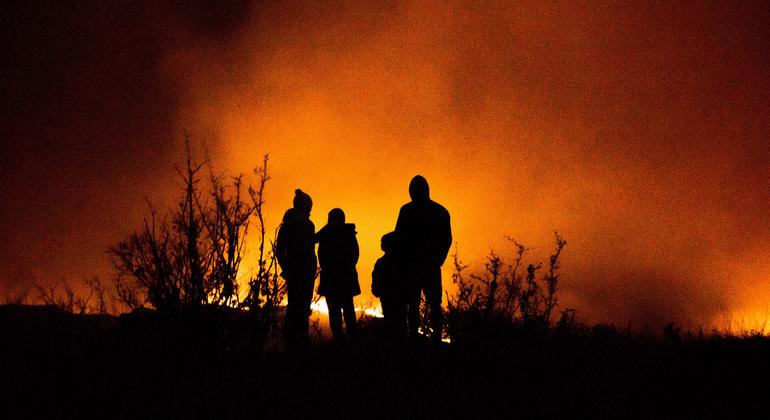
Europe Burns 57% More Land in Four Years, WHO Drops the Mic on Climate Change
Wildfires in Europe have increased 57% in four years, burning 2.2 million hectares, forcing mass evacuations, and prompting the WHO to state the obvious: climate change is the culprit.
Europe is currently impersonating a barbecue grill, and not in a fun way. The World Health Organization (WHO) in Europe reports that the amount of land charred by wildfires has leapt by 57% in just four years, from 1.4 million hectares in 2022 to 2.2 million hectares in 2025. Spain and Portugal are leading the charge, with the number of wildfires more than doubling since last year. Madrid declared a national emergency on Friday after fires near the capital forced 10,000 people to flee, with a regional official calling them 'the worst ever.' Meanwhile, southern France joined the conflagration party, evacuating 63,000 people after multiple fires destroyed about 80 homes.
'Wildfires destroy homes and livelihoods, force evacuations, and place enormous pressure on emergency services and health systems,' the WHO wrote in a press release, in what might be the understatement of the century. 'Tragically, they also claim lives.' The organization pointed out that climate change is intensifying these fires by cranking up temperatures, drying out landscapes, and expanding urban sprawl, thus extending the wildfire season. Simon Stiell, the UN’s top climate change official, chimed in with the obvious solution: 'Action now is the basis of long-term peace and security around the world,' he said, urging a faster transition to renewable energy.
For those not yet evacuated, the WHO warns that wildfire smoke can worsen heart and respiratory conditions, especially for the elderly, children, pregnant women, and those with chronic diseases. The particulate matter is linked to lung disease, liver issues, eye infections, cognitive impairment, and memory loss. Because apparently fires aren't enough; they also want to destroy your brain. The WHO advises people to follow official advice, move away from active fires when safe, avoid unnecessary travel, and wear a well-fitting protective mask if they must venture outside. Governments, for their part, should provide timely weather alerts, clear health advice, accessible care, and special assistance for the most at-risk. The WHO is 'working with countries to assess risks, plan for emergencies, develop guidance to protect people from smoke and extreme heat, and make health services and facilities more resilient.' In other words, they're hoping we all don't go up in smoke.
The Good Times
News in your inbox.
One sardonic roundup, delivered on your schedule. Free. Unsubscribe whenever your tolerance for wit runs out.
Already subscribed but we never reach your inbox? Check your spam folder and hit 'Not spam' (or 'Remove from spam') to bust us out of junk-mail purgatory. You'll be helping everyone else too.
Don't open any of our emails for a month and you'll be automatically removed from the mailing list.
Rewrite Article
Select parts to regenerate with a fresh AI pass. Translations will be updated automatically.
Generate AI Image
Creates a sardonic version of the article image using OpenAI.