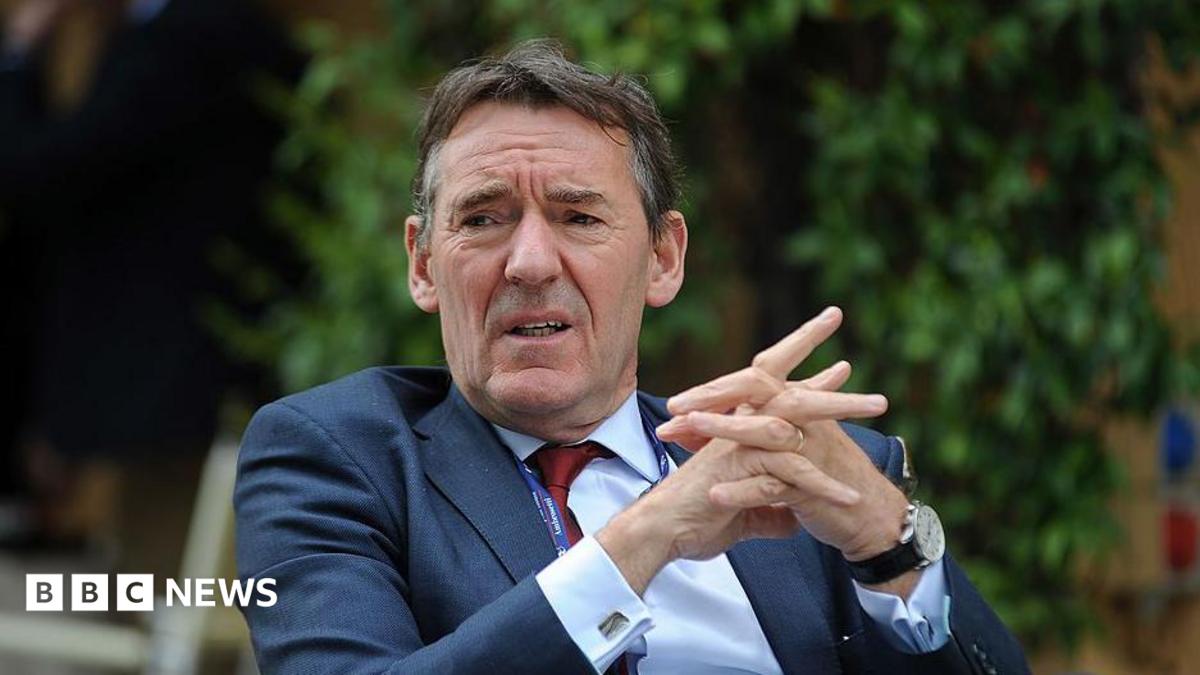
Lord Jim O'Neill, the economist whose résumé includes coining the acronym BRIC and advising the Prime Minister, has announced he will not be taking a formal job in Andy Burnham's government. The crossbench peer, who once served as a Treasury minister under the Conservatives, reportedly told the Financial Times that he simply couldn't bear the thought of 'constraints' - specifically, the kind involving blind trusts and giving up control of his business interests.
'I've decided to not take a formal role,' he said, probably while stroking a monocle. 'It's not because of any policy disagreements. I'm a massive fan of the focus on devolution and I hope Andy and his team will be bold on this and everything else.'
He added, with the air of a man who enjoys his freedom, 'I'll continue to, hopefully, maintain an informal relationship with the PM and his team.'
For those keeping score at home, Lord O'Neill was the former chief economist at Goldman Sachs and was tipped to become Burnham's chief economic adviser. But he'd rather keep his hands on his own business interests than subject them to a blind trust - a mechanism where ministers have no knowledge of how their investments are handled, to avoid any potential conflict of interest. Because who doesn't love a good blind trust?
From 2015 to 2016, he was commercial secretary to the Treasury under then-Chancellor George Osborne. A Greater Manchester lad, he was a key figure in pushing the Conservatives' Northern Powerhouse agenda, which aimed to boost the North of England's economy - a noble cause that apparently didn't require blind trusts.
And let's not forget his greatest claim to fame: in 2001, he coined the term 'Bric' to describe Brazil, Russia, India, and China - leading developing countries with potential for fast growth. They later became 'Brics' when South Africa joined, proving that even acronyms can expand their membership.
So while Burnham's government will have to find another economic brain, Lord O'Neill will be off doing whatever it is crossbench peers do, presumably without any pesky constraints on his portfolio.
The Good Times
News in your inbox.
One sardonic roundup, delivered on your schedule. Free. Unsubscribe whenever your tolerance for wit runs out.
Already subscribed but we never reach your inbox? Check your spam folder and hit 'Not spam' (or 'Remove from spam') to bust us out of junk-mail purgatory. You'll be helping everyone else too.
Don't open any of our emails for a month and you'll be automatically removed from the mailing list.
Rewrite Article
Select parts to regenerate with a fresh AI pass. Translations will be updated automatically.
Generate AI Image
Creates a sardonic version of the article image using OpenAI.