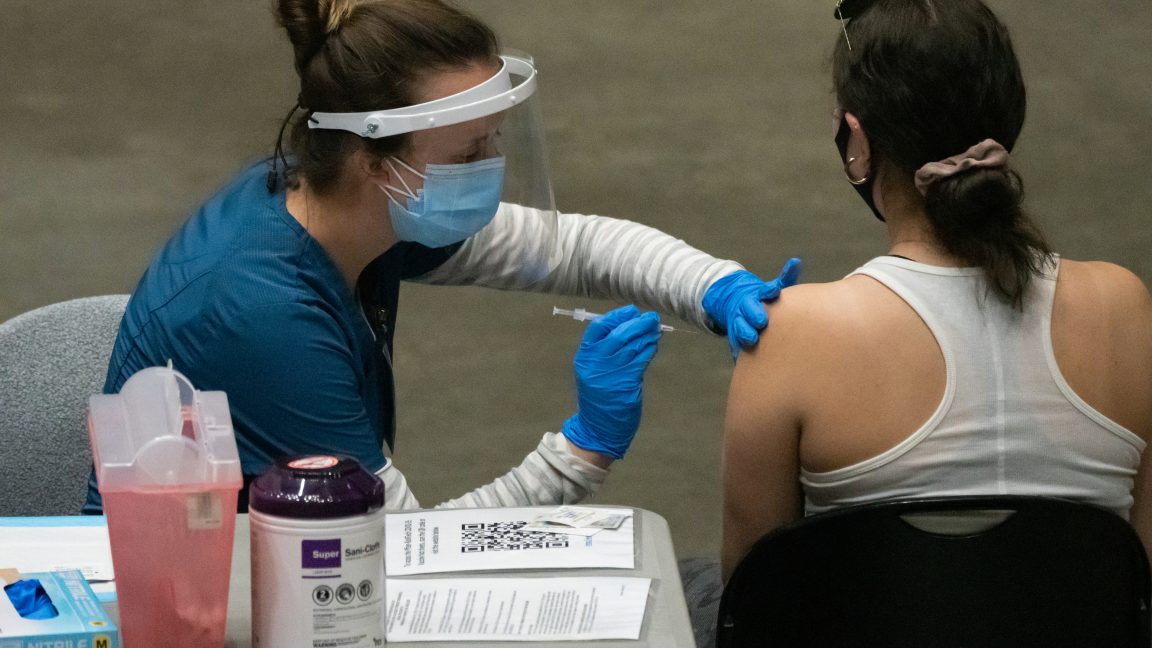
Despite most Americans treating updated COVID-19 vaccines like a trendy food they tried once and decided wasn't for them, a new study suggests the shots continue to offer significant protection against cardiovascular disease. The research, published in JAMA Internal Medicine, analyzed data from over 1 million patients in the US Department of Veterans Affairs health system and found that the 2024 - 2025 COVID-19 vaccine reduced the risk of major adverse cardiovascular events (MACE) - including heart attacks, strokes, and cardiovascular death - by 38 percent.
The study, led by epidemiologist Ziyad Al-Aly at the St. Louis VA, tracked 1,039,659 patients who received a seasonal flu shot between September 3 and December 31, 2024. Of those, 349,085 also got a COVID-19 vaccine, while 690,574 served as the flu-only control group. After eight months, researchers found that COVID-19-associated MACE events dropped from about 5 per 10,000 to 3 per 10,000 among the vaccinated. The benefits were strongest for those aged 75 and older and those with underlying conditions - precisely the groups one might expect to benefit most from not dropping dead of a heart attack.
The researchers also looked at MACE and deaths without documented COVID-19, where the benefits were even more pronounced, suggesting some cases flew under the diagnostic radar. The estimated absolute reduction: from 382 MACE events per 10,000 to 358, and deaths from 223 to 207. Extrapolated to a population of 1 million, vaccination could avert roughly 2,370 MACE events and 1,580 deaths over eight months - though the authors caution against overinterpreting these numbers.
An accompanying study in the same journal found the vaccines still reduce hospitalization risk by 35 percent and critical illness by 41 percent. In an editorial, former FDA commissioner Robert Califf lamented that despite this “strong evidence of a favorable balance of benefit to risk,” national views are being swayed by “general antivaccination statements from the US Department of Health and Human Services” - run by Health Secretary Robert F. Kennedy Jr., who has made his skepticism about vaccines well known.
Only 17.5 percent of adults and 22.6 percent of those over 65 have gotten the 2025 - 2026 COVID shot, according to federal data. Califf called for more data collection and public engagement, especially on social media, to counter the anti-vaccine rhetoric. Because nothing says “trust the science” like arguing about it on Twitter.
The study has limitations - the VA population skews older, White, and male - so the findings may not generalize perfectly. But they do suggest that getting a shot might be better than playing cardiac roulette with a virus that keeps evolving. Your move, America.
The Good Times
News in your inbox.
One sardonic roundup, delivered on your schedule. Free. Unsubscribe whenever your tolerance for wit runs out.
Already subscribed but we never reach your inbox? Check your spam folder and hit 'Not spam' (or 'Remove from spam') to bust us out of junk-mail purgatory. You'll be helping everyone else too.
Don't open any of our emails for a month and you'll be automatically removed from the mailing list.
Rewrite Article
Select parts to regenerate with a fresh AI pass. Translations will be updated automatically.
Generate AI Image
Creates a sardonic version of the article image using OpenAI.