Brain's Janitorial Staff Gets a Raise: Boosting One Protein Helps Astrocytes Vacuum Alzheimer's Plaques
Baylor researchers discover that boosting a protein called Sox9 turns the brain's support cells into amyloid-plaque-eating vacuum cleaners, preserving memory in Alzheimer's mouse models.
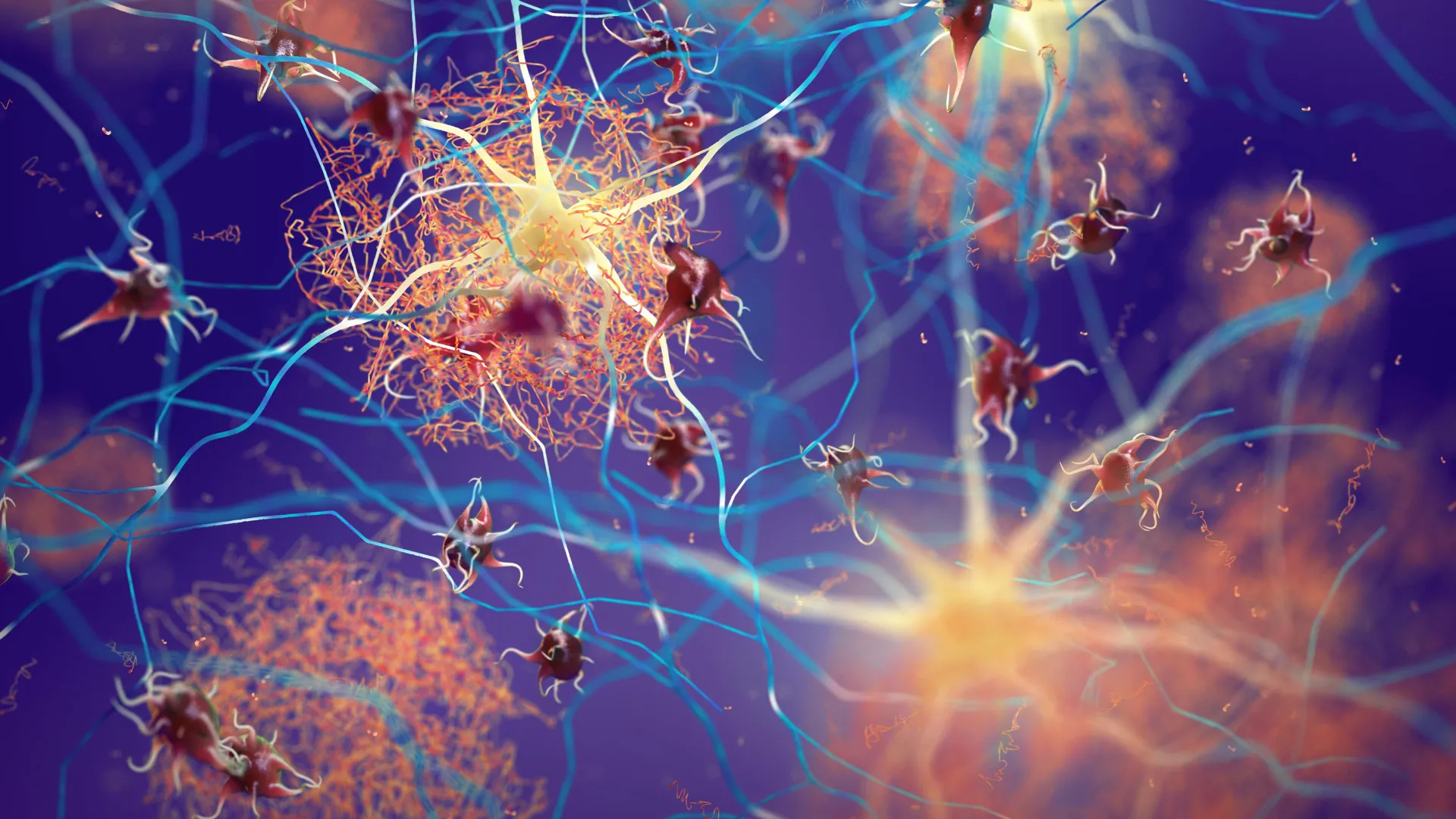
Researchers at Baylor College of Medicine have discovered that the brain already comes with a built-in cleaning crew for Alzheimer's plaques - it just needs a little pep talk. The team found that increasing levels of a protein called Sox9 in astrocytes, the brain's star-shaped support cells, enables them to clear out toxic amyloid plaques while preserving memory and thinking ability in mouse models of Alzheimer's disease.
The study, published in Nature Neuroscience, focuses on astrocytes - cells that, like that one friend who actually remembers where everyone parked, handle essential tasks like facilitating brain communications and memory storage. As the brain ages, astrocytes undergo functional alterations; what those alterations mean for aging and neurodegeneration has been something of a mystery, until now.
First author Dr. Dong-Joo Choi, who conducted the work at Baylor's Center for Cell and Gene Therapy and Department of Neurosurgery (and is now an assistant professor at the University of Texas Health Science Center at Houston), explained that astrocytes perform diverse tasks essential for normal brain function. The researchers zeroed in on Sox9 because it controls the activity of many genes in aging astrocytes, making it a prime suspect in the age-related brain cleanup slowdown.
The team manipulated Sox9 expression in mouse models that already had cognitive impairment and amyloid plaques - a more realistic scenario than testing before symptoms appear, which is like trying to fix a leaky roof while the sun is shining. Over six months, they tracked the mice's ability to recognize familiar objects and environments, then measured plaque accumulation.
Results were stark: lower Sox9 levels led to faster plaque buildup and simpler astrocyte structure; higher Sox9 levels turned astrocytes into tiny vacuum cleaners, improving plaque clearance and structural complexity. Mice with boosted Sox9 maintained better cognitive function, suggesting that activating the brain's support crew can slow mental decline.
"We found that increasing Sox9 expression triggered astrocytes to ingest more amyloid plaques, clearing them from the brain like a vacuum cleaner," said corresponding author Dr. Benjamin Deneen, professor and chair at Baylor. "Most current treatments focus on neurons or try to prevent plaque formation. This study suggests that enhancing astrocytes' natural ability to clean up could be just as important."
The researchers caution that more work is needed to understand Sox9 in the human brain over time, but the findings open the door to therapies that harness astrocytes as a natural defense against neurodegenerative disease - essentially giving the brain's janitorial staff a raise and better equipment.
Additional contributors from Baylor include Sanjana Murali, Wookbong Kwon, Junsung Woo, Eun-Ah Christine Song, Yeunjung Ko, Debo Sardar, Brittney Lozzi, Yi-Ting Cheng, Michael R. Williamson, Teng-Wei Huang, Kaitlyn Sanchez and Joanna Jankowsky. The research was supported by National Institutes of Health grants and the David and Eula Wintermann Foundation, among others.
The Good Times
News in your inbox.
One sardonic roundup, delivered on your schedule. Free. Unsubscribe whenever your tolerance for wit runs out.
Already subscribed but we never reach your inbox? Check your spam folder and hit 'Not spam' (or 'Remove from spam') to bust us out of junk-mail purgatory. You'll be helping everyone else too.
Don't open any of our emails for a month and you'll be automatically removed from the mailing list.
Rewrite Article
Select parts to regenerate with a fresh AI pass. Translations will be updated automatically.
Generate AI Image
Creates a sardonic version of the article image using OpenAI.