Ancient Asteroid Craters: The Original Oxygen Bars for Earth's Earliest Life
South Korean scientists find that asteroid impacts created warm, mineral-rich crater lakes where oxygen-producing microbes thrived, potentially explaining Earth's Great Oxidation Event - and giving Mars a new place to look for alien life.
A team of researchers in South Korea has uncovered evidence that ancient asteroid impacts might have done more than just rearrange the planetary landscape - they may have also created cozy little hotspots for oxygen-producing microbes to throw the planet's first house parties.
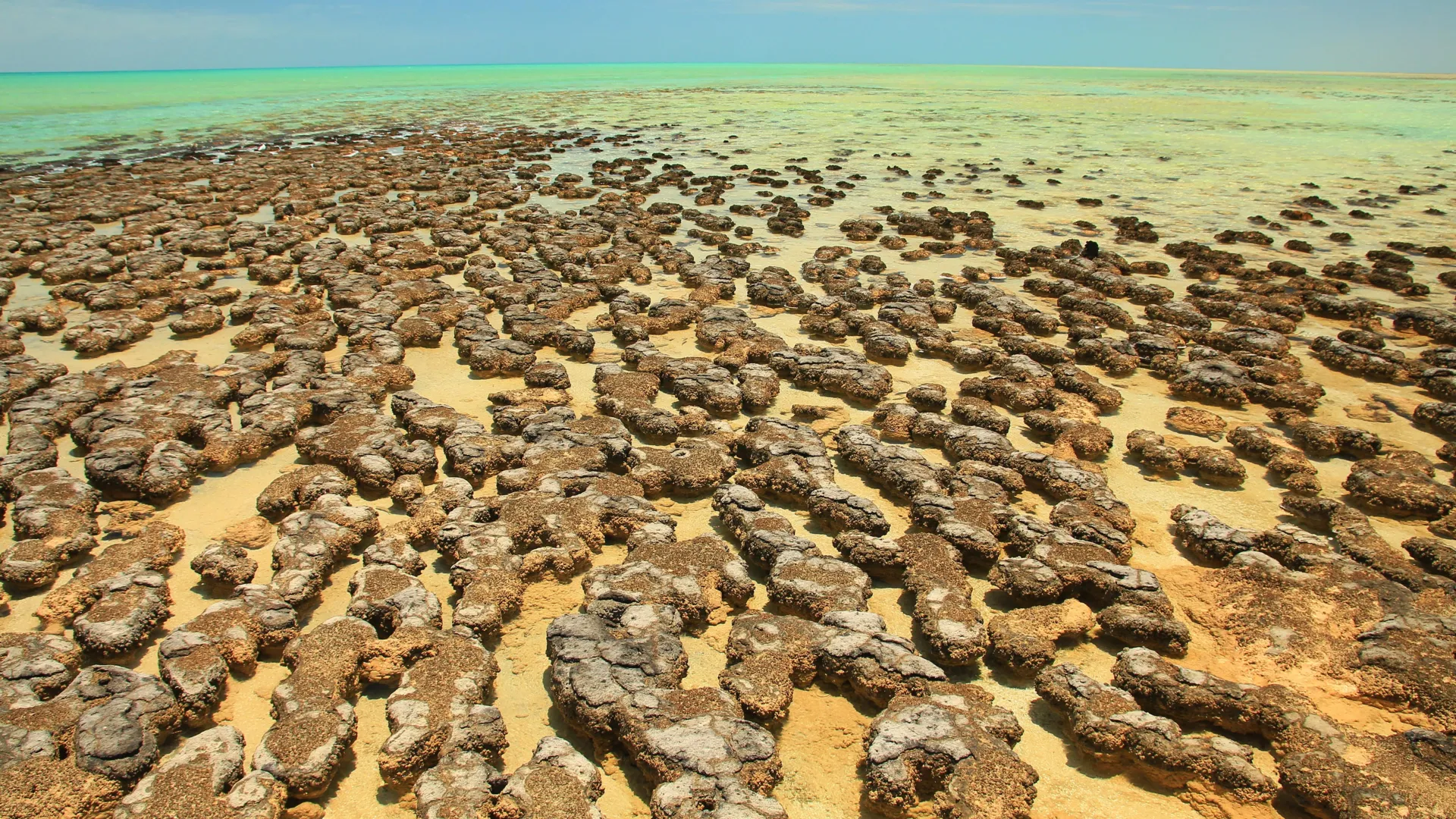
Scientists from the Korea Institute of Geoscience and Mineral Resources (KIGAM) discovered stromatolites - layered rock structures built by ancient microbial communities - inside the Hapcheon impact crater, the only confirmed asteroid impact crater on the Korean Peninsula. Their findings, published in Communications Earth & Environment, a Nature Portfolio journal, suggest these craters weren't just destructive; they were also surprisingly hospitable.
According to the researchers, the stromatolites likely formed in a hydrothermal lake that developed after an asteroid strike. The impact generated intense heat, melting surrounding rock and warming the water for extended periods. Those warm, mineral-rich conditions may have provided an ideal environment for ancient microbes to survive and grow. Stromatolites, produced by microorganisms such as cyanobacteria that release oxygen through photosynthesis, are considered some of the oldest known evidence of life on Earth, with fossils dating back at least 3.5 billion years.
The research team found several stromatolites in the northwestern area of the Hapcheon crater, each measuring roughly 10 to 20 centimeters in diameter - the first time such structures have been identified at the site. The discovery could help scientists better understand the Great Oxidation Event (GOE), which occurred about 2.4 billion years ago when oxygen levels in Earth's atmosphere rose dramatically. Researchers suggest that hydrothermal lakes formed by asteroid impacts may have acted as isolated environments where oxygen-producing microbes could thrive, functioning as localized "oxygen oases" before oxygen became widespread across the planet.
Geochemical testing of the stromatolites revealed signs of both extraterrestrial material and nearby bedrock, along with evidence that the structures were altered by hot water. The inner portions of the stromatolites showed stronger hydrothermal signatures, indicating they likely formed during an earlier and hotter stage of the crater lake's history. Taken together, the findings support the idea that the stromatolites developed inside a hydrothermal lake created after the asteroid impact and continued forming as the environment gradually cooled.
The findings may also have implications beyond Earth. Scientists believe early Mars once contained water-filled impact craters similar to those on ancient Earth, making impact crater environments on Mars promising places to search for signs of past microbial life. The new study expands on previous work published in Gondwana Research in 2021, when KIGAM scientists first confirmed the existence of the Hapcheon impact crater. The latest research adds possible biological evidence, including stromatolites, within the crater environment.
"This is the first comprehensive evidence suggesting that stromatolites could form in hydrothermal lakes created by asteroid impacts," said Dr. Jaesoo Lim, lead author of the study. "Such environments may have provided favorable conditions for early microbial ecosystems." The Korea Institute of Geoscience and Mineral Resources (KIGAM) is a government-funded research institute focused on geoscience, natural resources, and Earth system science. Materials provided by National Research Council of Science & Technology.
The Good Times
News in your inbox.
One sardonic roundup, delivered on your schedule. Free. Unsubscribe whenever your tolerance for wit runs out.
Already subscribed but we never reach your inbox? Check your spam folder and hit 'Not spam' (or 'Remove from spam') to bust us out of junk-mail purgatory. You'll be helping everyone else too.
Don't open any of our emails for a month and you'll be automatically removed from the mailing list.
Rewrite Article
Select parts to regenerate with a fresh AI pass. Translations will be updated automatically.
Generate AI Image
Creates a sardonic version of the article image using OpenAI.