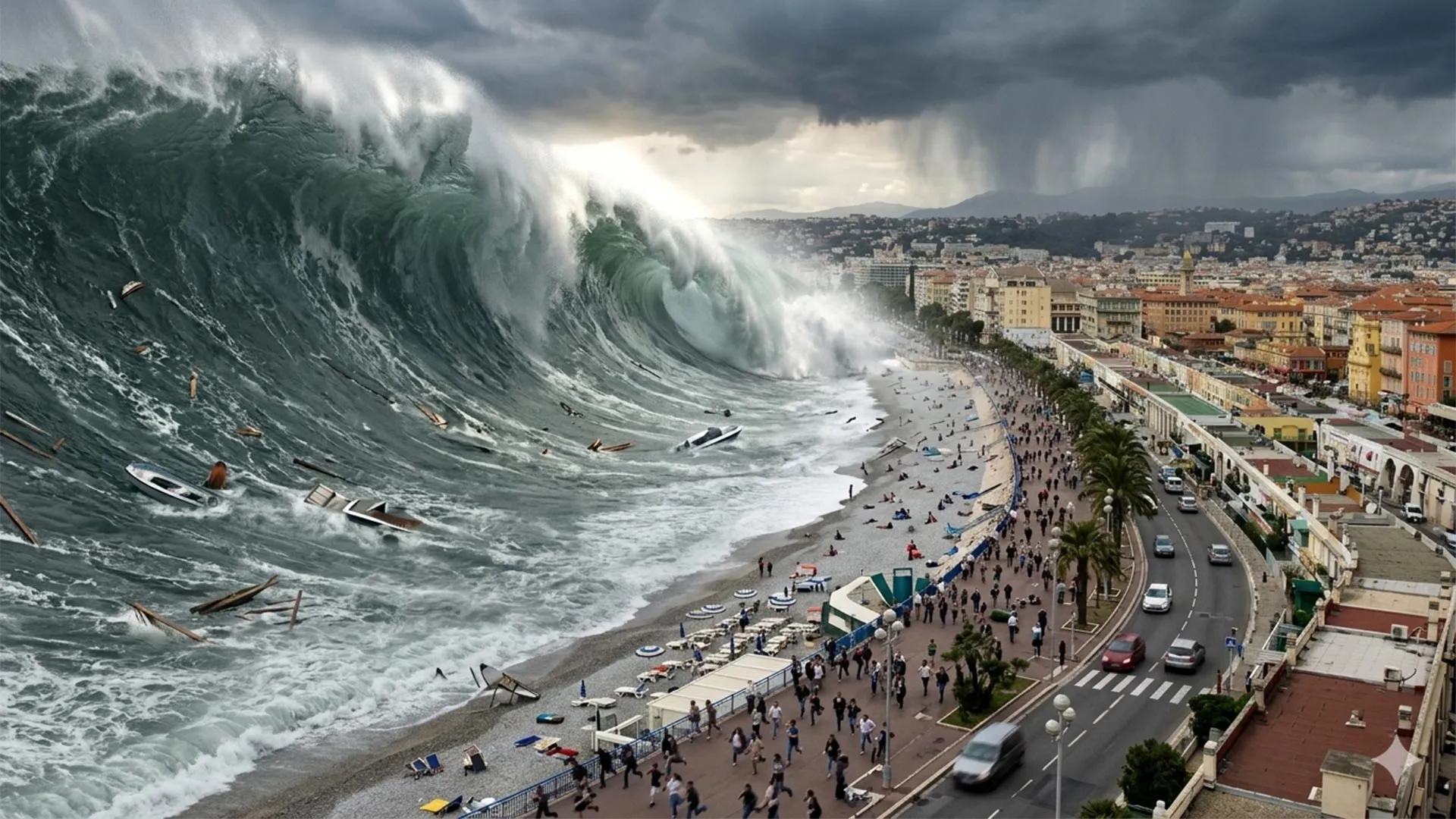
UNESCO Drops a Sobering Fact: Mediterranean Tsunami Isn't a Matter of If, but When
UNESCO declares a Mediterranean tsunami is inevitable within 30 years, while the French Riviera braces with evacuation plans and a very awkward beach-read.
The Mediterranean Sea, long considered the cute, less-threatening cousin of the Pacific when it comes to tsunamis, has apparently been hiding a dangerous secret. UNESCO, never one to mince words, declared in June 2022 that there is a 100% chance of a tsunami of at least one meter hitting the Mediterranean in the next 30 years. So, pack your sunscreen and your life jacket.
According to historical records, the French Riviera has experienced about twenty tsunami incidents between the 16th century and early 2000s, with waves often exceeding two meters. The 1979 Nice tsunami, triggered by an underwater landslide from a port construction site, killed eight people. The 2003 Boumerdès earthquake in Algeria sent sea levels dropping up to 1.5 meters along the French coast, damaging boats and marinas. And the 1887 Ligurian Sea earthquake, measuring 6.5 to 6.8, caused a sudden sea retreat before a two-meter wave crashed the beach party.
Authorities have mapped evacuation zones along 1,700 km of coastline, affecting 187 towns and at least 164,000 residents - or up to 835,000 beachgoers in summer. Nice, with its dense urbanization and tourist appeal, could see between 10,000 and 87,000 people needing evacuation from beaches alone. The current alert system, Cenalt, can detect earthquakes and send alerts in under 15 minutes, but that's too slow for local tsunamis that arrive in under ten minutes. Hence, evacuation plans rely on walking routes, refuge sites, and public awareness. Nice has nearly a hundred mapped refuge sites and an interactive platform to guide people, all part of UNESCO's Tsunami Ready program, which has already certified Deshaies in Guadeloupe and Cannes, with Nice next in line.
Because when a wave can arrive in minutes, knowing where to run is the difference between a funny story and a tragic one.
The Good Times
News in your inbox.
One sardonic roundup, delivered on your schedule. Free. Unsubscribe whenever your tolerance for wit runs out.
Already subscribed but we never reach your inbox? Check your spam folder and hit 'Not spam' (or 'Remove from spam') to bust us out of junk-mail purgatory. You'll be helping everyone else too.
Don't open any of our emails for a month and you'll be automatically removed from the mailing list.
Rewrite Article
Select parts to regenerate with a fresh AI pass. Translations will be updated automatically.
Generate AI Image
Creates a sardonic version of the article image using OpenAI.