Scientists Turn World's Most Uncooperative Plastic Into Engine Oil, Because Why Not
Virginia Tech researchers have turned the recycling nightmare that is PVC into high-performance engine oil, proving that one person's trash is another person's lubricant.
In a move that will surely delight environmentalists and confuse anyone who's ever tried to recycle a PVC pipe, researchers at Virginia Tech have figured out how to turn polyvinyl chloride (PVC) - one of the most notoriously difficult plastics to recycle - into polyalphaolefin, a key ingredient in engine oil and other lubricants.
The process, published Aug. 5 in Nature, tackles two problems at once: the plastic waste crisis and the environmental cost of producing industrial lubricants. PVC is a recycling nightmare because it contains chlorine and a grab bag of additives depending on its manufacturing origins, which is why so much of it ends up in landfills. Meanwhile, the world's insatiable appetite for engine oil - used in everything from lawn mowers to jet engines - carries a significant environmental toll. So why not just turn one problem into the other?
The method is almost disarmingly simple: take PVC (similar to what's in your plumbing, windows, and credit cards), dissolve it in a solvent, add aluminum trichloride and alpha olefins, heat to 158 degrees Fahrenheit for three hours, and - voilà - you've got a thick, usable lubricant. It's like cooking, but with more hazardous chemicals.
"Number one, we have proved that it is feasible to use plastic waste to make high-performance lubricants. Number two, these lubricants are green, and they can meet the emerging needs for sustainability by the market," said Guoliang "Greg" Liu, the chemist and chemical engineer leading the research.
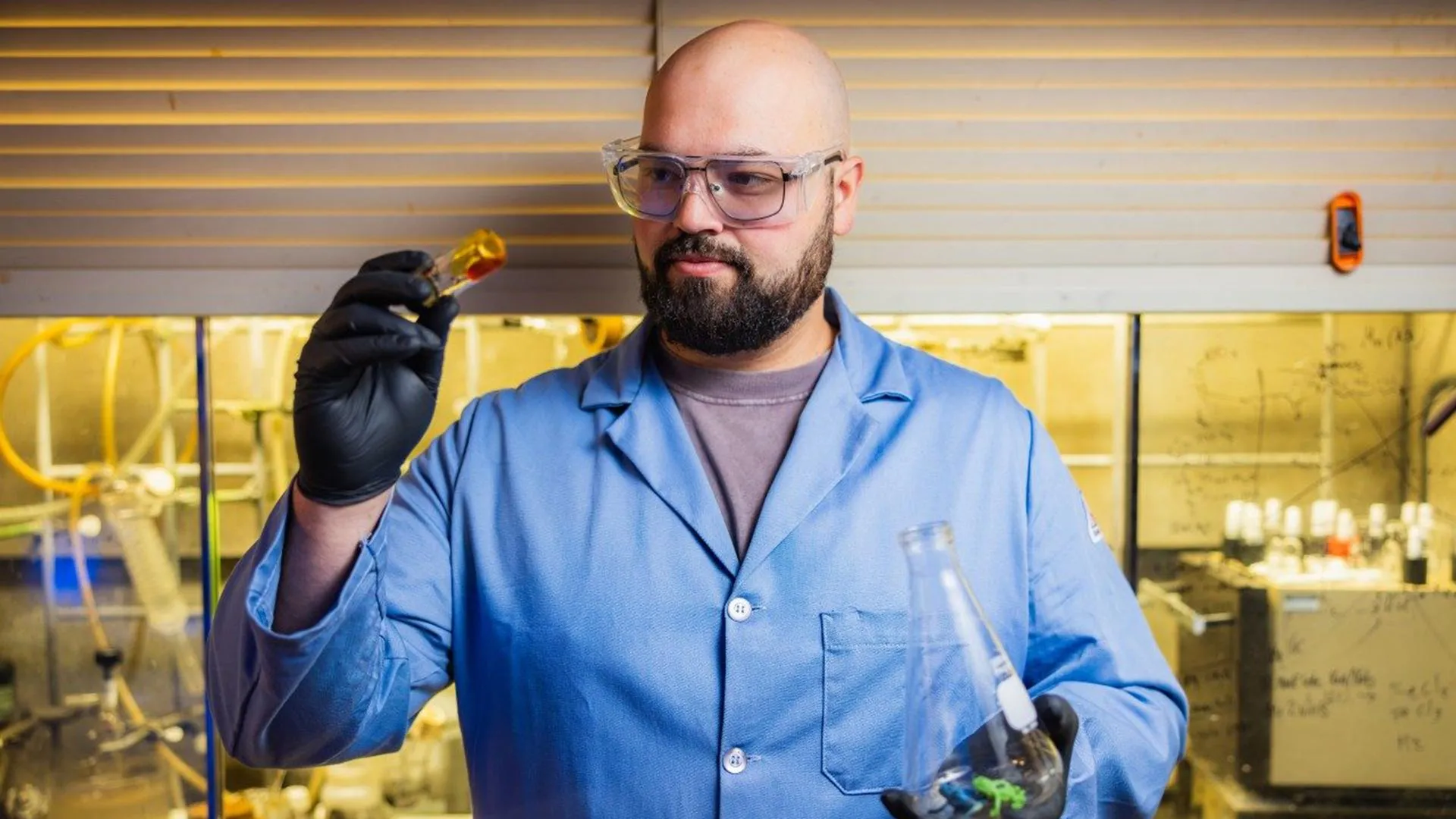
The project builds on earlier work by Liu's team, published in Science and Nature Sustainability, which converted other plastic waste into surfactants for soaps and detergents. After that success, they turned their attention to PVC. The team, affectionately dubbed "the three musketeers" by Liu, included doctoral student Eric Munyaneza Nuwayo, chemistry graduate student Connor S. Thompson, and first-year graduate student Abby Civiello.
Initially, the researchers tried to replace PVC's chlorine atoms with other chemical groups, but the results were "soft, somewhat gooey," and utterly unimpressive. Then Liu had a eureka moment: "If this polymer is so gooey and so soft, why don't I just keep breaking the polymer chains down to smaller segments?" This shift in strategy led to the breakthrough.
To verify their creation, the team sent samples to Ali Erdemir at Texas A&M University for testing, collaborated with William Goddard at Caltech on chemical computations, and worked with Virginia Tech colleague Xi Chen on economic and production models for scaling up.
The researchers aim to make the process more sustainable and the oil more widely available. As Liu put it, "Lubricants are the silent hero out there. We often don't recognize they exist, but they are out there working quietly. We want to be able to produce the oil on a larger scale to reach more people in the world."
So next time you change your car's oil, take a moment to thank the PVC pipe that might have lived a past life as a credit card. The future of lubrication is looking decidedly plastic.
The Good Times
News in your inbox.
One sardonic roundup, delivered on your schedule. Free. Unsubscribe whenever your tolerance for wit runs out.
Already subscribed but we never reach your inbox? Check your spam folder and hit 'Not spam' (or 'Remove from spam') to bust us out of junk-mail purgatory. You'll be helping everyone else too.
Don't open any of our emails for a month and you'll be automatically removed from the mailing list.
Rewrite Article
Select parts to regenerate with a fresh AI pass. Translations will be updated automatically.
Generate AI Image
Creates a sardonic version of the article image using OpenAI.