Scientists Confirm Your Blood Cells Are Basically Ancient Single-Celled Squatters
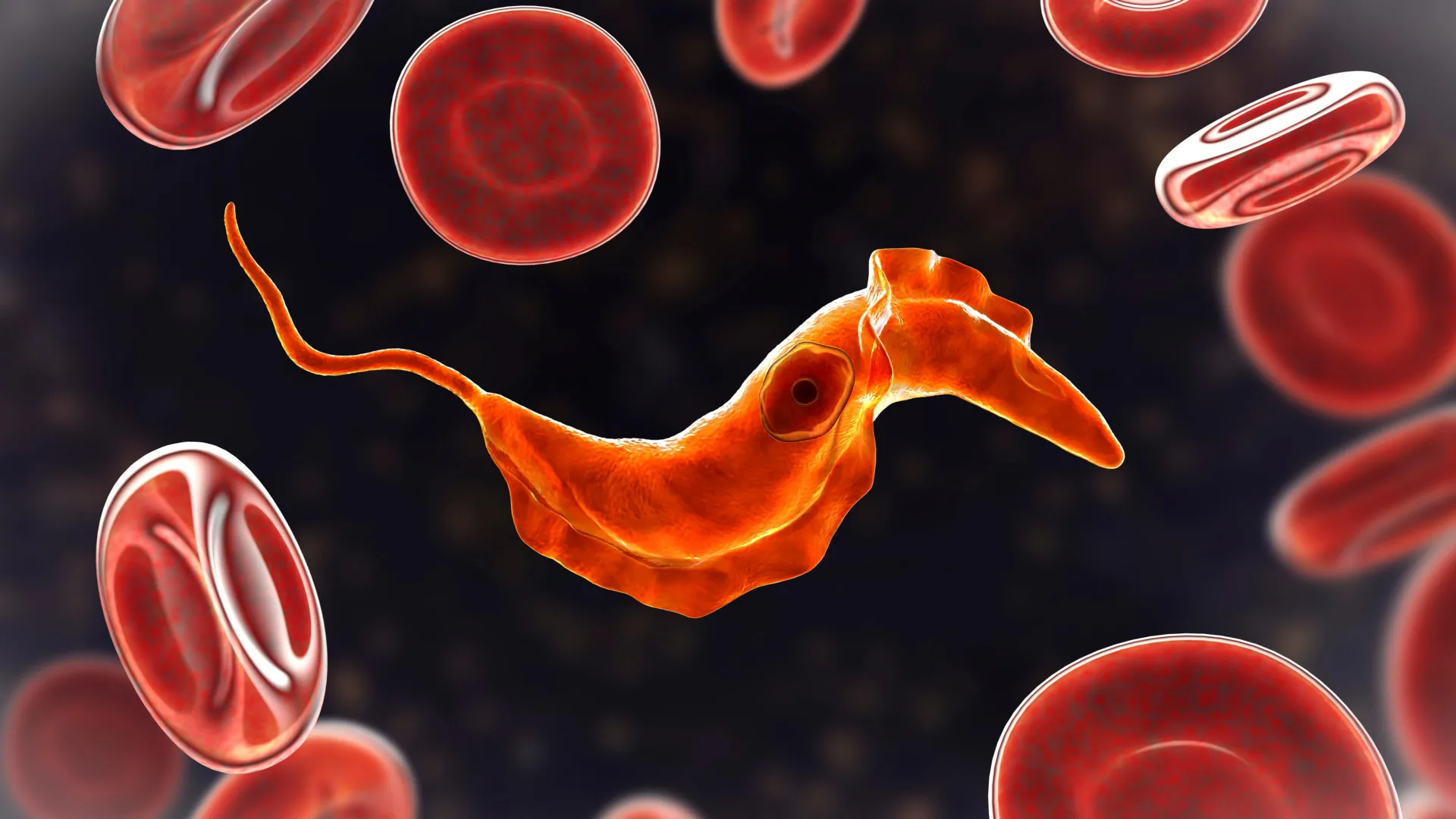
Your blood cells are basically ancient single-celled squatters that have been freeloading for 700 million years, and scientists finally have the family tree to prove it.
Nearly every animal species, including humans, has blood cells - but don't get too attached to the idea that yours are uniquely mammalian. Different species have evolved different types of blood and immune cells over millions of years of adaptation against infection, which is nature's way of saying "adapt or die." Scientists already know a great deal about human and mouse blood thanks to hematology and immunology, but how these cells first appeared and evolved has remained elusive. So researchers at Kyoto University decided to trace the origins and diversification of blood cells across the animal world.
The team created a new analytical approach that compared gene expression patterns across many cell types and species, building evolutionary family trees for blood cell lineages and estimating how these cells developed over time. They also compared blood cells with unicellular organisms to identify possible single-celled ancestors - and found that macrophages, the immune cells that engulf harmful microbes and debris, showed the strongest similarities to those ancient loners. This suggests the earliest blood cells may have resembled macrophages, which is about as humble a start as "I used to be a single-celled blob that ate things."
The researchers traced the gene FOS, widely expressed in blood cells across many animal species, back to a unicellular ancestor that lived about 700 million years ago - meaning the first blood cells likely emerged around the same time multicellular animals first appeared. In other words, early animals recycled genetic material from single-celled ancestors to make blood cells. The analysis also revealed how different blood cell types branched off over time: mast cells evolved from macrophages, early T cells and red blood cells later emerged from mast cells, and prototypic B cells branched directly from macrophages after mast cells had already separated.
By reconstructing this 700-million-year family tree, the scientists mapped the evolution of blood cells and found that modern development pathways still reflect this ancient history. "I feel deeply moved by these findings, which represent the culmination of our work and illustrate that the differentiation pathways of vertebrate blood cells reflects the 700-million-year evolutionary history of these cells," says team leader Hiroshi Kawamoto. First author Yosuke Nagahata of the Institute of Evolutionary Biology, Spain, adds: "When I let it sink in that this legacy from so long ago is circulating within my body as blood cells, I feel closer to our distant ancestors." The team believes their new analytical method could also help investigate the evolutionary origins of diseases like cancer, potentially leading to new treatments - because if you're going to inherit ancient cellular baggage, you might as well learn how to fix it.
The paper, "Animals have expanded the evolutionary legacy of unicellular ancestors in blood cells," will be published May 29, 2026, in Proceedings of the National Academy of Sciences of the United States of America, with doi: 10.1073/pnas.2528110123. Materials provided by Kyoto University. Note: Content may be edited for style and length.
The Good Times
News in your inbox.
One sardonic roundup, delivered on your schedule. Free. Unsubscribe whenever your tolerance for wit runs out.
Already subscribed but we never reach your inbox? Check your spam folder and hit 'Not spam' (or 'Remove from spam') to bust us out of junk-mail purgatory. You'll be helping everyone else too.
Don't open any of our emails for a month and you'll be automatically removed from the mailing list.
Rewrite Article
Select parts to regenerate with a fresh AI pass. Translations will be updated automatically.
Generate AI Image
Creates a sardonic version of the article image using OpenAI.