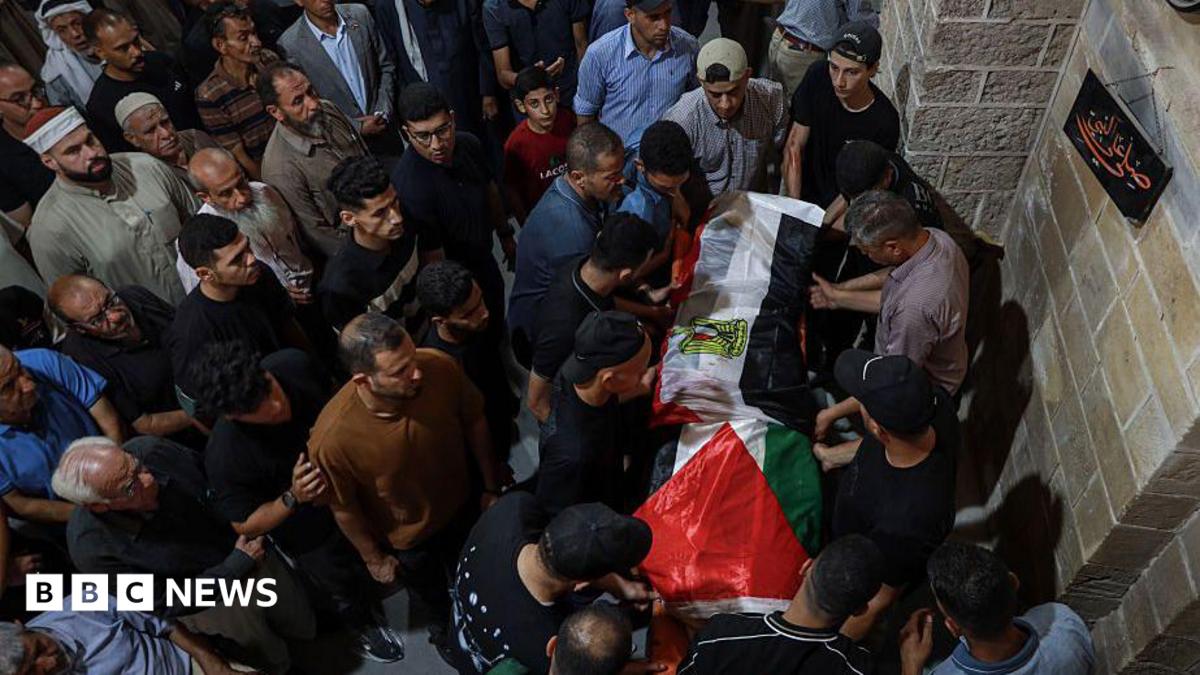
Man Who Brought World Cup Joy to Gaza Killed in Strike Hours Before Match
A beloved aid worker who organized World Cup screenings for displaced families in Gaza was killed by an Israeli strike hours before a match, leaving a community mourning both the man and the fleeting joy he brought.
Mohammed al-Wahidi, a 65-year-old English teacher turned humanitarian coordinator, was killed in an Israeli air strike in Gaza City on Tuesday, prompting an outpouring of grief across the territory where he had become one of the most recognizable aid figures.
An Israeli missile struck the taxi al-Wahidi was traveling in through the Sabra neighborhood, killing him along with three others, including two brothers aged eight and 10 who were passing by. The Israeli military said it had struck a Hamas operative and was aware of claims that uninvolved individuals were killed.
Al-Wahidi had spent over two and a half years as a senior official with the Egyptian Relief Committee, coordinating emergency food aid, overseeing displacement camps, and delivering supplies to communities hit by repeated waves of displacement. Unlike many administrators, he preferred to stay in the field, becoming a familiar face at distribution points and shelters.
In recent weeks, he gained wider recognition for organizing public screenings of World Cup matches in Gaza City, Deir al-Balah, and al-Mawasi, offering families - especially children - a brief escape from war. Videos of crowds gathering around giant screens amid destroyed buildings spread online, showing rare scenes of celebration.
Al-Wahidi was killed just hours before Egypt's last-16 match against Argentina, deepening the sense of loss. Activist Mohammed Hmeid wrote: "He was not simply an aid worker... He was a door to hope that opened every day for displaced people."
His death comes as humanitarian workers face extreme risks: as of late April, the UN recorded at least 593 aid workers killed since the war began, including eight since the ceasefire 10 months ago. The war started after Hamas's October 7, 2023 attack killed about 1,200 people and took 251 hostages. Since then, at least 73,118 people have been killed in Gaza, according to the Hamas-run health ministry, whose figures the UN considers reliable.
The Good Times
News in your inbox.
One sardonic roundup, delivered on your schedule. Free. Unsubscribe whenever your tolerance for wit runs out.
Already subscribed but we never reach your inbox? Check your spam folder and hit 'Not spam' (or 'Remove from spam') to bust us out of junk-mail purgatory. You'll be helping everyone else too.
Don't open any of our emails for a month and you'll be automatically removed from the mailing list.
Rewrite Article
Select parts to regenerate with a fresh AI pass. Translations will be updated automatically.
Generate AI Image
Creates a sardonic version of the article image using OpenAI.