Hawaii Turns Ocean Plastic Into Roads Because Landfills Are So Last Century
Hawaii is testing roads made from ocean plastic and fishing nets, finding they don't shed more microplastics than regular asphalt - and they keep garbage out of landfills and the sea.
Hawaii has a plastic problem. Recycling on the islands is expensive and difficult, and marine debris keeps washing ashore like that relative who won't leave. Now researchers are testing a solution: turning discarded fishing nets and household plastic waste into asphalt for roads. Early results suggest the approach could give plastics a second life - preferably one that doesn't involve floating in the Pacific.
Jeremy Axworthy, a researcher at the Center for Marine Debris Research (CMDR) at Hawaiʻi Pacific University, presented the findings at the spring meeting of the American Chemical Society (ACS). "This work investigates whether it's responsible to use recycled plastics in Hawaii's roads," Axworthy shares. "By reusing plastic waste that is already in Hawaii, we can reduce the environmental and economic impacts of transporting waste plastics from the islands, incinerating it or dumping it in Hawaii's overflowing landfills."
Since 2020, most Hawaii roads have been built with polymer-modified asphalt (PMA), which adds strength and flexibility - handy for a tropical climate that loves to crack pavement. Normally, PMA uses virgin styrene-butadiene-styrene (SBS) pellets melted into asphalt binder. Researchers wondered if some of that virgin polymer could be replaced with discarded plastics, and whether the resulting roads would perform well or release microplastics into the environment.
The Hawaii Department of Transportation (HDOT) asked environmental chemist Jennifer Lynch, director of CMDR, to tackle two tasks: supply abandoned fishing nets from Hawaii's waters for experimental asphalt, and test whether recycled plastic pavement releases more microplastics than standard SBS asphalt. "Foreign plastic derelict fishing gear is the largest contributor of Hawaii's marine debris problem," Lynch shares. "To date, CMDR's Bounty Project has removed 84 tons of large, derelict fishing gear from the Pacific Ocean."
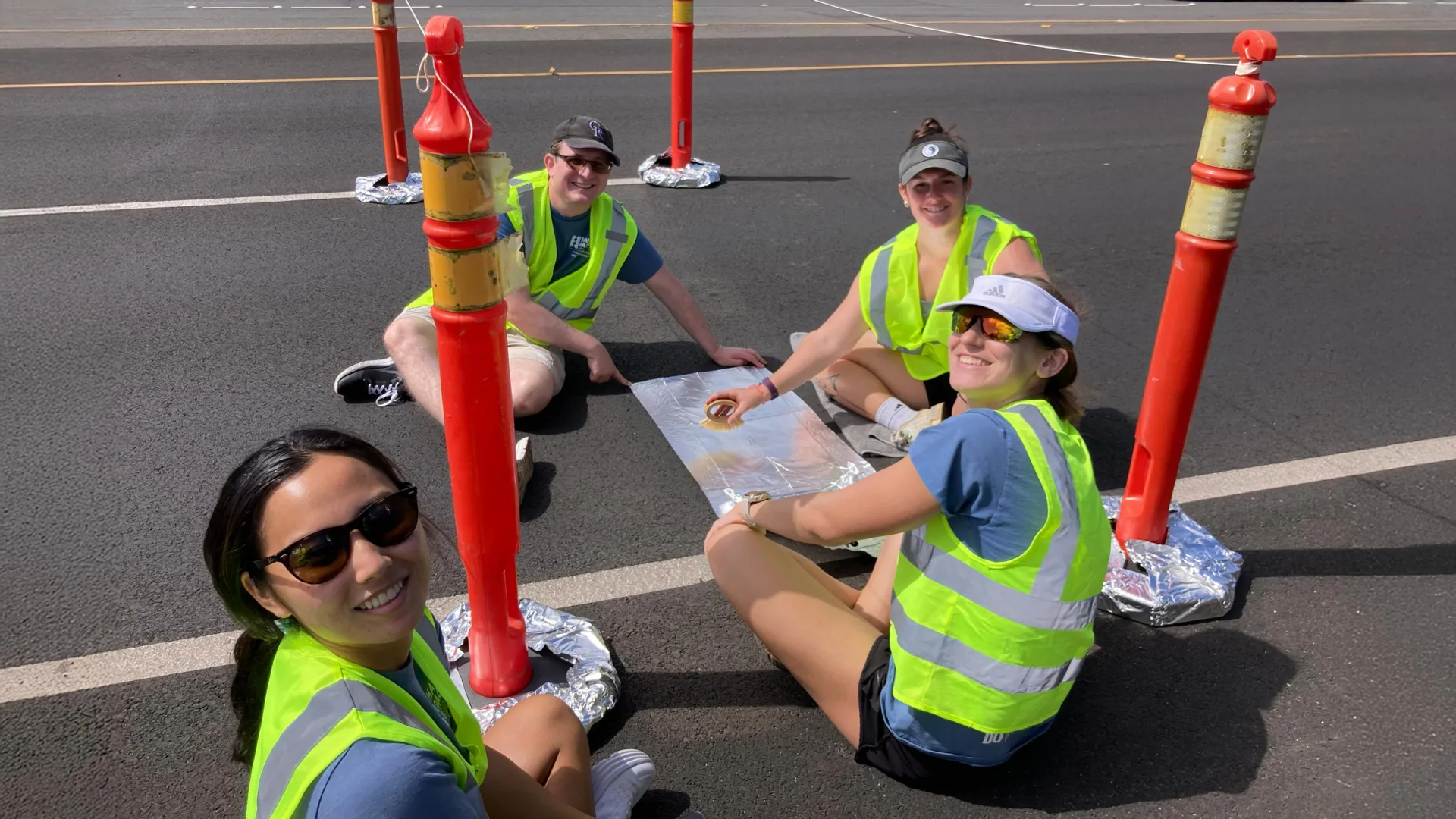
After a U.S. company processed the recovered plastics, a local paving company resurfaced sections of a residential street on Oahu using three mixtures: standard SBS, one with recycled polyethylene from Honolulu's recycling program, and one with polyethylene from discarded fishing nets. About 11 months later, the team collected road dust to measure microplastic release. Using pyrolysis gas chromatography-mass spectrometry (Py-GC-MS), they found that pavement containing recycled polyethylene did not release more polymers than conventional SBS pavement. The same pattern held in lab tests and simulated stormwater.
Although researchers detected microplastic-sized particles, very few were polyethylene, regardless of pavement type. The plastic appears to blend into the asphalt binder, so wear particles contain rock, binder, and polymer together - not plastic alone. Lynch notes, "In our initial Py-GC-MS data, we saw tire wear swamps the signal of polyethylene by orders of magnitude, like gigantic peaks! We had to search the weeds of the chromatogram to find signs of polyethylene."
More testing is needed to evaluate long-term durability, but researchers believe the approach could reduce both landfill waste and marine debris. "Some people think plastic recycling is a hoax - that it doesn't work; it's too challenging," Lynch shares. "But this work demonstrates that recycling can work when society prioritizes sustainability." The research was funded by HDOT.
The Good Times
News in your inbox.
One sardonic roundup, delivered on your schedule. Free. Unsubscribe whenever your tolerance for wit runs out.
Already subscribed but we never reach your inbox? Check your spam folder and hit 'Not spam' (or 'Remove from spam') to bust us out of junk-mail purgatory. You'll be helping everyone else too.
Don't open any of our emails for a month and you'll be automatically removed from the mailing list.
Rewrite Article
Select parts to regenerate with a fresh AI pass. Translations will be updated automatically.
Generate AI Image
Creates a sardonic version of the article image using OpenAI.