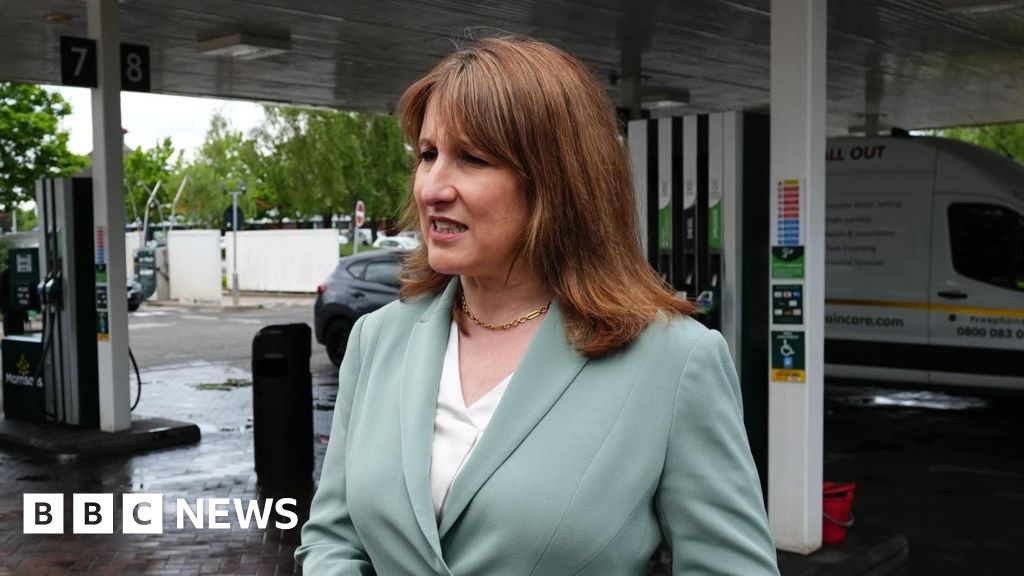
Government Launches 'Great British Summer Savings' Campaign, Which Is Definitely Not Just Cheap Sofa Ad Energy
Rachel Reeves wants you to know summer savings are coming - just not for your energy bills, which will be handled by… someone, possibly in October, maybe.
The government has branded this week's chancellor announcements as the 'Great British Summer Savings' drive - a slogan that sounds suspiciously like it was borrowed from a late-night sofa clearance ad, complete with breathless voiceover and dramatic saxophone.
Rachel Reeves is keen to convey that she gets it: despite all the political noise and Westminster psychodrama, the cost of living remains the number one issue for millions of families. Ministers are therefore reveling in cracking on with policies they hope will help people, rather than, say, tearing themselves apart in public.
Sir Keir Starmer makes his big-picture economic pitch in The Times today, proudly touting an 'active and interventionist' government and pointing to a new trade deal with six Gulf economies. Senior figures also highlight sunny macro news that's been drowned out by the recent political maelstrom: the economy growing faster than expected and inflation falling faster than expected.
The actual retail pitch - the policy ideas ministers hope you'll notice - includes fuel duty news, a plan to ensure enough jet fuel for summer holidays, and free bus travel for children in England during August. What you won't see today is a big intervention on energy bills.
The rationale: we're heading into summer, when bills are lower, so the focus is on contingency planning for winter. There's also a strong conviction in government that repeating the Conservatives' universal energy bill cap - Liz Truss's infamous 'massive untargeted bung' - would be unaffordable and irresponsible given the impact on public finances. As one government figure put it: 'A massive untargeted bung would cost people in different ways.'
So any winter help will be targeted - though who gets targeted and with what level of support remains a mystery. 'Who knows where we will be in October,' is the mantra you hear from folk in government. It's an imponderable, not just because of the international picture and whether fuel flows freely through the Strait of Hormuz, but because of the domestic picture too. Not least: who might be Chancellor of the Exchequer by then.
The Good Times
News in your inbox.
One sardonic roundup, delivered on your schedule. Free. Unsubscribe whenever your tolerance for wit runs out.
Already subscribed but we never reach your inbox? Check your spam folder and hit 'Not spam' (or 'Remove from spam') to bust us out of junk-mail purgatory. You'll be helping everyone else too.
Don't open any of our emails for a month and you'll be automatically removed from the mailing list.
Rewrite Article
Select parts to regenerate with a fresh AI pass. Translations will be updated automatically.
Generate AI Image
Creates a sardonic version of the article image using OpenAI.