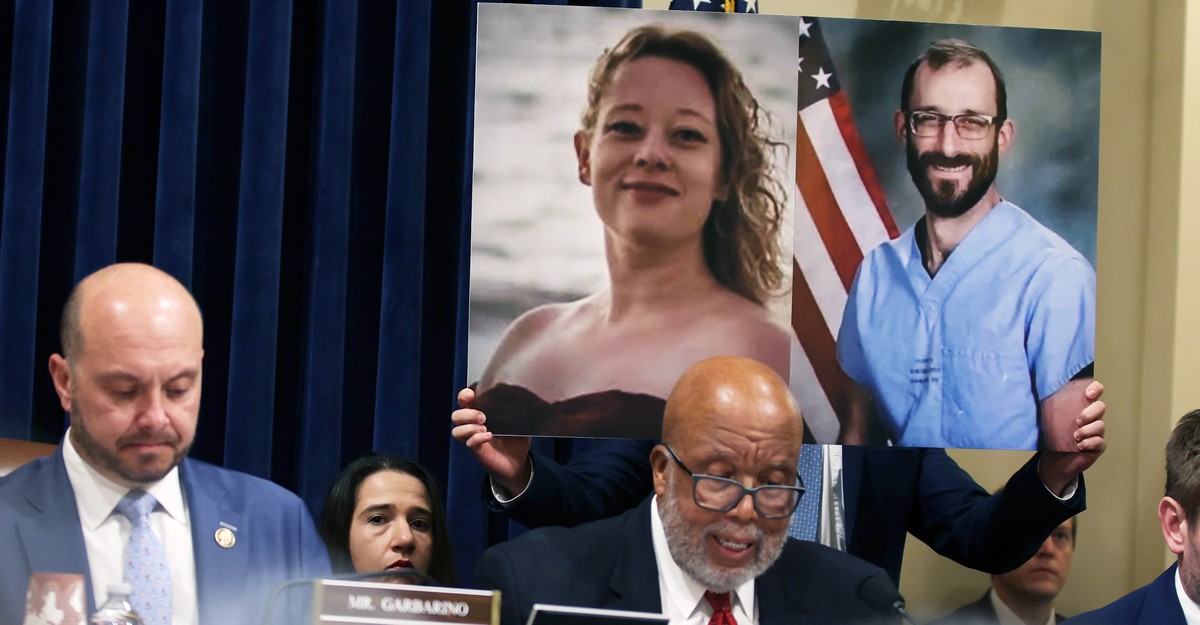
Nearly six months after federal officers shot and killed Renee Good and Alex Pretti in Minneapolis, the Trump administration has provided no arrests, no serious investigation, and a whole lot of stonewalling. Vice President Vance declared the day after Good's death that the agent who shot her would face no charges because "absolute immunity" - a phrase that sounds made up but apparently isn't. Stephen Miller then helpfully reminded all ICE officers that they have "federal immunity in the conduct of your duties," which agents apparently interpreted as a license to keep shooting: the next day an ICE agent wounded a Venezuelan immigrant, and a week later Pretti was killed outside a doughnut shop.
Typically, after a contentious police killing, the Justice Department launches a civil-rights probe. After George Floyd's murder, DOJ worked alongside Minnesota law enforcement. This time, DOJ locked state investigators out of the crime scene, confiscated evidence (including Good's maroon Honda Pilot with the bullet hole still in the windshield), and refused to open a criminal investigation into the shooter. Instead, DOJ looked into investigating Good's widow. Six federal prosecutors in Minnesota resigned in protest. An FBI agent did too.
When ICE agent Christian Castro shot Julio Cesar Sosa-Celis, state investigators were again frozen out - then federal prosecutors charged Sosa-Celis instead, only to drop the case after discovering Castro apparently lied about being attacked with a shovel. For Pretti's killing, federal officials simply blocked state law enforcement from the scene entirely. The state still doesn't officially know who shot him.
Under pressure, DHS opened internal investigations and DOJ announced a civil-rights probe into Pretti's death - but a senior DOJ official called it a "look under the hood" rather than a full investigation. The lawyers assigned were new hires with no experience in law-enforcement accountability; one previously asked for a single day in prison for a cop involved in Breonna Taylor's death. Meanwhile, ICE's internal watchdog started sending threatening letters to people who expressed anger online.
With the feds doing nothing, Minnesota state and local authorities are suing for access to evidence. Becca Good filed a lawsuit to get her wife's car back. In a separate case, a judge ordered the feds to hand over materials about the shooter's past conduct. The Minnesota Bureau of Criminal Apprehension is poring over public videos of both shootings. Hennepin County prosecutors might file charges against the officers - if they can prove crimes without federal cooperation.
They already charged Castro with assault for lying about the shovel attack. That case is testing Vance and Miller's claim of total immunity - which, it turns out, isn't actually true. States have prosecuted federal officials before, like after the Ruby Ridge standoff. But that case took a decade and ended with charges dropped. Castro is currently in a Texas jail, waiting for Governor Greg Abbott to approve extradition. Once he gets to Minnesota, he may try to move his case to federal court. The legal process is so confusing that the Hennepin County Attorney's Office released a YouTube video explaining it. At one point, an earnest attorney says, "If the agent were convicted in federal court, there would be no pardon by the president, because the conviction would be under state law." People ask that frequently, apparently.
The Good Times
News in your inbox.
One sardonic roundup, delivered on your schedule. Free. Unsubscribe whenever your tolerance for wit runs out.
Already subscribed but we never reach your inbox? Check your spam folder and hit 'Not spam' (or 'Remove from spam') to bust us out of junk-mail purgatory. You'll be helping everyone else too.
Don't open any of our emails for a month and you'll be automatically removed from the mailing list.
Rewrite Article
Select parts to regenerate with a fresh AI pass. Translations will be updated automatically.
Generate AI Image
Creates a sardonic version of the article image using OpenAI.