
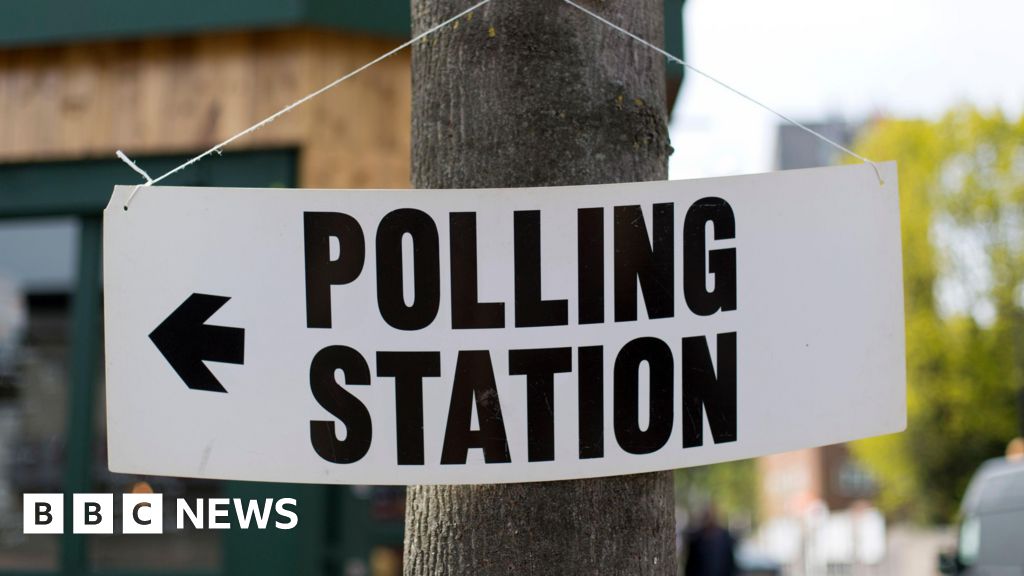
Political parties and their candidates have been making their final push for votes on the last full day of campaigning ahead of elections across England, Scotland and Wales. Because nothing says 'democracy in action' like a flurry of last-minute promises and photo ops.
Voters in Scotland and Wales will choose who should run their national governments, while seats on dozens of councils and mayors are up for election in England. The polls will be open between 0700 BST and 2200 BST on Thursday 7 May, with results expected to follow on Friday and over the weekend. Mark your calendars, clear your schedules, and prepare for the political equivalent of a slow-motion car crash.
The polls will be the biggest test of public opinion since Labour won the general election in 2024. Opinion polling suggests the results could reflect the increasing fragmentation of British politics, with voters' support spread across a wider range of parties in England, Scotland and Wales. Because nothing says 'unity' like a dozen parties all claiming to be the true voice of the people.
In Scotland, the Scottish National Party is looking to stay in government by winning its fifth devolved election in a row, keeping Labour and Reform UK at bay. Meanwhile, Reform UK and Plaid Cymru are vying to be the biggest party in the Senedd, in Wales, where Labour's continuous streak in power since devolution in 1999 is under threat. Labour also has a lot to lose in England, where the party has a majority on or leads many of the councils up for election, and could face significant losses to Reform UK and the Green Party candidates. The results will determine who runs vital public services such as schools, social care, rubbish collection, transport. You know, the boring stuff that actually affects people's lives.
But they could also indicate how voters feel about the performance of the Labour government and Prime Minister Sir Keir Starmer, whose leadership has come under pressure in recent months. There has been speculation of a challenge to his leadership should the results prove to be disastrous for the party. Because nothing says 'stable government' like a potential knife fight in the backbenches.
Britain's party leaders were out and about attempting to woo voters on the final full day of campaigning on Wednesday. Writing in Wednesday's Mirror newspaper, the prime minister said there was 'a clear choice' for voters in these elections. Sir Keir wrote: 'Unity or division. Progress versus the politics of anger. The right plan for our country up against easy answers that will lead us nowhere.' Because voters love being told they have a binary choice between good and evil, obviously.
Speaking to broadcasters in London, Conservative leader Kemi Badenoch said the Tories were the 'only serious party'. 'Whether it's our plan to get Britain working, whether it's our cheap power plan - drilling for oil and gas in the North Sea, lowering taxes, abolishing stamp duty, abolishing business rates for small businesses, we have a plan no one else does,' Badenoch said. Because nothing says 'serious' like promising to drill for fossil fuels in a climate crisis.
Liberal Democrat leader Sir Ed Davey claimed his party was the only force capable of stopping the rise of Reform UK in communities across England. On the campaign trail in Surrey, Sir Ed said: 'While Reform offers nothing but Trump-style division and empty slogans, Liberal Democrat local champions are focused on the issues that actually matter: fixing the church roof, ending our GP surgery crisis, cleaning up the sewage in our rivers, and tackling the cost of living.' Because who doesn't love a good church roof during an election?
Green leader Zack Polanski said his party was offering 'hope and a plan'. In a post on X, he said he was proud to call for wealth taxes, put forward a plan to lower bills and speak out against 'genocide'. Because subtlety is for people who don't have a platform.
Reform UK leader Nigel Farage repeated his party's campaign slogan: 'Vote Reform Get Starmer out'. 'If you want real change in national government and in the approach to local government, we are the change option,' Farage said. Because nothing says 'change' like a man who's been in politics for decades.
Scottish First Minister John Swinney said he wanted people in Scotland 'to vote positively for an SNP government that will always be on Scotland's side'. He said: 'A government that will continue to deliver improvements in our National Health Service, deliver practical support to members of the public on the cost-of-living challenges they face and give Scotland a choice over our own future through a referendum on independence.' Because nothing says 'practical support' like a referendum that may or may not happen.
Plaid Cymru leader Rhun ap Iorwerth told his supporters the Welsh election was 'going down to the wire'. In a video message posted to X, he described Plaid as 'the only party rooted in Wales, with a plan for Wales, focused only on Wales, accountable only to the people of Wales, and the only party that can beat Reform'. Because if you say 'Wales' enough times, it becomes a winning strategy.