Astronomers Finally Explain the 2-Million-Light-Year Musical Symbol, and It's a Black Hole
A 2-million-light-year radio structure shaped like a treble clef finally gets an explanation: a supermassive black hole and a galactic collision, because the universe enjoys a good remix.
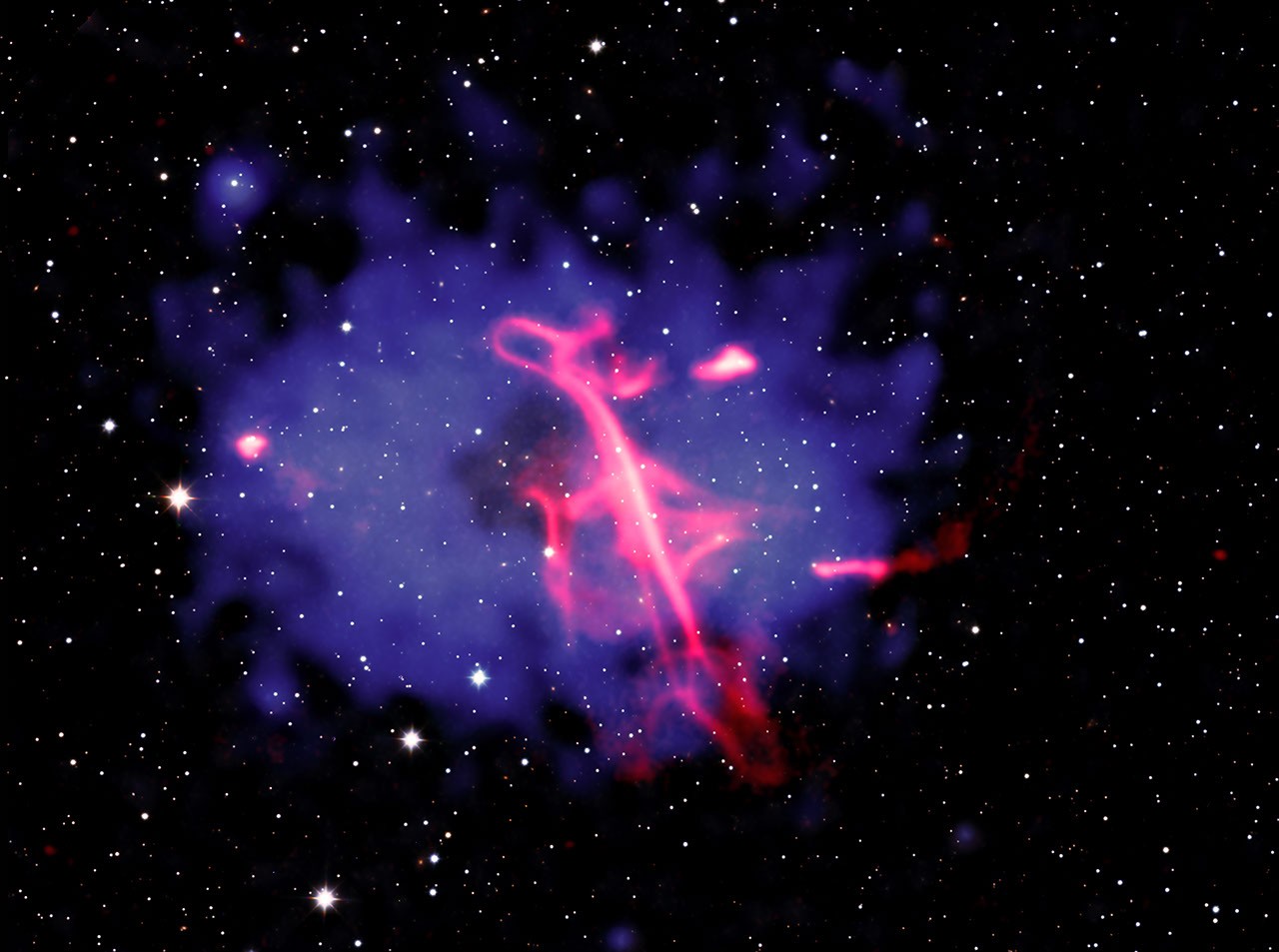
NASA's Astronomy Picture of the Day has unveiled a cosmic object that looks like a treble clef, spans over 2 million light-years, and has been quietly confusing astronomers since 2004. Meet VLSS J0318.9+5755 - dubbed Treble Clef - a radio structure so large and so oddly shaped that its visible light is hidden behind our own Milky Way Galaxy. Because of course it is.
When examined in 2004, the nature of Treble Clef remained unknown. That's two decades of scientists looking at a giant musical symbol in the sky and shrugging. Recent observations by the Chandra X-ray Observatory and eROSITA, however, have finally produced a hypothesis: the Treble Clef's central cloud of charged particles was originally expelled by a supermassive black hole at the center of a galaxy. A black hole, in other words, essentially cleared its throat and spat out a cloud of particles large enough to be measured in millions of light-years.
But the story doesn't end there. After the radio emission from those particles faded, they may have been reinvigorated by a shock wave from the collision of two clusters of galaxies. So the Treble Clef is not just a black hole's exhaust - it's a black hole's exhaust that got a second wind courtesy of two galaxy clusters slamming into each other. The featured composite image shows radio emission in red, while the recently discovered X-rays are shown in blue, which is a helpful color-coding scheme for anyone who enjoys watching the universe play its own sheet music.
Unusual objects like Treble Clef give humanity unexpected clues about how whole clusters of galaxies interact as well as the general evolution of our universe. In short, a 2-million-light-year musical note is teaching us about the cosmos, which is either profound or just the universe showing off. Tomorrow's picture: backwards rainbow. Because naturally.
The Good Times
News in your inbox.
One sardonic roundup, delivered on your schedule. Free. Unsubscribe whenever your tolerance for wit runs out.
Already subscribed but we never reach your inbox? Check your spam folder and hit 'Not spam' (or 'Remove from spam') to bust us out of junk-mail purgatory. You'll be helping everyone else too.
Don't open any of our emails for a month and you'll be automatically removed from the mailing list.
Rewrite Article
Select parts to regenerate with a fresh AI pass. Translations will be updated automatically.
Generate AI Image
Creates a sardonic version of the article image using OpenAI.