Tiny Silica Particles Wipe Out Aggressive Prostate Cancer in Mice, Scientists Only Mildly Surprised
Cornell researchers discover that tiny silica particles can kill prostate cancer cells and wake up the immune system, making mice very happy and giving immunotherapy a run for its money.
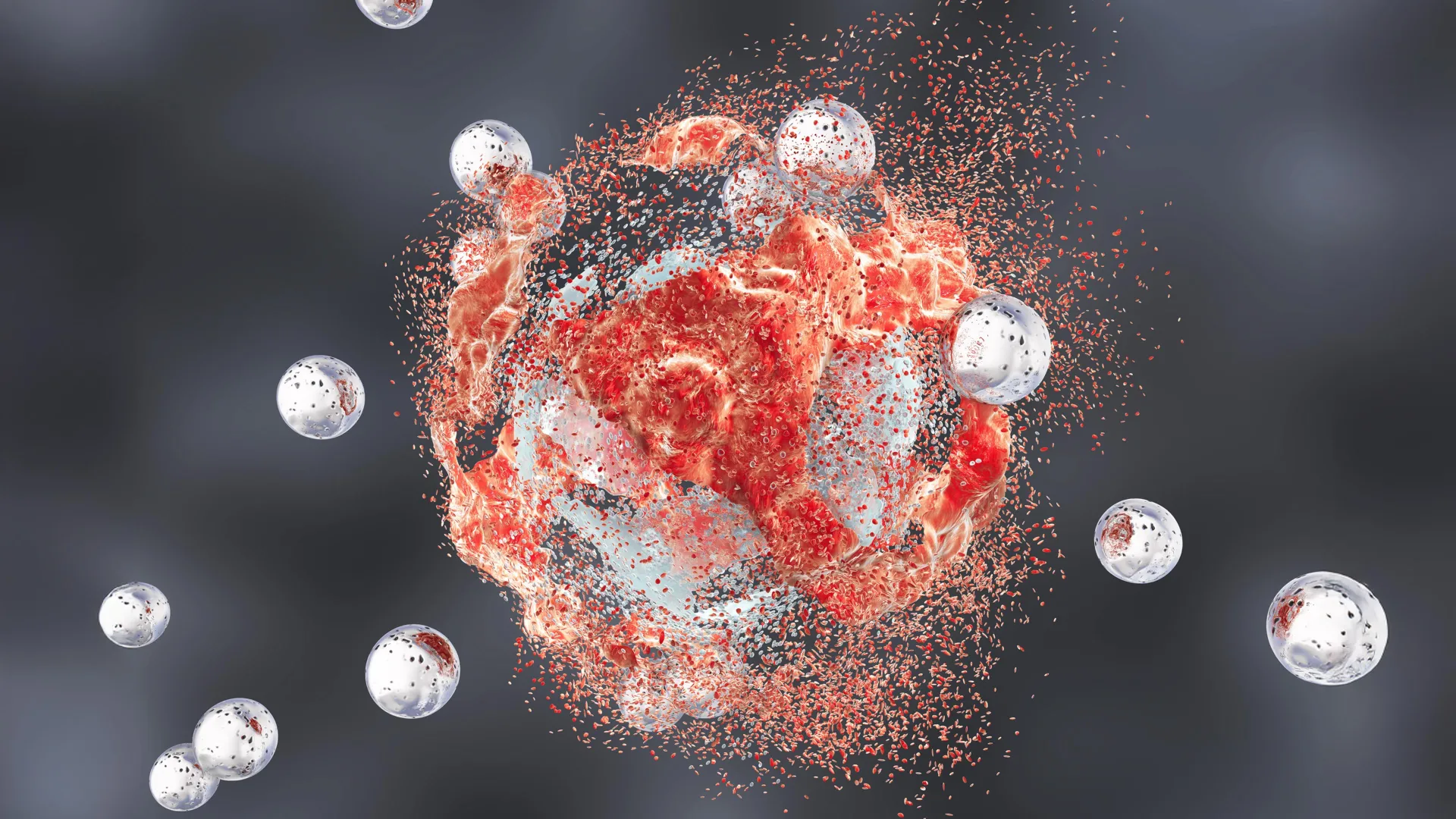
Researchers at Weill Cornell Medicine and the Cornell Duffield College of Engineering have developed tiny silica nanoparticles that can directly destroy prostate tumors while also awakening the body's immune system to fight cancer, according to a new preclinical study. In mouse models of aggressive prostate cancer, the targeted particles produced several complete tumor remissions, offering encouraging evidence that the approach could eventually advance to human clinical trials.
The nanoparticles, known as ultrasmall fluorescent core shell silica nanoparticles or Cornell Prime dots (C' dots), were originally created to improve medical imaging. They have already advanced into late stage clinical trials for image guided surgery and other therapeutic uses. More recently, researchers discovered that the particles themselves can selectively damage cancer cells while leaving healthy cells largely unharmed.
In the study published June 15 in Cancer Research, the team tested the nanoparticles in mice with aggressive prostate cancer. They found that the particles made tumor cells highly vulnerable to a form of self destruction called ferroptosis while also transforming the tumor environment from an immune resistant "cold" state into an immune active "hot" state. This shift could significantly improve the effectiveness of existing immunotherapies.
"We're very encouraged by these results; a treatment that directly induces tumor-cell death while transforming the immune microenvironment, as this does, would represent a new clinical paradigm," said senior author Dr. Michelle Bradbury, the Endowed Professor of Imaging Research in Radiology and director of the Molecular Imaging Innovations Institute at Weill Cornell Medicine.
The most dramatic findings came from survival studies. On their own, both the C' dots and immunotherapy modestly improved survival compared with no treatment. However, combining the nanoparticles with an immune checkpoint blockade therapy produced complete or nearly complete remissions and indefinite survival in four out of ten mice. Adding a third treatment called CSF-1R blockade increased the number of complete remissions to five out of ten mice.
"We think there's nothing else out there that has such a strong and durable tumor growth suppressing effect," Dr. Bradbury said.
The research team is continuing to investigate these ultrasmall core shell silica particles as a potential new class of cancer therapies. Their long term goal is to evaluate the safety and effectiveness of the treatment in human clinical trials.
The Good Times
News in your inbox.
One sardonic roundup, delivered on your schedule. Free. Unsubscribe whenever your tolerance for wit runs out.
Already subscribed but we never reach your inbox? Check your spam folder and hit 'Not spam' (or 'Remove from spam') to bust us out of junk-mail purgatory. You'll be helping everyone else too.
Don't open any of our emails for a month and you'll be automatically removed from the mailing list.
Rewrite Article
Select parts to regenerate with a fresh AI pass. Translations will be updated automatically.
Generate AI Image
Creates a sardonic version of the article image using OpenAI.