Scientists Find a Bone-Building Switch, Because Osteoporosis Needed a Better Nemesis
Leipzig researchers find that activating the GPR133 receptor with compound AP503 boosts bone strength in mice, offering a potential new osteoporosis treatment - and possibly a muscle bonus.
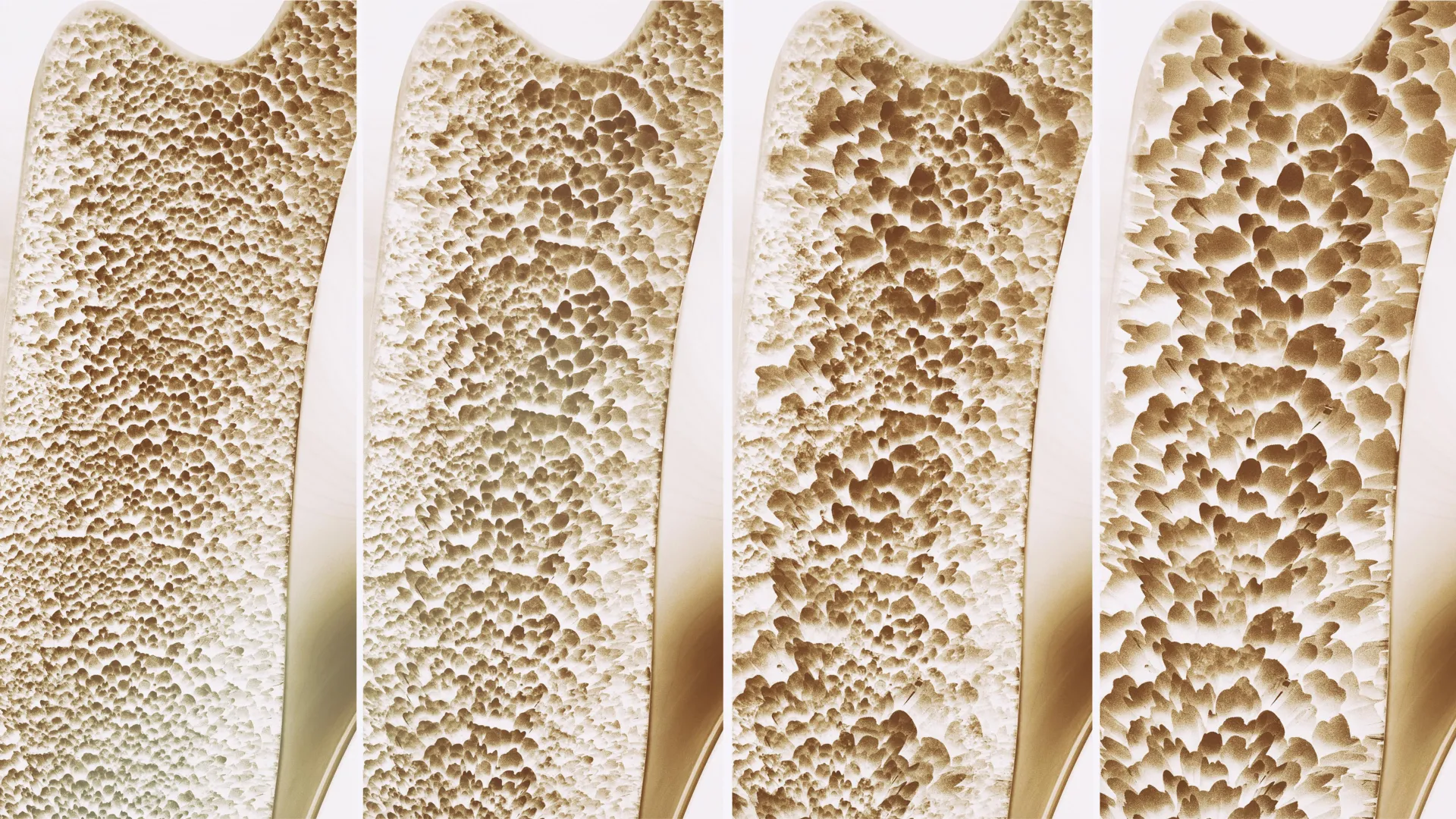
Osteoporosis, the bone-weakening condition that makes falls feel like personal betrayals, affects millions and remains a stubborn challenge for doctors seeking long-term safe treatments. In Germany alone, about six million people - most of them women - are navigating life with bones that have apparently given up on their structural integrity.
Existing therapies have limitations and side effects, so researchers are hunting for new biological targets. Scientists at Leipzig University have identified one such target: GPR133, a receptor that appears to play a surprisingly important role in keeping bones strong. Because nothing says 'breakthrough' like a receptor you've never heard of.
GPR133 belongs to a group known as adhesion G protein-coupled receptors, which sit on cell surfaces and help cells respond to their surroundings. While this family is still not fully understood, the new findings suggest GPR133 is deeply involved in bone building and maintenance. It's like discovering that the quiet neighbor has been running the neighborhood watch all along.
'If this receptor is impaired by genetic changes, mice show signs of loss of bone density at an early age - similar to osteoporosis in humans,' says Professor Ines Liebscher of the Rudolf Schönheimer Institute of Biochemistry. 'Using the substance AP503, which was only recently identified via a computer-assisted screen as a stimulator of GPR133, we were able to significantly increase bone strength in both healthy and osteoporotic mice.' So, mice with osteoporosis got a bone boost, and the researchers got a potential new therapy. Win-win.
The results point to GPR133 as a valuable target for future treatments. Stimulating the receptor with AP503 increased bone strength in healthy mice and in mice with osteoporosis-like bone loss. Inside bone tissue, GPR133 responds to physical forces and interactions between bone cells, and when activated, it tweaks the balance between bone-building osteoblasts and bone-resorbing osteoclasts. Activation encourages osteoblasts while reducing osteoclast activity, shifting the balance toward stronger, more durable bone - essentially telling the demolition crew to take a break.
AP503 appears to mimic the natural activation of GPR133, raising the possibility that it could eventually be used to strengthen bones or even restore weakened ones. One potential application is osteoporosis associated with menopause, when declining hormone levels accelerate bone loss in women - because menopause wasn't already enough of a party.
The findings may have broader implications, as AP503 could affect more than the skeleton. In an earlier study, the Leipzig team found that AP503 also strengthens skeletal muscle. 'The newly demonstrated parallel strengthening of bone once again highlights the great potential this receptor holds for medical applications in an aging population,' says Dr. Juliane Lehmann, lead author. A treatment that improves both bone and muscle strength could be a game-changer for older adults, who often experience declines in both tissues simultaneously. Stronger muscles support mobility, and stronger bones reduce fracture vulnerability - a one-two punch against aging's physical toll.
The Leipzig team is pursuing follow-up projects to understand GPR133 more fully and investigate whether AP503 could treat other diseases. This research builds on over a decade of work at Leipzig University, which has made adhesion G protein-coupled receptors a priority through Collaborative Research Center 1423, 'Structural Dynamics of GPCR Activation and Signaling.' The program focuses on how these receptors change shape and transmit signals, and Leipzig is internationally recognized as a leading center in this niche field.
Materials provided by Universität Leipzig. Note: Content may be edited for style and length.
(Also, because the universe loves a good teaser: bats may hold secrets to fighting aging and cancer, a bacterial molecule disarms a dangerous fungus, blood pressure drugs might be missing heart-protective benefits, and pomegranates could unlock a new heart failure treatment. Stay tuned, science fans.)
The Good Times
News in your inbox.
One sardonic roundup, delivered on your schedule. Free. Unsubscribe whenever your tolerance for wit runs out.
Already subscribed but we never reach your inbox? Check your spam folder and hit 'Not spam' (or 'Remove from spam') to bust us out of junk-mail purgatory. You'll be helping everyone else too.
Don't open any of our emails for a month and you'll be automatically removed from the mailing list.
Rewrite Article
Select parts to regenerate with a fresh AI pass. Translations will be updated automatically.
Generate AI Image
Creates a sardonic version of the article image using OpenAI.