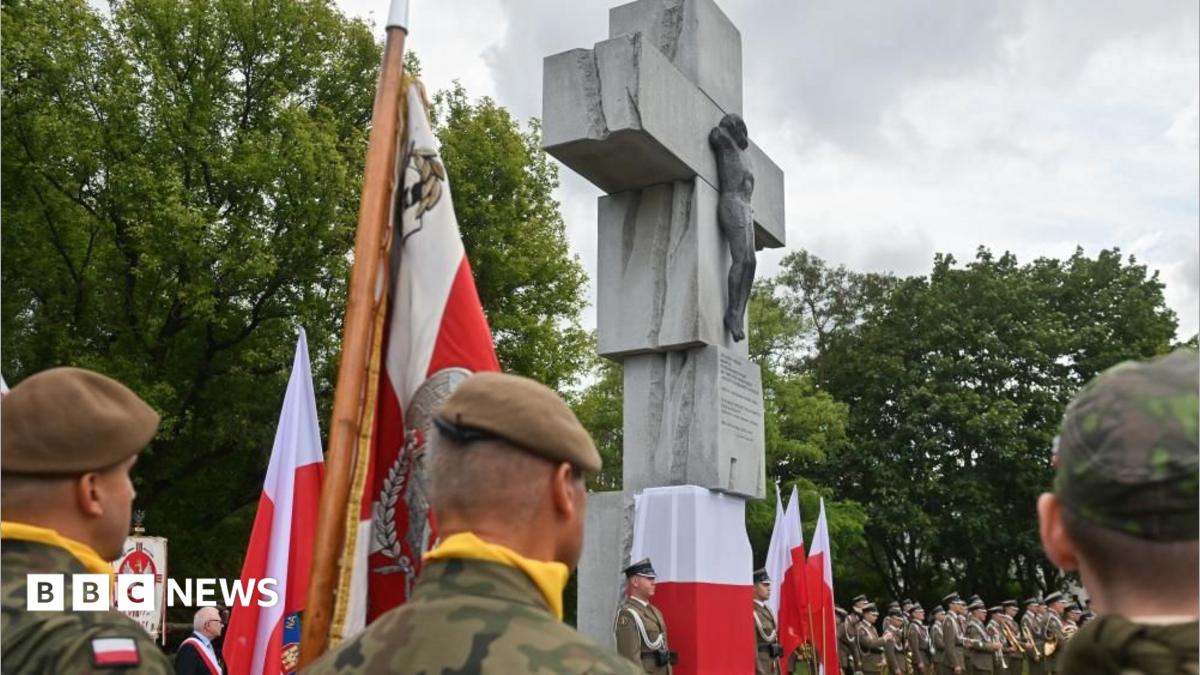
Poland Plans Memorial for WW2 'Genocide' by Ukrainian Nationalists, Because Nothing Says 'Better Future' Like Reopening Old Wounds
Poland announces memorial for WW2 massacre by Ukrainian nationalists, while urging Ukraine to 'embrace the truth' for EU membership - because historical accuracy is the new entry requirement.
Polish Prime Minister Donald Tusk has announced the creation of a national memorial to victims of what Poland calls a 'genocide committed by Ukrainian nationalists' during World War Two. Speaking on the anniversary of the Volhynia 'massacre' - a Polish territory in German-occupied Poland now part of Ukraine, known as Volyn - Tusk recalled the killing of some 100,000 ethnic Poles by the Ukrainian Insurgent Army (UPA) in 1943-45. Many in Ukraine view the UPA as heroes who fought for independence from the Soviet Union, Nazi Germany, and Polish authorities, creating a historical disagreement that has festered for decades. Up to 10,000 Ukrainian civilians are also estimated to have been killed in the events.
Tusk, with an apparent penchant for poetic contradictions, declared: 'Truth is our duty toward the victims, but also a way to overcome a painful past for the sake of a better future. Memory cannot be the servant of hatred. The answer to nationalism cannot be more nationalism.' He urged Ukraine to 'embrace this truth' if it wants to join the European Union - a not-so-subtle diplomatic nudge.
Tensions have escalated recently: last month, Ukrainian President Volodymyr Zelensky was stripped of Poland's highest state honor after naming a Ukrainian military unit after the UPA. Polish President Karol Nawrocki insisted the row wouldn't affect Poland's support for Ukraine against Russia's full-scale invasion launched in 2022. Three former Ukrainian presidents returned their White Eagle awards in solidarity with Zelensky, because nothing says solidarity like returning medals.
In his Saturday video address, Zelensky noted that representatives from both countries held joint prayers for the victims. 'Ukraine is doing its part to honestly establish the facts about those killed in those years,' he said, before pivoting to the present: 'We must not forget that now... Ukraine and Poland have one common threat, and this is a mortal threat to our independence, to our states, to every city, to every village, and this threat is called Russia.' Because nothing unites like a common enemy - especially one that's currently invading you.
The Good Times
News in your inbox.
One sardonic roundup, delivered on your schedule. Free. Unsubscribe whenever your tolerance for wit runs out.
Already subscribed but we never reach your inbox? Check your spam folder and hit 'Not spam' (or 'Remove from spam') to bust us out of junk-mail purgatory. You'll be helping everyone else too.
Don't open any of our emails for a month and you'll be automatically removed from the mailing list.
Rewrite Article
Select parts to regenerate with a fresh AI pass. Translations will be updated automatically.
Generate AI Image
Creates a sardonic version of the article image using OpenAI.