Researchers at the Department of Energy's Oak Ridge National Laboratory (ORNL), in cahoots with The Ohio State University and Amphenol Corporation, have discovered that applying an electric field to a ceramic material can make heat flow nearly three times more efficiently in one direction. The findings, published in PRX Energy, challenge everything we thought we knew about heat transport - or at least, they challenge some long-held assumptions.
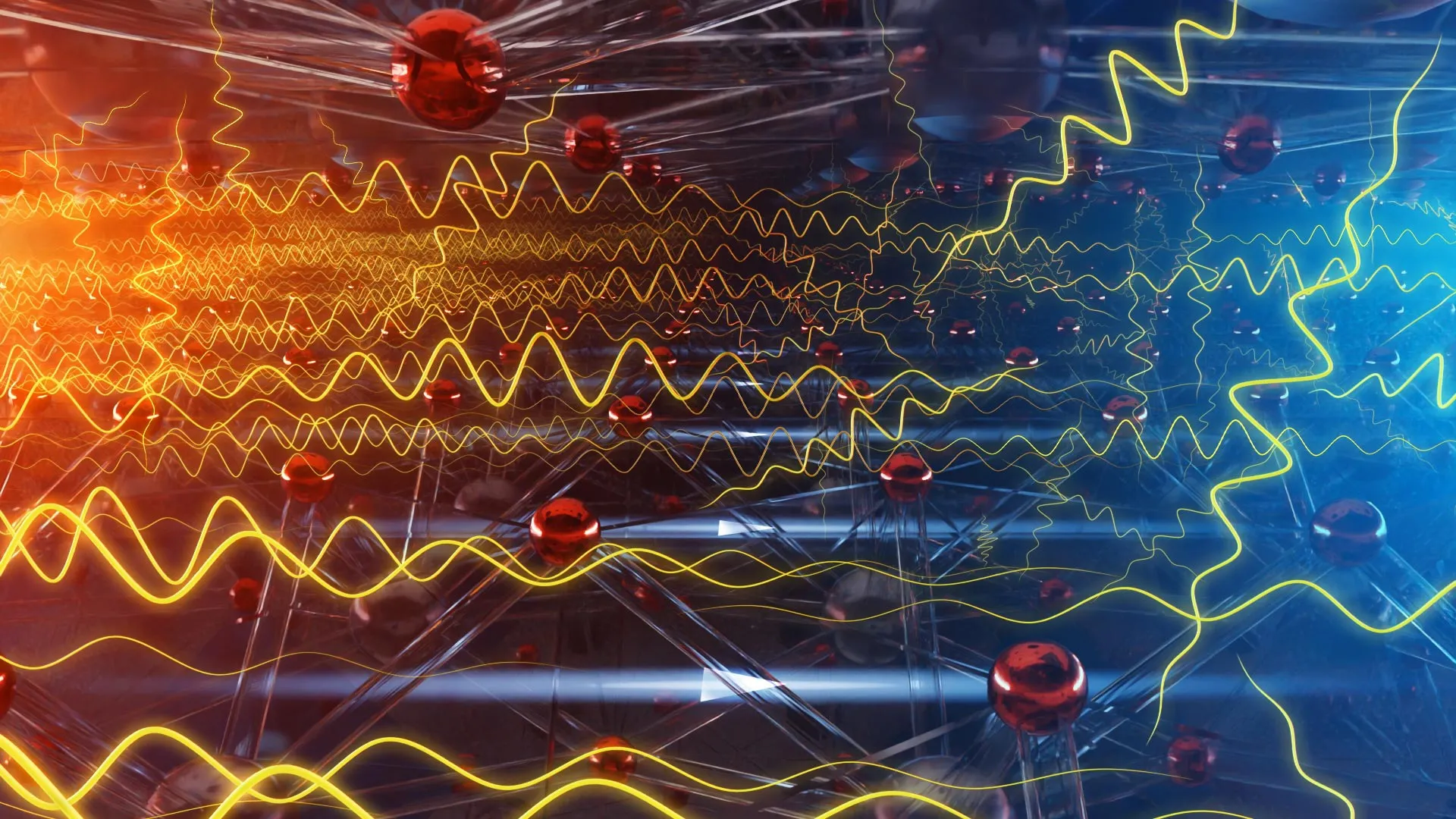
The secret lies in phonons, those tiny atomic vibrations that carry heat like a very small, very crowded subway. When an electric field is applied, the phonons that vibrate in the same direction as the field get to live longer and travel farther, while the ones vibrating sideways just sort of give up. The result? Heat zips along the field direction almost three times faster than it does elsewhere.
“Being able to control both how fast and in what manner heat flows could lead to devices that manage thermal energy far more efficiently,” said Puspa Upreti, an ORNL postdoctoral research associate, in a tone that suggests she's already dreaming of better cooling systems.
The team used a class of ceramics called relaxor-based ferroelectrics, which are basically the cool kids of the material world - when exposed to an electric field, their tiny electric charges line up and stop scattering the phonons. To see what was actually happening, they deployed advanced inelastic neutron scattering at the Spallation Neutron Source, because when you want to watch atoms vibrate, you bring out the big neutron guns.
“Earlier work on bulk ferroelectric materials achieved modest improvements in thermal conductivity of 5 percent to 10 percent, while the new measurements reveal an enhancement close to 300 percent,” said ORNL senior researcher Michael Manley, who led the experiments. That's a threefold increase, which surprised even the researchers, who were apparently expecting something more like a polite nudge.
The late Professor Joseph Heremans of Ohio State, who designed the thermal conductivity experiments, would have been proud. His doctoral candidate Delaram Rashadfar noted, “Professor Heremans always stressed the importance of trusting the data first and letting the theory follow.” Sage advice, especially when the data says, “Hey, we just tripled heat flow.”
This breakthrough could lead to solid-state cooling systems, heat-to-electricity converters, and better chip-based electronics - basically anything that gets too hot and needs to calm down. The research was supported by the DOE Basic Energy Sciences program, because apparently even the government wants its electronics to stop overheating.
The Good Times
News in your inbox.
One sardonic roundup, delivered on your schedule. Free. Unsubscribe whenever your tolerance for wit runs out.
Already subscribed but we never reach your inbox? Check your spam folder and hit 'Not spam' (or 'Remove from spam') to bust us out of junk-mail purgatory. You'll be helping everyone else too.
Don't open any of our emails for a month and you'll be automatically removed from the mailing list.
Rewrite Article
Select parts to regenerate with a fresh AI pass. Translations will be updated automatically.
Generate AI Image
Creates a sardonic version of the article image using OpenAI.