Nepal Flood Death Toll Hits 903, Because Nature Had to One-Up the 2015 Earthquake
Nepal's flood death toll hits 903, making it the deadliest disaster since 2015, and the UN is doing its best to help while the roads - and the climate - fall apart.
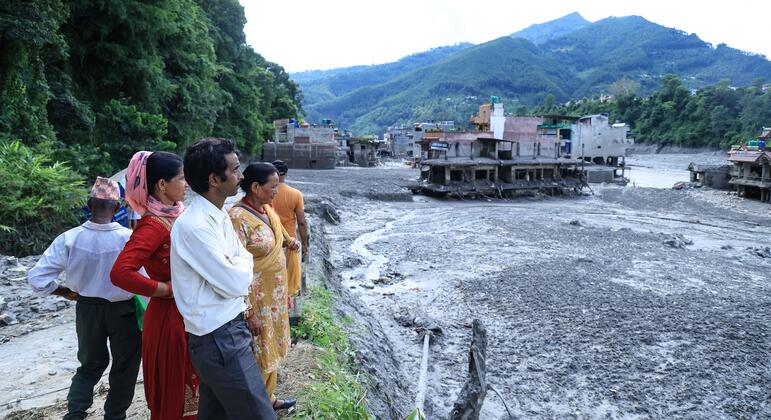
Nepal’s catastrophic floods have officially become the country’s deadliest natural disaster since the 2015 earthquake, with the confirmed death toll surging to 903 and more than 4,200 people still missing, according to UN Spokesperson Stéphane Dujarric. The disaster, triggered by a glacier collapse and landslide on Nepal’s border with China on Wednesday, has left rescue crews and humanitarian workers battling blocked highways to reach the hardest-hit areas - because nothing says 'relief' like a road that’s also a river.
Access remains the single biggest obstacle to the response, according to the UN emergency relief agency, OCHA. Roads are passable only as far as Nuwakot, and some sections of the highway linking Kathmandu to the worst-hit areas are completely blocked. Power has been restored in some areas, which is nice, but it’s a bit like fixing the Wi-Fi while the house is on fire.
Nepal’s Government has deployed more than 20,000 search and rescue personnel and declared a flood emergency in 15 municipalities. More than 10,000 people have been rescued so far, including 252 foreign nationals. The government is clearly trying, but when you’re rescuing people from rooftops, the paperwork tends to pile up.
UN agencies have begun to assess long-term needs, and the numbers are as grim as the scenery. More than 22,000 children need protection, and about 2,600 children under five are expected to require treatment for severe wasting - or acute malnutrition, because 'wasting' sounds far too casual. Around 10,500 pregnant and breastfeeding women need nutrition assistance. Some 19 schools have been damaged, nine completely destroyed, and eight more are being used to shelter displaced families. More than 10,000 school-age children require psychosocial support, which is a fancy way of saying they’ve seen things no kid should see.
Most urgently, preliminary reports indicate that 107 children may be separated from their parents or caregivers, leaving first responders to prioritise family tracing and reunification. Because nothing says 'aftermath' like a game of hide-and-seek where nobody’s laughing.
The World Health Organization’s spokesperson, Tarik Jašarević, warned that overcrowding and disruption to water, sanitation, and health services raise the risk of infectious disease outbreaks. Because why stop at drowning when you can add cholera to the mix?
Kamal Kishore, head of the UN Office for Disaster Risk Reduction (UNDRR), highlighted the unprecedented nature of the glacier collapse and warned last week that 'we are still coming to grips with the extent of the damage.' Translation: we have no idea what we’re dealing with yet, but it’s bad.
The disaster has also affected the Tibet side of the border, where Chinese authorities report at least 16 dead and at least 546 missing. Because disasters are equal-opportunity.
UN climate chief Simon Stiell said the disaster served as a reminder of how fragile mountain environments have become, noting that scientists and local communities have warned for years about the risks of climate change in the area. 'We also know a warming climate, driven by humanity burning colossal amounts of coal, oil and gas, is making tragedies like this one, and so many others around the world, much more likely, frequent and severe, with vulnerable communities often hardest hit,' he said. In other words, we’ve been warned, we didn’t listen, and now the mountains are literally falling apart.
Here’s a look at the ongoing response from UN agencies: it’s a bit like trying to bail out the ocean with a teacup, but with more acronyms.
The Good Times
News in your inbox.
One sardonic roundup, delivered on your schedule. Free. Unsubscribe whenever your tolerance for wit runs out.
Already subscribed but we never reach your inbox? Check your spam folder and hit 'Not spam' (or 'Remove from spam') to bust us out of junk-mail purgatory. You'll be helping everyone else too.
Don't open any of our emails for a month and you'll be automatically removed from the mailing list.
Rewrite Article
Select parts to regenerate with a fresh AI pass. Translations will be updated automatically.
Generate AI Image
Creates a sardonic version of the article image using OpenAI.