IS Claims Responsibility for Attack That Turned a Football Pitch Into a Shooting Gallery
Islamic State claims responsibility for a deadly attack on a Nigerian football pitch that killed 29, burned homes and churches, and left a community wondering if any public space is safe.
In what can only be described as a grim reminder that even recreational sports aren't safe from extremism, at least 29 people were killed when gunmen attacked a community in Nigeria's north-eastern Adamawa state. Local officials confirmed the death toll, and the Islamic State group (IS) has claimed responsibility, though, in a stunning lack of transparency, they didn't bother to specify their motive.
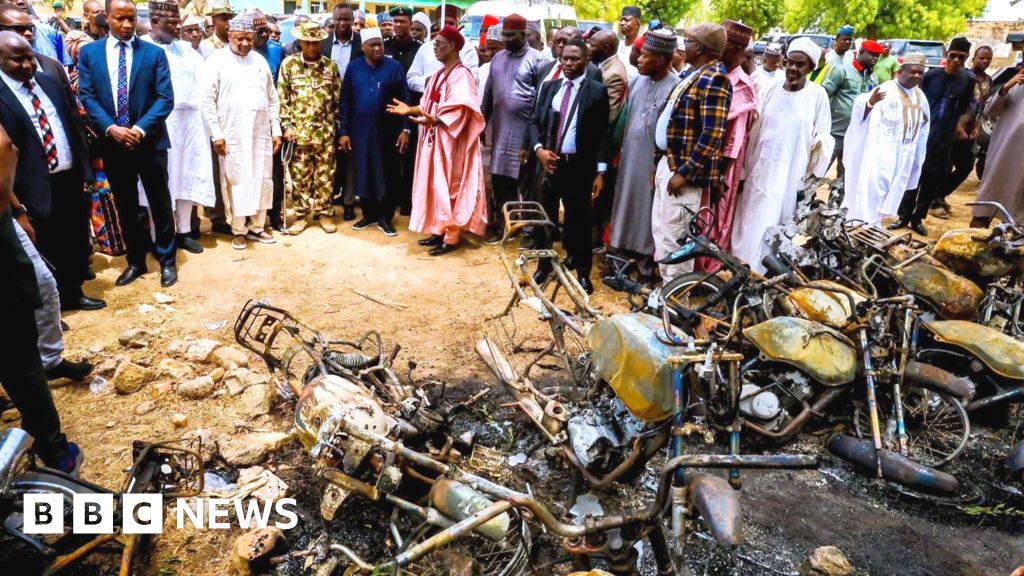
Authorities and local residents say the militants raided a football pitch where people had gathered, opened fire at random, and then, apparently not satisfied with the carnage, burned houses, places of worship, and motorcycles. State governor Ahmadu Umaru Fintiri toured the scene and described the attack as an "affront to our humanity," which is diplomatic speak for "this is absolutely horrific."
The governor's media office reported that the attack lasted several hours in the Guyaku community in the Gombi local government area. BBC Verify geolocated photos from Fintiri's visit to Sangere Mapindi, a village 4km (2.5 miles) south-east of Guyakyu. His spokesperson noted on Facebook that the "atmosphere in the community remains tense, with grief and fear evident," adding that many families have abandoned their homes over concerns of further attacks. Because nothing says 'security' like fleeing your own house.
Fintiri posted on X that security operations are being intensified to restore peace, which is a noble goal, but the region has been anything but peaceful. Social media videos analyzed by BBC Verify show the aftermath: officials inspecting damage to the village's primary school and burned-out motorbikes. Another video from Nigerian broadcaster TVC News reveals heavy damage inside Sangere Mapidni's church, including burn marks, an overturned drum kit, and an abandoned keyboard. The church's pastor reported that attackers followed people fleeing gunfire into the village, burning homes and the church, and pleaded: "We are pleading, on behalf of the people here, we need security."
The restive region bordering Cameroon has seen repeated attacks by local criminal gangs and IS affiliates. Earlier this month, almost 400 people were sentenced in mass trials for links with militant Islamist groups Boko Haram and its rival splinter group, the Islamic State West Africa Province (Iswap). Since 2009, Boko Haram's insurgency in Nigeria's north-east has killed tens of thousands and displaced over two million people, according to aid groups. The jihadist conflict has also spread to Niger, Chad, and Cameroon.
Nigeria's government is under intense pressure to curb rising insecurity in Africa's most-populous nation, which faces international scrutiny ahead of general elections in January. Late last year, the US launched "powerful and deadly" strikes against IS-linked militants in north-western Nigeria, because sometimes it takes a global superpower to remind people that football matches shouldn't be war zones.
The Good Times
News in your inbox.
One sardonic roundup, delivered on your schedule. Free. Unsubscribe whenever your tolerance for wit runs out.
Already subscribed but we never reach your inbox? Check your spam folder and hit 'Not spam' (or 'Remove from spam') to bust us out of junk-mail purgatory. You'll be helping everyone else too.
Don't open any of our emails for a month and you'll be automatically removed from the mailing list.
Rewrite Article
Select parts to regenerate with a fresh AI pass. Translations will be updated automatically.
Generate AI Image
Creates a sardonic version of the article image using OpenAI.