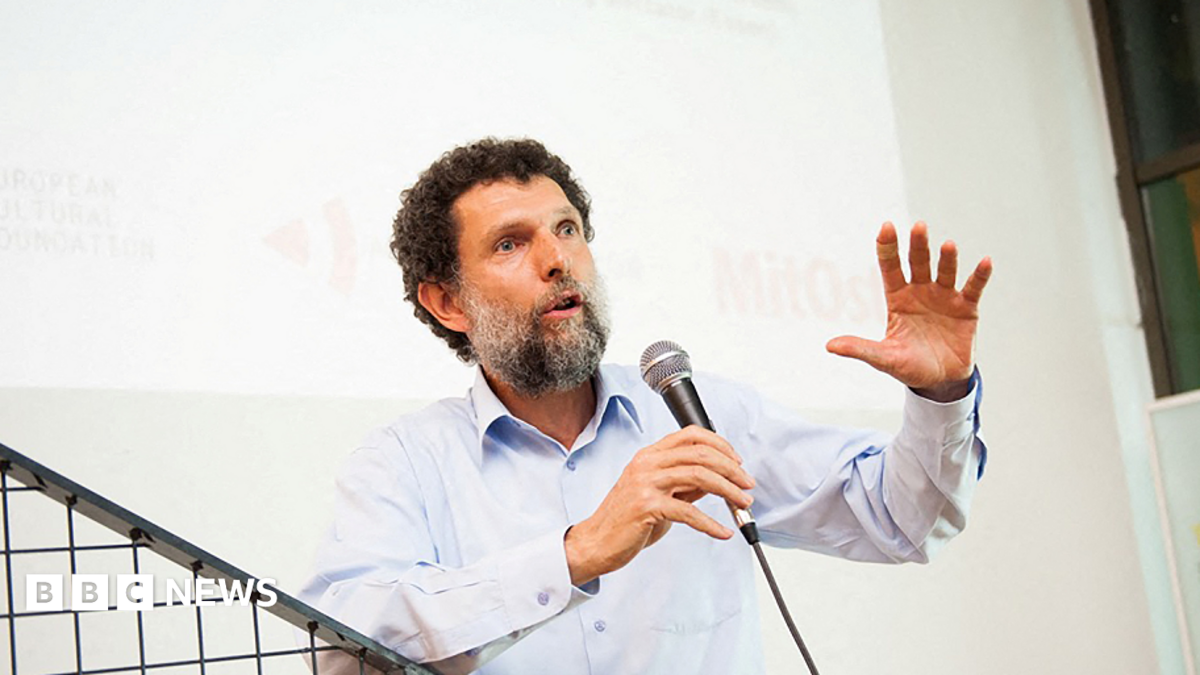
The European Court of Human Rights (ECHR) has once again told Turkey to let Osman Kavala go, marking the third time the court has made this request. Kavala, an activist and philanthropist, has been in prison for nearly a decade, which is quite the sentence for a guy who runs a cultural centre.
Kavala was handed a life sentence in 2022 over charges related to the 2013 Gezi Park protests and the 2016 failed coup attempt. Since his arrest in 2017, rights groups and Kavala himself have insisted the charges are politically motivated, which the ECHR on Tuesday seemed to agree with, ruling that his detention was unlawful and violated his rights to a fair trial, freedom of expression, and association.
The court's ruling was blunt: the measures against Kavala were "predominantly motivated by an ulterior purpose, namely, to punish him for his role in the Gezi Park demonstrations and for expressing his opinions as a human rights defender, and to silence him." It even called his aggravated life sentence "inhuman and degrading treatment."
Rights advocates and opposition groups have long said President Recep Tayyip Erdogan's government uses the judiciary to go after critics, and the ECHR found a "systemic problem" in Turkey of detaining and prosecuting political opponents, human rights defenders, and journalists, with "structural shortcomings" affecting judicial independence and impartiality. The Turkish government, of course, insists its courts are independent.
Kavala, 68, became a symbol of the crackdown on civil society after his arrest in October 2017. He was accused of orchestrating and financing the 2013 protests that started in Istanbul's Gezi Park and spread nationwide - the first major challenge to Erdogan's rule. Amnesty International says prosecutors falsely alleged the protests were an attempted overthrow.
In 2019, the ECHR demanded his release, calling his detention arbitrary and politically motivated. Turkey ignored that. He was acquitted in February 2020 but rearrested hours later on new charges related to the 2016 coup. His acquittal was overturned in January 2021, and he got life in April 2022 - a conviction the ECHR has now declared "null and void."
Amnesty International's Eve Geddie said: "This obstruction of justice must end. Turkey's authorities, including judicial and prosecutorial, must act to free Osman Kavala immediately and unconditionally." Meanwhile, Erdogan has accused Kavala of being an agent of George Soros, which is apparently a thing.
Turkey has ignored the ECHR twice before, so whether it will comply this time is anyone's guess. The case remains a major flashpoint between Ankara and Strasbourg. The Council of Europe, which oversees ECHR rulings, can suspend voting rights or freeze membership for serious violations, but Turkey remains a founding member and hasn't broken ties. A Committee of Ministers meeting in mid-September will likely prioritize the Kavala case - though whether it'll actually do anything remains to be seen.
The Good Times
News in your inbox.
One sardonic roundup, delivered on your schedule. Free. Unsubscribe whenever your tolerance for wit runs out.
Already subscribed but we never reach your inbox? Check your spam folder and hit 'Not spam' (or 'Remove from spam') to bust us out of junk-mail purgatory. You'll be helping everyone else too.
Don't open any of our emails for a month and you'll be automatically removed from the mailing list.
Rewrite Article
Select parts to regenerate with a fresh AI pass. Translations will be updated automatically.
Generate AI Image
Creates a sardonic version of the article image using OpenAI.