UN Reports 860,000 Lebanese Returned Home, But 'Immense' Crisis Says 'Nice Try, Have You Seen the Rubble?'
860,000 people have returned to southern Lebanon, but with 360,000 still displaced, water systems wrecked, and funding at 48%, the UN's 'crisis far from over' is the understatement of the year.
The United Nations dropped some cautiously optimistic news on Tuesday: approximately 860,000 people displaced by the conflict in southern Lebanon have returned home. But before anyone breaks out the celebratory hummus, the UN also noted that the displacement and humanitarian crisis are 'far from over' - a phrase that in UN-speak roughly translates to 'we're all still quite screwed.'
The region has seen years of conflict, with Israeli airstrikes killing thousands and displacing over a million since heavy fighting resumed in March of this year. Multiple ceasefires have been declared since April, yet clashes between Hezbollah fighters and Israeli forces have continued with the regularity of a bad soap opera.
The most recent cessation of hostilities agreement - negotiated between Israeli and Lebanese officials and brokered by the United States in late June - called for Hezbollah to fully disarm while Israeli forces were to withdraw fully from the south. Because, as we all know, agreements like that always work out perfectly and immediately.
Fighting has persisted, including this past weekend when Israeli airstrikes sparked a new wave of displacement, with hundreds of families forced to flee northwards. Ah, the joy of a 'cessation of hostilities' that isn't.
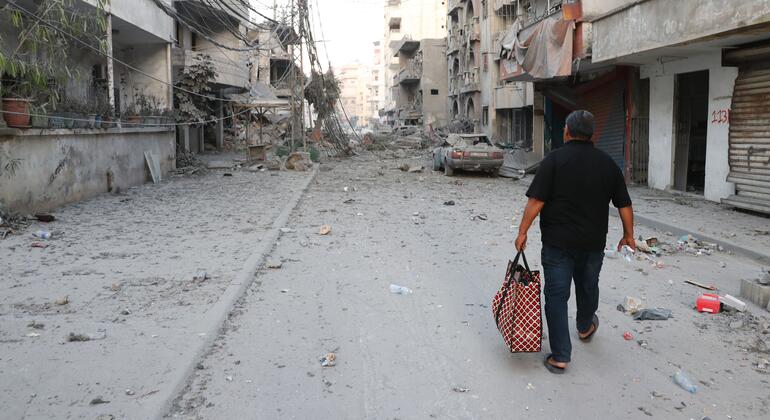
Around 360,000 people remain displaced, including at least 22,000 living in collective shelters, according to UN figures. Many Lebanese cannot return to their homes, which are located in areas ravaged by the conflict. Extensive debris, widespread damage to infrastructure, and continuing insecurity have resulted in strained or non-functioning health, water, and electricity services. Because nothing says 'welcome home' like a collapsed roof and no clean water.
UN refugee agency (UNHCR) spokesperson Babar Baloch highlighted on Tuesday the need for temporary housing solutions for displaced families so they can remain close to their communities. 'Humanitarian needs remain substantial. Widespread damage to housing, water system, electricity networks, schools, health facilities, agriculture, land and community infrastructure continue to constrain prospect of recovery.' In other words, the prospects are about as constrained as a pair of skinny jeans after Thanksgiving.
Although 860,000 people are reported to have made the journey, many have been unable to enter their own damaged homes, forced to live in temporary quarters nearby. Many continue to rely on rented accommodation or temporary hosts while waiting for debris clearance, home repairs, and the restoration of public services. Because nothing says 'home sweet home' like a cot in someone else's living room.
Severe damage to housing, water systems, electricity, agricultural land, health facilities, and infrastructure continues to prevent sustainable returns and recovery. Over 700,000 people are still affected by damage to water infrastructure in parts of southern Lebanon. That's a lot of people potentially relying on bottled water or questionable wells.
The Lebanese Government is providing protection services, shelter assistance, financial support, and psychosocial counselling to affected populations, with the help of humanitarian organizations including UNHCR. Yet agencies themselves face severe funding shortages, limiting their capacity to intervene effectively and at a large scale. Because of course they do.
The inter-agency Flash Appeal of $639.9 million is only 48 per cent funded. UNHCR's specific Lebanon operation is only 24 per cent funded against total requirements of $472.3 million for 2026. So, to recap: the crisis is 'immense,' the needs are 'substantial,' and the funding is 'please send money, we're serious.'
In related news, the UN is reportedly considering a new slogan: 'Lebanon: We'll rebuild it, but we're going to need a lot more than thoughts and prayers.'
The Good Times
News in your inbox.
One sardonic roundup, delivered on your schedule. Free. Unsubscribe whenever your tolerance for wit runs out.
Already subscribed but we never reach your inbox? Check your spam folder and hit 'Not spam' (or 'Remove from spam') to bust us out of junk-mail purgatory. You'll be helping everyone else too.
Don't open any of our emails for a month and you'll be automatically removed from the mailing list.
Rewrite Article
Select parts to regenerate with a fresh AI pass. Translations will be updated automatically.
Generate AI Image
Creates a sardonic version of the article image using OpenAI.