UN Human Rights Chief Tells Sudan's Warring Factions: 'Enough, Already'
Volker Türk calls for ceasefire in Sudan's fourth year of war, as drones turn weddings and hospitals into targets, and hospitals crumble. UN asks nicely, again.
The UN Human Rights Council got a Monday morning dose of déjà vu as Volker Türk, the UN's top human rights official, once again pleaded for an end to the war in Sudan. Because apparently, the fourth year of conflict wasn't enough of a hint.
Speaking at the Council in Geneva, Türk led the chorus of condemnation against attacks on civilians in places you'd think would be off-limits: markets, hospitals, and fuel stations. But in Sudan, the Sudanese Armed Forces (SAF) and the Rapid Support Forces (RSF) have turned these everyday locations into combat zones.
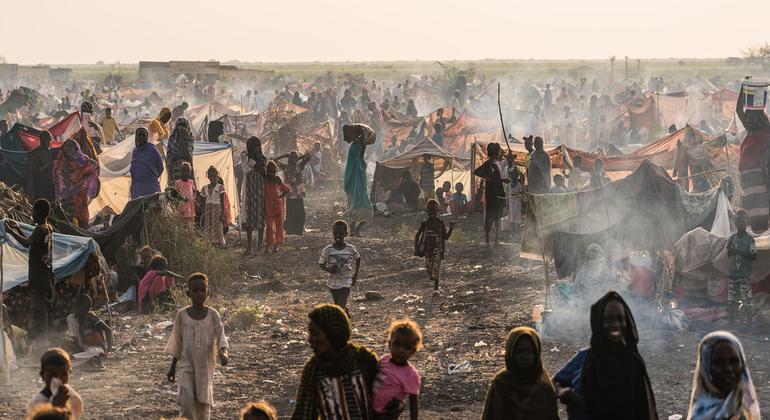
The numbers are staggering: over six million people displaced internally, and another 4.5 million forced to flee across borders. That's a lot of people who'd rather be anywhere else. Türk warned that the situation in Kordofan, Blue Nile, and North and West Darfur is deteriorating, with civilians at "imminent" risk. He called for an immediate ceasefire, an end to foreign meddling, and a return to inclusive civilian rule. You know, the usual.
But wait, there's more. A new report from the Fact-Finding Mission for the Sudan, a group of independent investigators who work for free (because apparently, that's the only way to get unbiased reporting), has found that both sides are now using long-range drones. Because why fight on the ground when you can rain death from above?
Mohamed Othman, the mission's chair, painted a grim picture: drones have killed civilians in their homes, schools, hospitals, markets, and even at weddings and funerals. In El Obeid, RSF drone attacks have crippled water and energy infrastructure, making life even more miserable for people under partial siege.
The report is an equal-opportunity indictment: both the SAF and RSF have committed attacks that "may amount to war crimes." Specific incidents include RSF drone strikes on a kindergarten and hospital in Kalogie that killed 114 people, including 60 children, and SAF attacks on Ad-Da'ein Teaching Hospital that killed at least 70. Because nothing says 'we're the good guys' like bombing a hospital.
Meanwhile, in Khartoum, the World Health Organization reported that three major hospitals - Khartoum Teaching, Ophthalmology, and Dental - have been reduced to shells. Operating theaters destroyed, imaging equipment gone, wards collapsed. WHO's Dr. Abdinasir Abubakar noted that staff are still trying to treat patients in whatever parts of the buildings remain usable. They're asking for help to repair the "immense" damage, but let's be real: the only thing that will fix this is a ceasefire.
So, in summary: war is bad, drones are worse, and children are dying. The UN keeps asking nicely. Sudan's leaders keep not listening. Stay tuned for year five.
The Good Times
News in your inbox.
One sardonic roundup, delivered on your schedule. Free. Unsubscribe whenever your tolerance for wit runs out.
Already subscribed but we never reach your inbox? Check your spam folder and hit 'Not spam' (or 'Remove from spam') to bust us out of junk-mail purgatory. You'll be helping everyone else too.
Don't open any of our emails for a month and you'll be automatically removed from the mailing list.
Rewrite Article
Select parts to regenerate with a fresh AI pass. Translations will be updated automatically.
Generate AI Image
Creates a sardonic version of the article image using OpenAI.