Spain's Wildfire Death Toll Hits 12, Because Downed Power Lines and 40°C Heat Are a Great Combo
Twelve people die in a Spanish wildfire sparked by a downed power line, as a heatwave bakes southern Europe and sets records for 'worst fire season ever' - again.
At least 12 people have died in a wildfire in Los Gallardos, Almería, according to the Andalusian regional government. Six more were injured, including one person hospitalized for smoke inhalation and another with burns. Four others were treated on-site for minor burns and respiratory issues because, apparently, standing near a wildfire is bad for your lungs.
Witnesses say the fire started from a downed power line, which then spread to a nearby wooded area with the enthusiasm of a tourist at a beach bar. Authorities haven't confirmed the cause yet, but they're probably too busy fighting the blaze to point fingers.
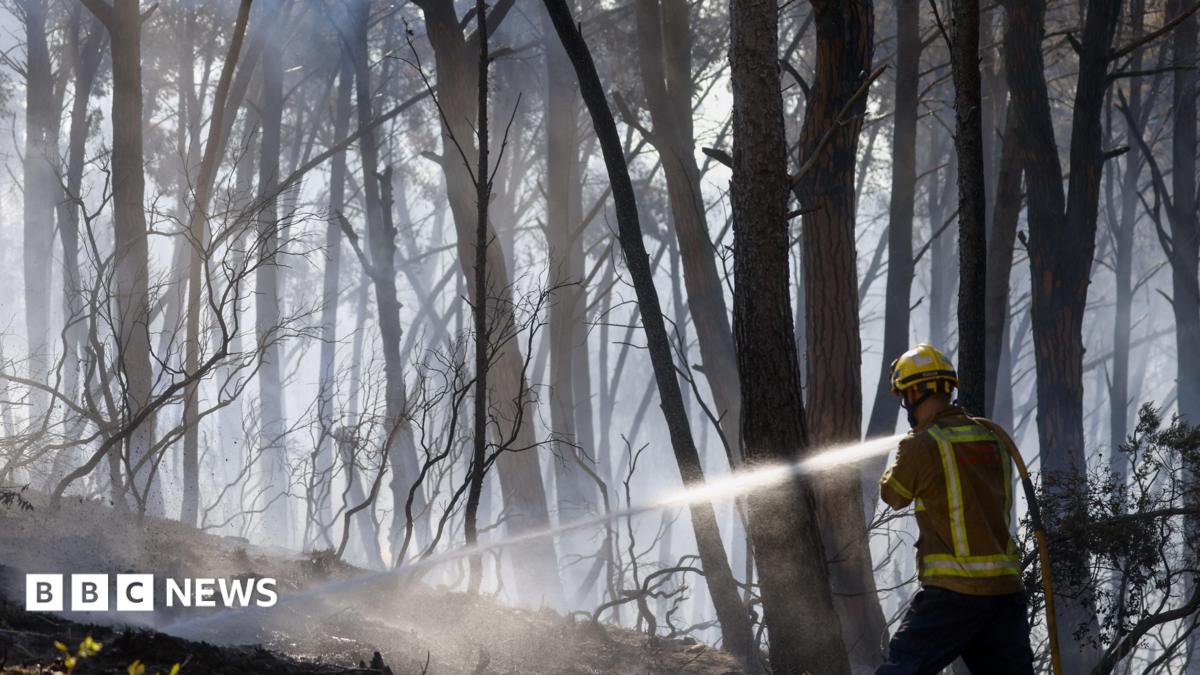
About 150 firefighters are working to quell the fire in the hamlet of Bedar, while 1,000 residents have been evacuated. The fire also closed roads, because nothing says 'summer fun' like fleeing your home while the landscape turns to ash.
This is all happening as a sustained heatwave with temperatures around 40°C (104°F) torches southern Europe. Hundreds of firefighters are battling major incidents in France, Portugal, and Spain, with thousands forced to leave their homes. Spain's Prime Minister Pedro Sanchez said in May that the country would deploy its largest-ever summer wildfire response this year - prescient, but not exactly comforting.
Juanma Moreno, head of the Andalusian regional government, called the deaths 'a tragedy.' Writing on X after an initial toll of six deaths, he said: 'Our hearts are heavy and we are devastated by grief.' The death toll later doubled, which probably didn't lighten the mood.
Last year, a record 393,000 hectares (971,000 acres) burned in Spain, according to the European Forest Fire Information System (EFFIS) - more than six times the Spanish average between 2006 and 2024. And last year was the European Union's worst wildfire season since records began in 2006, with over a million hectares burning - about half the land area of Wales, if you're keeping score at home.
Climate change is driving up temperatures worldwide, and Europe is the fastest warming continent, heating up twice as fast as the global average, according to the Copernicus climate service. This means more summer heatwaves, greater pressure on water supplies, and more intense wildfires. The worsening fire season in the Mediterranean has been linked directly to climate change in a study by the World Weather Attribution group at Imperial College London, because of course it has.
Experts warn that more frequent and severe fires across Europe are likely to continue. In other words, we're all going to need a bigger fire extinguisher.
The Good Times
News in your inbox.
One sardonic roundup, delivered on your schedule. Free. Unsubscribe whenever your tolerance for wit runs out.
Already subscribed but we never reach your inbox? Check your spam folder and hit 'Not spam' (or 'Remove from spam') to bust us out of junk-mail purgatory. You'll be helping everyone else too.
Don't open any of our emails for a month and you'll be automatically removed from the mailing list.
Rewrite Article
Select parts to regenerate with a fresh AI pass. Translations will be updated automatically.
Generate AI Image
Creates a sardonic version of the article image using OpenAI.