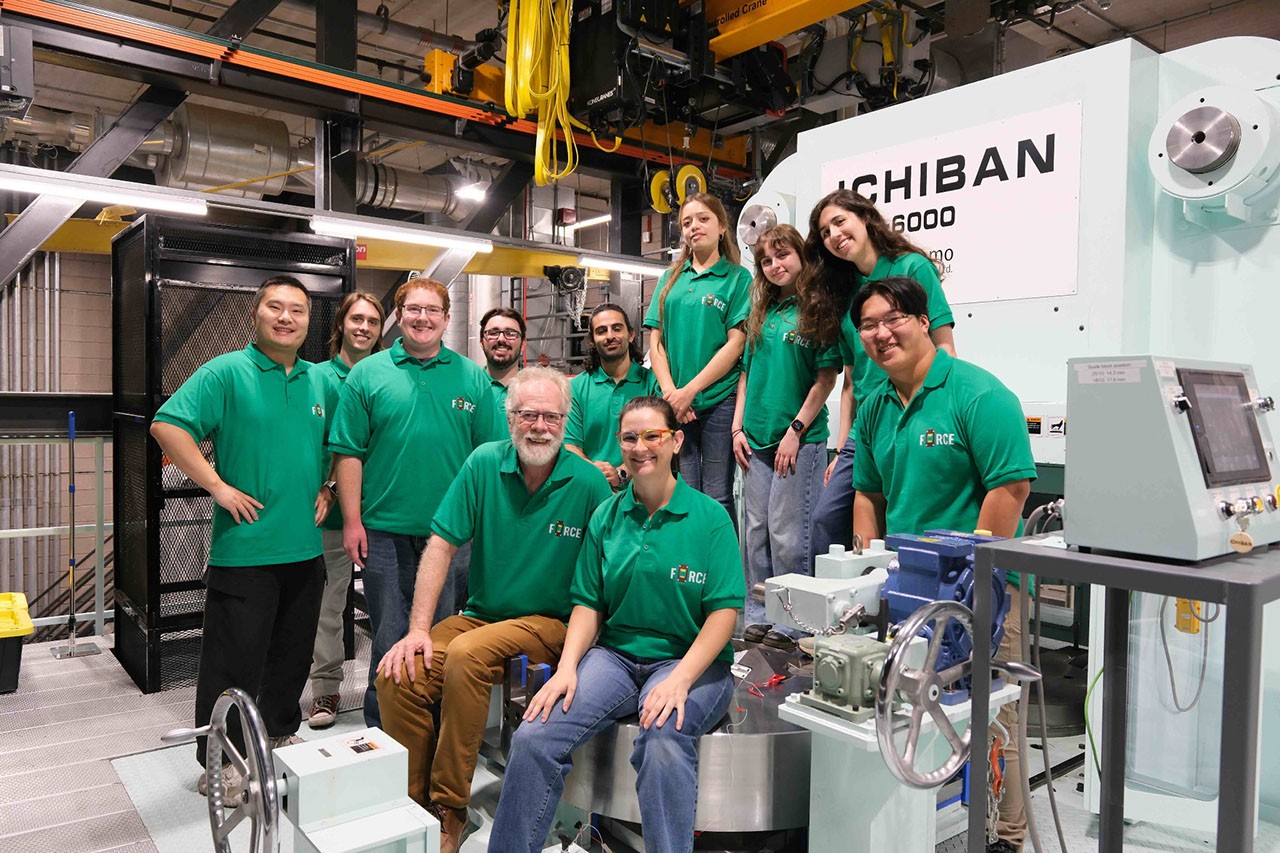
In a groundbreaking move that will surely shock no one, NASA has decided that scientists might need actual training to talk about their work with the general public. Because apparently, 'it's really, really hot and high pressure down there' wasn't cutting it as a public engagement strategy.
The NASA Science Mission Directorate (SMD) Community of Practice for Education (SCoPE), part of the NASA Science Activation (SciAct) Program portfolio, has been busy turning lab-dwelling researchers into communicators. In Summer 2026, SCoPE partnered with Arizona State University's Facility for Open Research in a Compressed Environment (FORCE) Summer School to help seven undergraduate student interns develop the science communication skills needed to share their research with a variety of audiences. FORCE, for the uninitiated, is a world-class laboratory that uses high-pressure experimental equipment to recreate the extreme conditions found deep within Earth and other planetary bodies, enabling researchers to better understand how planets form, evolve, and behave under immense pressures. In other words, they squish stuff until it behaves like the center of a planet.
As part of the Summer School, SCoPE facilitated two hands-on workshops on June 25 and 26, followed by office hours the following week, to help interns translate their technical research into compelling stories for non-expert audiences. The training focused on identifying the central themes of their work, developing clear and engaging messages, planning effective visitor interactions, and thinking through the logistics of public engagement. Interns also received guidance on preparing both their research posters and individual outreach stations. Because nothing says 'science communication' like a poster with a font size that's actually legible from three feet away.
The training culminated in two complementary outreach experiences. The first was the FORCE Open House, which welcomed approximately 50 members of the general public for an inside look at the laboratory. Visitors toured the facility, met the research team, explored the specialized equipment used to simulate the interiors of Earth and other planets, and interacted with interns at themed outreach stations designed to explain the science behind the experiments in accessible, engaging ways. The second event was a poster session for ASU faculty, staff, and students, where the interns presented their research, providing an opportunity to discuss their scientific findings with members of the university community and receive feedback on their presentations.
By integrating science communication training into the Summer School experience, NASA SCoPE helped equip emerging planetary scientists with practical skills for engaging both scientific peers and public audiences. The poster session and Open House demonstrated how thoughtful communication training can strengthen researchers' confidence while building stronger connections between cutting-edge planetary science and the communities it serves. NASA SCoPE is supported by NASA cooperative agreement award number 80NSSC21M0006 and helps enrich and enhance the impact of the NASA Science Activation Program portfolio, which connects learners with authentic NASA science experiences through partnerships with educators and community organizations. So, the next time you meet a planetary scientist who can explain mantle convection without putting you to sleep, you'll know who to thank.
The Good Times
News in your inbox.
One sardonic roundup, delivered on your schedule. Free. Unsubscribe whenever your tolerance for wit runs out.
Already subscribed but we never reach your inbox? Check your spam folder and hit 'Not spam' (or 'Remove from spam') to bust us out of junk-mail purgatory. You'll be helping everyone else too.
Don't open any of our emails for a month and you'll be automatically removed from the mailing list.
Rewrite Article
Select parts to regenerate with a fresh AI pass. Translations will be updated automatically.
Generate AI Image
Creates a sardonic version of the article image using OpenAI.