NASA Announces Winners for 2026 Human Lander Challenge: Students Figure Out How to Keep Astronauts Alive on the Moon
NASA announces winners of the 2026 Human Lander Challenge, where students designed life support systems so astronauts don't die on the Moon. Cal Poly wins $10k for a hydration system that sounds cool.
NASA has crowned the student champions of the 2026 Human Lander Challenge, a competition that essentially asked university teams to solve the problem of keeping astronauts alive in deep space. The winners were announced after months of research aimed at improving environmental control and life support systems for future crewed lunar landers, supporting the Artemis program that plans to return American astronauts to the Moon in 2028.
The challenge wrapped up June 25 following final technical presentations near NASA’s Marshall Space Flight Center in Huntsville, Alabama. Since September 2025, student teams from across the nation have been designing systems-level approaches to make life support technologies more reliable for astronauts on deep space missions. Because nothing says “fun” like figuring out how to recycle air and water when you're 238,000 miles from the nearest hardware store.
“As NASA continues preparing for sustained lunar exploration and future human missions to Mars, the development of robust, efficient, and reliable life support systems remains a critical focus area,” said Natalie Martinez-Vlasoff, mission capabilities and risk reduction advanced capabilities integration lead at NASA Marshall. “The 2026 student teams demonstrated a strong understanding of the range of design choices for these systems, and how well-considered, systems-level approaches can improve reliability and crew safety for astronauts using future human landing systems. It is encouraging to see students contributing ideas that help make long-duration lunar exploration more achievable.”
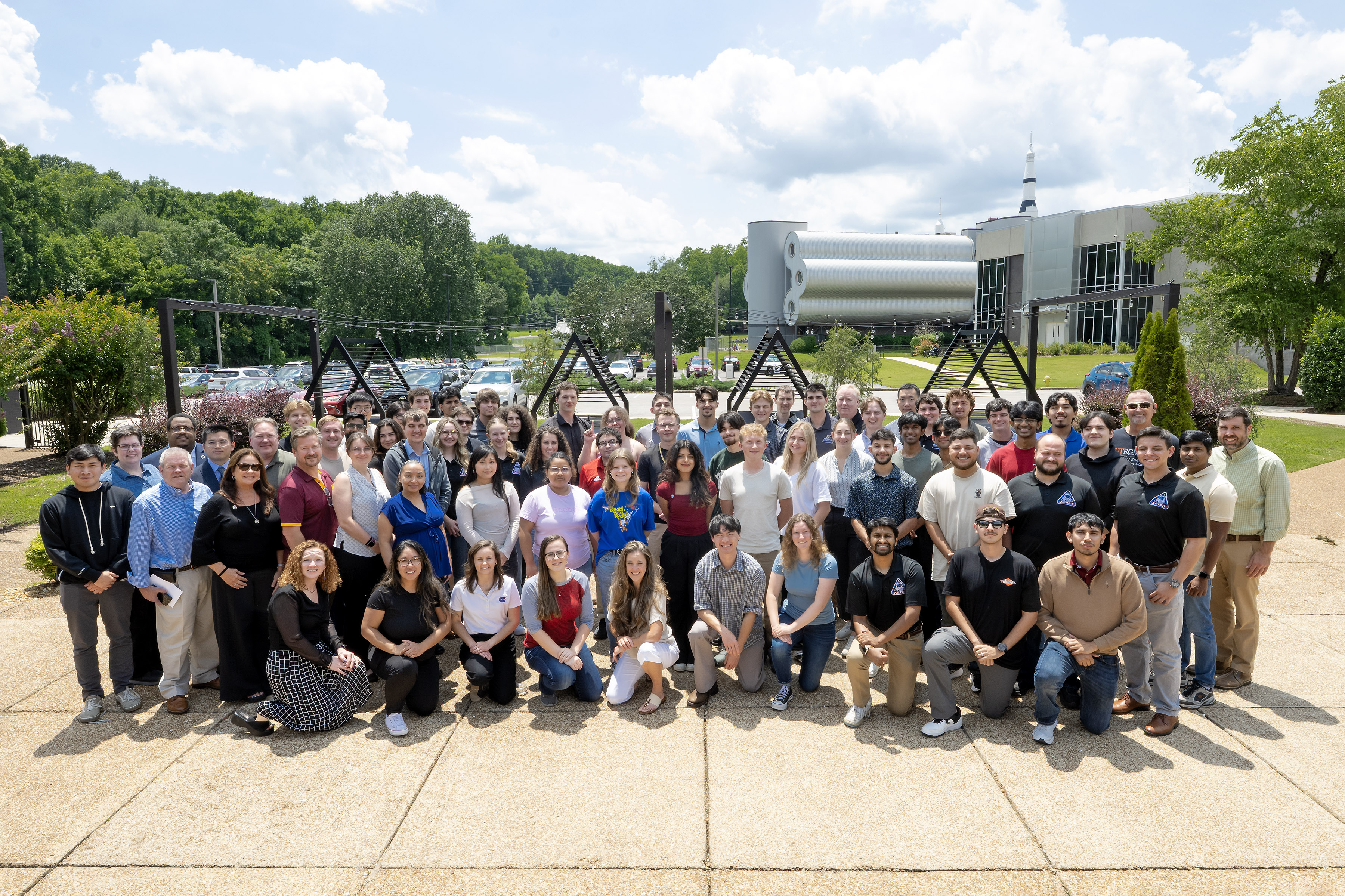
The finalist teams gathered at the U.S. Space & Rocket Center in Huntsville on June 22 to present their research to a panel of NASA and aerospace industry experts, as well as to their peers, during a collaborative poster session. The annual competition concluded with an awards ceremony recognizing the top-performing teams out of the 12 finalists.
California Polytechnic State University took the top prize of $10,000 for their Peltier-based Hydration Accumulation Terminal project. Because nothing says “winning” like a hydration system that sounds like it belongs in a sci-fi novel. Purdue University snagged second place and $5,000 for an Enhanced Potable Water Dispenser, while Embry-Riddle Aeronautical University, Daytona Beach, landed third with $3,000 for their Advanced Quality Orbital Rehydration Assembly project. Yes, the names are as technical as they sound, but they'll probably keep astronauts from dying of thirst.
The Human Lander Challenge is designed to inspire and engage the next generation of engineers and scientists as NASA and its partners prepare to send astronauts to the Moon in preparation for future missions to Mars. The human landing system is the mode of transportation that will take astronauts to the lunar surface and back to lunar orbit under Artemis.
Through competitions like this, NASA fosters the next generation of engineers and researchers while advancing technologies needed for astronauts to explore deep space. Student solutions from the challenge could be incorporated into current work for the next-generation Artemis landers. So, basically, these students might be the reason future astronauts don't run out of water while bouncing around on the Moon. Not a bad gig.
NASA’s Human Landing System Program, managed by NASA Marshall, sponsors the challenge, which is administered by the National Institute of Aerospace.
Through the Artemis program, NASA will send astronauts to explore the Moon for scientific discovery, economic benefits, and to build the foundation for the first crewed missions to Mars - for the benefit of all. Or at least for the benefit of those who can hold their breath long enough.
The Good Times
News in your inbox.
One sardonic roundup, delivered on your schedule. Free. Unsubscribe whenever your tolerance for wit runs out.
Already subscribed but we never reach your inbox? Check your spam folder and hit 'Not spam' (or 'Remove from spam') to bust us out of junk-mail purgatory. You'll be helping everyone else too.
Don't open any of our emails for a month and you'll be automatically removed from the mailing list.
Rewrite Article
Select parts to regenerate with a fresh AI pass. Translations will be updated automatically.
Generate AI Image
Creates a sardonic version of the article image using OpenAI.