Iran Says It's Closed the Strait of Hormuz (Again); U.S. Says 'Nah, It's Fine'
Iran claims it has closed the Strait of Hormuz; the U.S. says it hasn't. Meanwhile, Vice President Vance heads to Switzerland for talks, and everyone keeps bombing everyone else.
The Iranian military announced it has closed the Strait of Hormuz once more, citing Israel's attacks on southern Lebanon as a violation of Tehran's agreement with the U.S. to end the war. The U.S. military, however, begs to differ.
"Traffic continues to flow," said U.S. Central Command spokesperson Tim Hawkins, with American forces "monitoring the situation to ensure this remains the case." He added, somewhat pointedly, that "Iran does not control the Strait of Hormuz."
The strait is a shipping channel through which about 20% of the world's oil and liquefied natural gas passes - roughly 20 million barrels per day, or nearly $600 billion worth of energy trade annually. So, you know, kind of a big deal.
On Saturday, U.S. Vice President JD Vance departed for direct U.S.-Iran talks in Switzerland, hoping to make progress "on the nuclear issue" and the "Lebanon ceasefire issue." He described the situation as "actually getting better" and "slowing down a little bit," which is one way to describe a day when at least 20 people were reportedly killed by Israeli airstrikes in southern Lebanon.
Iran's foreign ministry spokesman Esmail Baghaei said his country would be "demanding that the other side fulfil its commitments." Pakistan's Prime Minister Shehbaz Sharif will attend the talks, having previously hosted a round of negotiations in Islamabad in April.
Earlier this week, the U.S. and Iranian presidents signed an initial agreement aiming to end the war, including in Lebanon, with a commitment to further talks over the next 60 days. But on Saturday, Donald Trump posted that the U.S. could impose its own tolls on shipping in the strait if no deal is reached - because nothing says diplomacy like threatening to charge rent for a waterway you already claim isn't closed.
The Iranian military justified its closure announcement by accusing the U.S. of violating the first clause of their 14-point memorandum of understanding, which calls for "the immediate and permanent termination of military operations on all fronts, including in Lebanon."
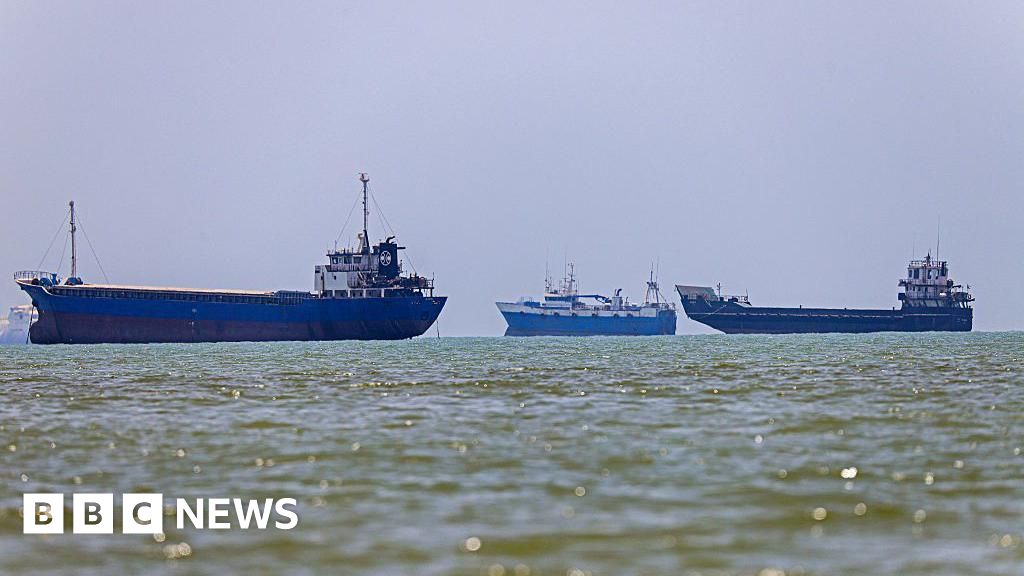
BBC Verify noted that at least five tankers passed through the strait on Saturday, while several vessels appeared to have made U-turns. Centcom said commercial traffic actually increased, with 55 merchant ships transiting.
The Iranian announcement came after a ceasefire between Israel and Hezbollah was announced - and then promptly violated by both sides. Israel struck "dozens" of Hezbollah targets after the group fired more than 50 projectiles; a family of four was killed in the town of Barich. An Israeli soldier also died in battle in southern Lebanon.
Hezbollah accused Israel of trying to "sabotage" the broader U.S.-Iran deal. The U.S. government has criticized Israel's ongoing operations in Lebanon, which was drawn into the war after Hezbollah launched rockets in retaliation for U.S.-Israeli strikes that killed Iran's supreme leader.
Iran first blocked the Strait of Hormuz after the U.S. and Israel attacked the country on 28 February, sending shockwaves through global energy markets. This latest claim appears to be more of a rhetorical blockade - but with $600 billion of annual energy trade at stake, everyone's watching the shipping lanes closely.
The Good Times
News in your inbox.
One sardonic roundup, delivered on your schedule. Free. Unsubscribe whenever your tolerance for wit runs out.
Already subscribed but we never reach your inbox? Check your spam folder and hit 'Not spam' (or 'Remove from spam') to bust us out of junk-mail purgatory. You'll be helping everyone else too.
Don't open any of our emails for a month and you'll be automatically removed from the mailing list.
Rewrite Article
Select parts to regenerate with a fresh AI pass. Translations will be updated automatically.
Generate AI Image
Creates a sardonic version of the article image using OpenAI.