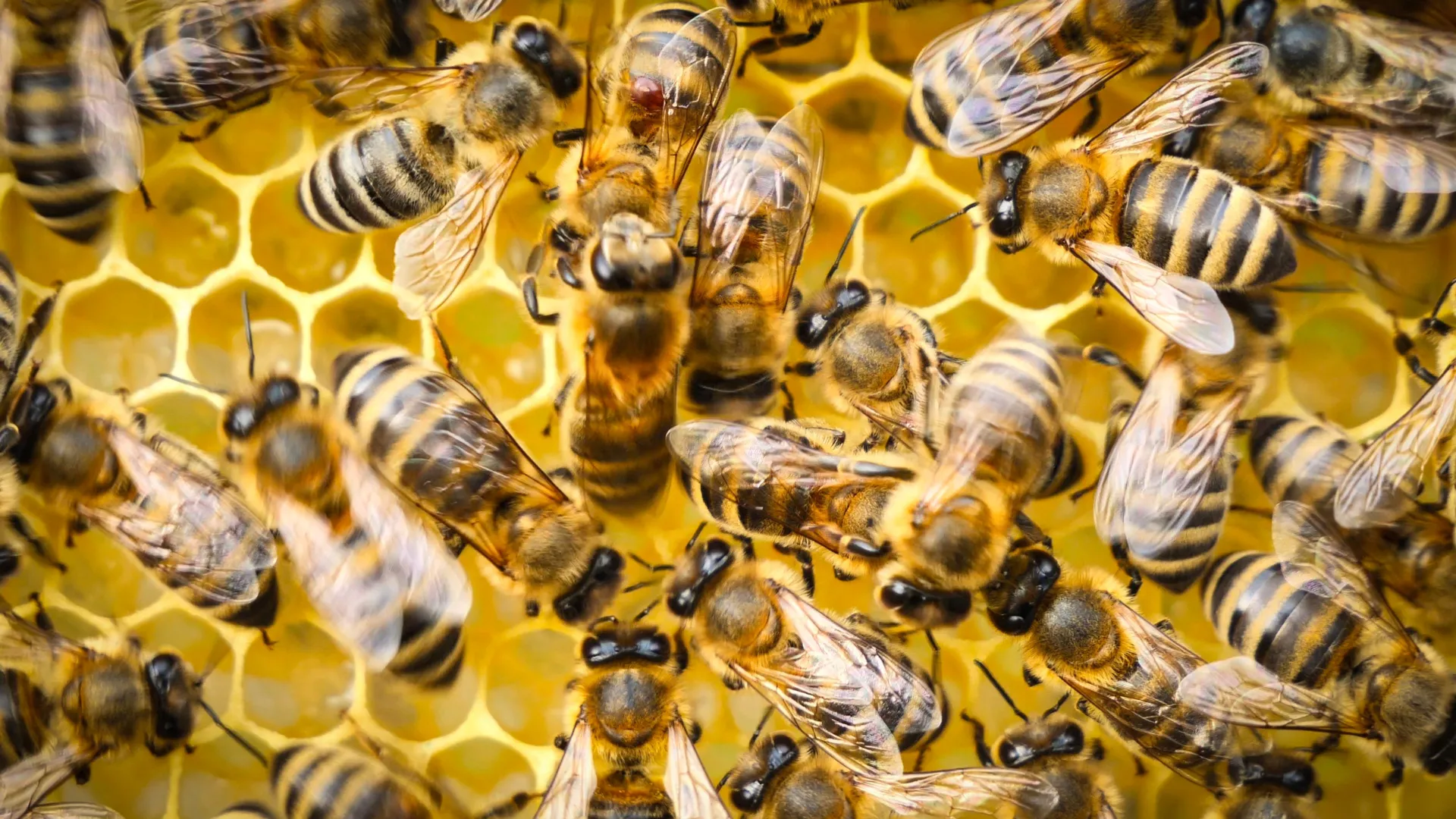
California's Mutant Bees Are Beating the Parasite That's Killing Everyone Else's
While commercial bee colonies are dying at alarming rates, a scrappy hybrid bee from Southern California is naturally fending off the deadly Varroa mite, offering a glimmer of hope for our food…
In a plot twist worthy of a nature documentary, Southern California appears to have spawned an unlikely hero in the fight to save honeybees. While commercial hives across the U.S. are getting absolutely wrecked, a distinct hybrid bee found in the region is showing a surprising ability to endure the onslaught.
Beekeepers nationwide reported losing up to 62% of their managed colonies in 2025, which is a problem for, you know, food. The usual suspects are to blame: pesticides, climate stress, habitat loss, and parasites. The main villain is the Varroa mite, a tiny vampire that weakens bees by feeding on their fat body tissue - an organ that does the jobs of a liver, pancreas, and immune system. This leaves bees underweight, sickly, and with tragically short lifespans. The mites also spread nasty viruses like Deformed Wing Virus and Acute Bee Paralysis Virus directly into bee bloodstreams. Beekeepers often fight back with chemicals, which, in a classic human move, are becoming less effective over time.
Enter new research from UC Riverside, published in Scientific Reports, offering a rare glimmer of hope. The study is the first to show that a locally adapted group of honeybees can consistently and naturally keep mite populations in check. "We kept hearing anecdotally that these Californian honeybees were surviving with way fewer treatments," said Genesis Chong-Echavez, the UCR graduate student who led the study. "I wanted to test them rigorously."
Working with entomologists from UCR's Center for Integrative Bee Research (CIBER), Chong-Echavez tracked 236 honeybee colonies from 2019 through 2022. The results? These bees aren't invincible, but they're doing far better than your average commercial colony. Colonies led by locally raised hybrid queens carried about 68% fewer mites on average and were more than five times less likely to reach infestation levels requiring chemical intervention.
These super-bees aren't the product of some fancy breeding program. They're a naturally mixed population in Southern California, often originating from feral colonies living in trees. Genetic studies show they're a blend of at least four lineages: African, Eastern European, Middle Eastern, and Western European bees. To figure out why they're better, researchers ran lab experiments on developing larvae, which mites must invade to reproduce. Mites showed significantly less interest in larvae from the hybrid bees, especially around seven days old - the peak vulnerability window. This suggests the defense is baked in early, possibly genetically, before adult behaviors even factor in.
"What surprised me most was the differences showed up even at the larval stage," Chong-Echavez said. The implications are huge. Honeybees pollinate billions of dollars in crops, and they're under siege. This research hints that natural biological traits could be the key to strengthening populations. As co-author Boris Baer, a UCR entomology professor, noted, the whole inquiry started with beekeepers: "They were not just observers; they helped shape the questions."
Researchers are quick to note these hybrid bees aren't mite-proof, and current management practices shouldn't be tossed. The goal is to identify the specific traits that allow for lower mite levels and see if they can be leveraged in breeding or to reduce chemical reliance. Future studies will hunt for the genetic, behavioral, and chemical signals that make the larvae less appealing to mites. In a time of global pollinator decline, it's a hopeful reminder that sometimes the solution is already out there, just waiting for us to catch up.
The Good Times
News in your inbox.
One sardonic roundup, delivered on your schedule. Free. Unsubscribe whenever your tolerance for wit runs out.
Already subscribed but we never reach your inbox? Check your spam folder and hit 'Not spam' (or 'Remove from spam') to bust us out of junk-mail purgatory. You'll be helping everyone else too.
Don't open any of our emails for a month and you'll be automatically removed from the mailing list.
Rewrite Article
Select parts to regenerate with a fresh AI pass. Translations will be updated automatically.
Generate AI Image
Creates a sardonic version of the article image using OpenAI.