200-Year-Old Physics Experiment Drafted for Future Computing Duties
NTU Singapore revives a 200-year-old optics experiment to create optical skyrmions using a laser and a disc, ditching expensive metamaterials and possibly paving the way for future data storage and computing.
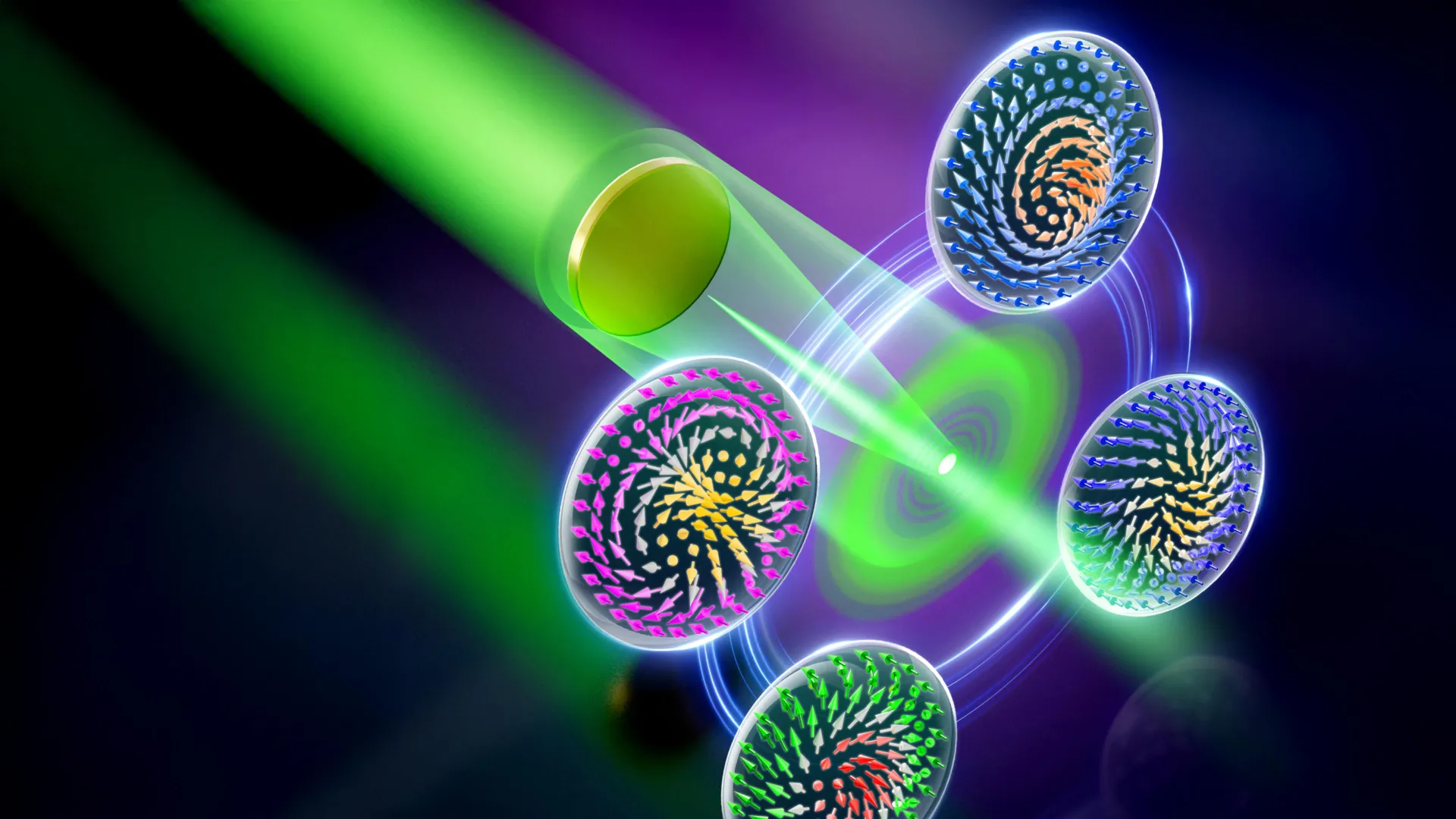
Scientists at Nanyang Technological University, Singapore (NTU Singapore) have discovered that a classic optics experiment from the early 1800s can generate optical skyrmions - tiny, stable swirling light patterns that look like hedgehog spines and could one day store data or power computers. The team, led by Nanyang Assistant Professor Shen Yijie, created these structures by simply shining a laser at a small circular disc, exploiting the Poisson spot effect where a bright point appears in the center of a disc's shadow. This is a far cry from the expensive, highly engineered metamaterials previously required.
"What is remarkable is that optical skyrmions can now be generated using a simple effect where light bends around an object, without relying on expensive, complex man-made metamaterials or highly specialized techniques," said Asst Prof Shen, whose findings were published in the journal Optica. The setup simultaneously produced four types of topological field patterns: spin skyrmions, Stokes skyrmions, electric field skyrmions, and magnetic field skyrmions. Scientists can now compare how these different optical skyrmions form and interact within the same light field, potentially uncovering new links between light's electric, magnetic, and other physical properties.
Skyrmions were first proposed in particle physics before becoming a big deal in condensed matter and magnetic materials. Now, with a simpler method to produce them, researchers can more easily study their potential for photonics, advanced materials, information processing, and next-generation computing. So the next time you need a bright spot in the center of a shadow, remember: it might just be the future of computers.
The Good Times
News in your inbox.
One sardonic roundup, delivered on your schedule. Free. Unsubscribe whenever your tolerance for wit runs out.
Already subscribed but we never reach your inbox? Check your spam folder and hit 'Not spam' (or 'Remove from spam') to bust us out of junk-mail purgatory. You'll be helping everyone else too.
Don't open any of our emails for a month and you'll be automatically removed from the mailing list.
Rewrite Article
Select parts to regenerate with a fresh AI pass. Translations will be updated automatically.
Generate AI Image
Creates a sardonic version of the article image using OpenAI.