Your Middle-Aged Micro-Awakenings May Be Whispering 'Alzheimer's Risk,' Scientists Say
New research from the University of Liège finds that middle-aged folks with more nighttime micro-awakenings may have a higher genetic risk for Alzheimer's - so those 3 a.m. wake-ups might be your brain's way of dropping hints.
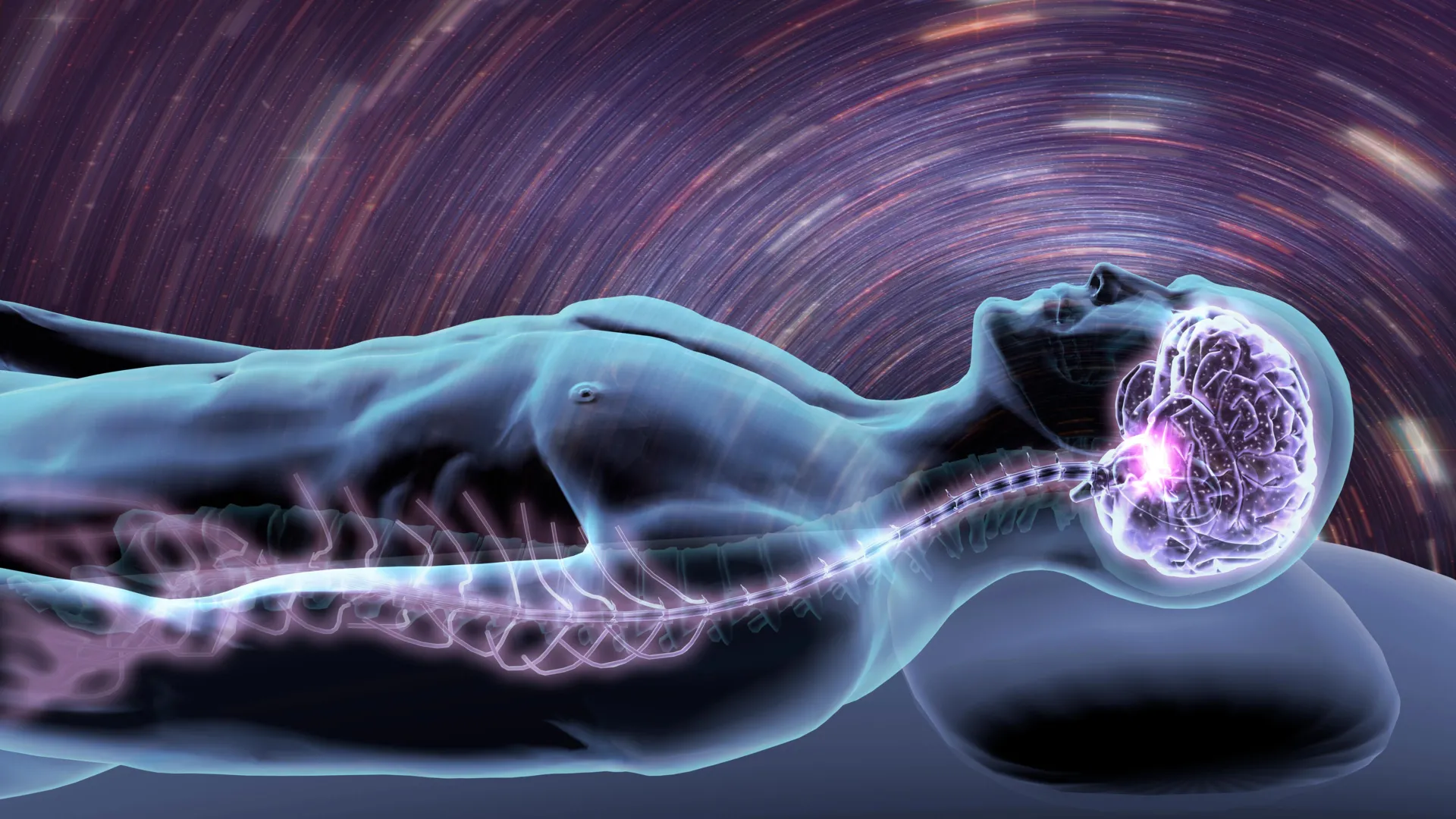
Here's another thing to keep you up at night: those little blips of wakefulness in your sleep might be more than just an annoyance. Researchers at the University of Liège, with a nudge from the Stop Alzheimer's Foundation, have been poking at the sleeping brain and found that in middle-aged folks, frequent micro-awakenings - those tiny brain hiccups that don't fully rouse you - are linked to a higher genetic risk of developing Alzheimer's disease. The study, published in the journal Sleep, suggests your slumber might be tattling on your future before you even forget where you put your keys.
The team, from GIGA Neurosciences, looked at sleep patterns in over 500 healthy volunteers, including a younger group (18 - 31) and an older one (50 - 69). They calculated a polygenic risk score for each participant - basically a genetic crystal ball that sums up your inherited odds of getting the disease. Then they crunched the numbers against sleep characteristics. Lo and behold, in the older crowd, more frequent micro-awakenings correlated with a higher genetic risk. The youngsters, however, showed no such connection, because apparently youth is wasted on the young.
"These micro-awakenings are therefore not insignificant," says Puneet Talwar, a researcher at GIGA ULiège. "Certain profiles could promote the accumulation of proteins involved in Alzheimer's disease and be associated with increased vulnerability." In other words, those tiny brain stutters might be paving the way for trouble.
The team also zeroed in on the locus coeruleus, a rice-grain-sized region in the brainstem that helps regulate wakefulness and attention. It's a prime suspect in Alzheimer's because it's one of the first places abnormal protein deposits show up - sometimes as early as adolescence. Using the snazzy 7-Tesla MRI scanner at ULiège, a 2025 preliminary study found that sleep quality (how fast you fall asleep, how deep you sleep) is linked to the brainstem's condition even in young adults, and that a healthy locus coeruleus is tied to good REM sleep, which is the memory-boosting phase.
Could sleep become an early warning system? "Sleep could become an accessible marker for the early identification of vulnerable individuals," says Gilles Vandewalle, co-director of the GIGA CRC In Vivo Imaging platform and a research director at the FNRS. Lucie Leroux, head of French-speaking activities at the Stop Alzheimer's Foundation, chimes in: "This research shows that sleep is not only an indicator of health, but also a potential lever for intervention." Because who doesn't want to think of their pillow as a preventive tool?
Now, before you start panicking about every toss and turn, a few caveats: this is about statistical associations, not proof that micro-awakenings cause Alzheimer's. The polygenic risk scores were low, and the findings can't tell you if any individual will actually get the disease. But with more than 220,000 people in Belgium affected by Alzheimer's (and millions more elsewhere), the idea that sleep might offer a hint years before symptoms is at least a reason to pay attention - and maybe to invest in a better mattress.
The research, provided by the University of Liège, adds to the growing pile of evidence that the brain's future may be written in its sleep patterns. So next time you wake up at 3 a.m. for no reason, just know: your brain might be doing more than counting sheep.
The Good Times
News in your inbox.
One sardonic roundup, delivered on your schedule. Free. Unsubscribe whenever your tolerance for wit runs out.
Already subscribed but we never reach your inbox? Check your spam folder and hit 'Not spam' (or 'Remove from spam') to bust us out of junk-mail purgatory. You'll be helping everyone else too.
Don't open any of our emails for a month and you'll be automatically removed from the mailing list.
Rewrite Article
Select parts to regenerate with a fresh AI pass. Translations will be updated automatically.
Generate AI Image
Creates a sardonic version of the article image using OpenAI.