South Sudan: 14 Fact-Finding Missions Later, the Human Cost Keeps Growing and the Excuses Keep Recycling
UN investigators wrap up their 14th South Sudan fact-finding mission with the same findings as the previous 13, because accountability remains a theoretical concept.
The UN Commission on Human Rights in South Sudan has returned from its 14th fact-finding mission in a decade with a familiar message: things are bad, getting worse, and the people responsible remain largely unbothered. The Commission warned that renewed violence, political tensions, shrinking civic space, entrenched corruption and persistent impunity continue to endanger both the population and the planned transition to democracy in the world's youngest nation.
During the four-day visit, investigators met with representatives from the Government, the political and security sectors, civil society and other stakeholders - presumably in rooms where everyone agreed something must be done, right before doing nothing.
South Sudan gained independence from Sudan in July 2011. Civil war erupted less than three years later, triggered by the power struggle between President Salva Kiir and Vice-President Riek Machar. Fighting continues despite a 2018 peace agreement, because apparently that's just how things work now.
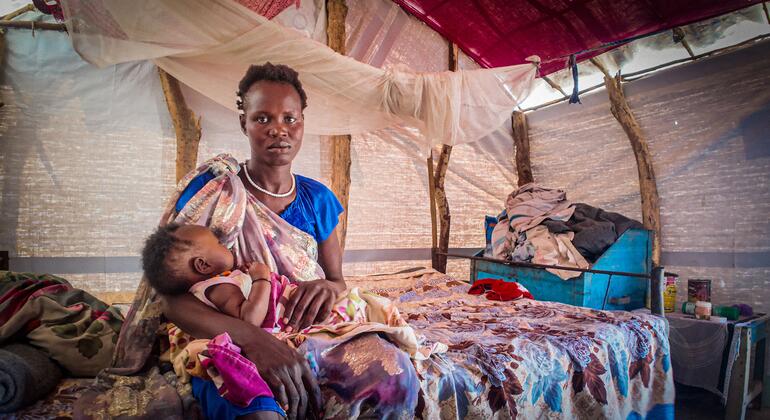
Commission Chair Yasmin Sooka travelled to Jonglei state, where she met survivors of recent fighting in the north. She heard harrowing accounts of sexual violence, killings, displacement and separation from family members. Some survivors described being left without access to medical, psychosocial or other essential support - including those facing serious and urgent health needs.
"Visit after visit, we continue to hear from people who bear the consequences of violence, displacement, insecurity and the failures of those with political and security responsibilities to prevent and address those harms," Sooka said. "The patterns have changed little, while the human cost continues to grow. South Sudanese people deserve better than to have their lives shaped by recurring cycles of violence and uncertainty."
The Commission raised concerns over killings, displacement, civilian attacks, disruption of humanitarian operations and growing insecurity for aid workers. Members noted that with immense humanitarian needs and ongoing funding shortfalls, support for humanitarian operations and the UN Mission in South Sudan (UNMISS) is critical. They also expressed alarm over a recent attack on an UNMISS patrol in Jonglei that killed two peacekeepers and injured others, calling for an investigation and accountability for those responsible.
The visit comes as South Sudan prepares for its first elections since independence. The Commission recently warned that elections without essential safeguards - including genuine inclusive political dialogue - could spark renewed conflict and increase the risk of atrocity crimes. Because nothing says "democracy" like a vote held without the basic conditions for it to mean anything.
Commissioner Barney Afako said that while implementation of the 2018 Revitalized Agreement has stalled, it remains essential for a democratic and peaceful South Sudan. "Even as the country heads for elections, political and civic space has narrowed, while many of the safeguards and conditions for peaceful and credible polls are still missing," he said. "South Sudanese do have a right to vote; that right must be protected by ensuring they can participate freely, compete fairly, and resolve any electoral disputes through credible adjudication. These are the safeguards that will prevent an election from becoming a trigger for violence and disruption."
The Commission again called for genuine and inclusive political dialogue, including with the Sudan People's Liberation Movement-in-Opposition (SPLM-IO), led by Mr. Machar, as well as holdout groups, civil society, women and youth. Meanwhile, corruption continues to be an obstacle to peace and security. The Commission noted lack of progress since its 2025 report outlined how entrenched corruption and the diversion and misallocation of public resources impact human rights.
"All these years, the Commission has documented serious violations and identified the same underlying problem: impunity," said Commissioner Carlos Castresana Fernández. "Too often, those responsible for grave abuses have not been held accountable, while institutions responsible for justice remain weak and under-resourced." In other words: the more things change, the more the same people get away with the same things.
The Good Times
News in your inbox.
One sardonic roundup, delivered on your schedule. Free. Unsubscribe whenever your tolerance for wit runs out.
Already subscribed but we never reach your inbox? Check your spam folder and hit 'Not spam' (or 'Remove from spam') to bust us out of junk-mail purgatory. You'll be helping everyone else too.
Don't open any of our emails for a month and you'll be automatically removed from the mailing list.
Rewrite Article
Select parts to regenerate with a fresh AI pass. Translations will be updated automatically.
Generate AI Image
Creates a sardonic version of the article image using OpenAI.