
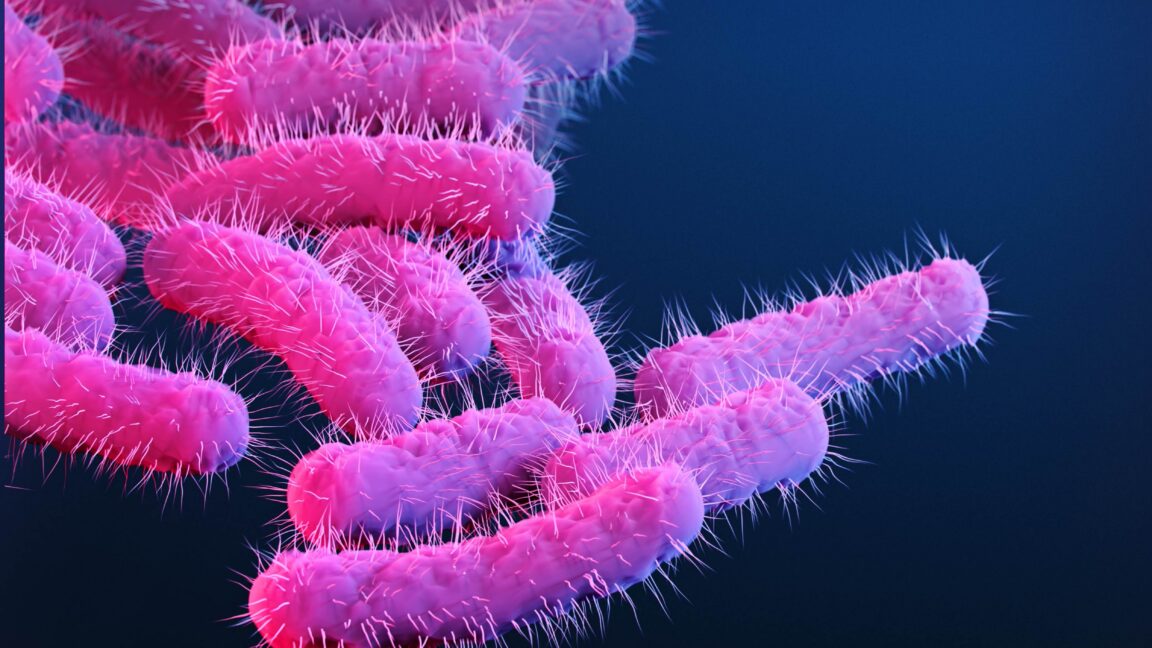
More than 150 non-human primates at a research facility spending over two years battling diarrhea doesn't exactly scream 'good fortune.' But for a team of scientists, it was a veritable treasure trove of data - a heaping pile of valuable information on how to finally defeat a particularly foul foe.
In a study published in the latest issue of Science Translational Medicine, researchers sifted through the dump of immunological data from the infections, logging new ways to train immune cells to defeat the bacteria behind the outbreak, a type of Shigella. They plucked out specific bits of the bacteria that the immune system could most effectively attack, linking target molecules to specific types of germ-busting immune responses. They even pinpointed the tiny notches within those craggy target molecules where the most potent antibodies attached.
'Our study revealed unexpected features of the anti-Shigella antibody response in naturally infected [non-human primates] and represents a step toward the rational design of Shigella vaccine candidates,' the authors write. Because nothing says 'rational design' like a two-year poop-pocalypse.
Shigella is a gastrointestinal horror that strikes more than 200 million people annually and kills more than 200,000, mostly children. Survivors typically develop some protective immune responses, but given the various species and serotypes, those responses tend to work against a narrow range of the bacterial family. And to add insult to injury, Shigella strains are only becoming more resistant to antibiotics.
The need for a vaccine that combats the whole cruddy clan is clear, and numerous development efforts are underway. But scientists have been toiling without the detailed molecular and structural data needed for a sophisticated vaccine. Enter the outbreak.
It began in December 2022 at the Wisconsin National Primate Research Center in Madison. Non-human primates are natural hosts for Shigella, and outbreaks at such facilities aren't uncommon. But it is unusual for an outbreak to be so big and last so long - even some facility workers fell ill.
In all, there were 169 microbiologically confirmed shigellosis cases among the primates. Researchers collected 151 Shigella isolates for serotyping and performed whole genome sequencing on 95 representative isolates. The outbreak was caused by two related clusters of Shigella flexneri, a species that commonly strikes captive non-human primates (human outbreaks are more often driven by Shigella sonnei, but both can infect either primate). Of the 90 isolates tested for antimicrobial resistance, more than half (63%) were multidrug resistant. Most cases caused mild diarrhea, but there were asymptomatic cases and some severe ones. Infants were the hardest hit, mirroring human patterns.
The researchers drew serum, plasma, and specific immune cells from 41 infected animals at 1, 2, and 4-6 weeks post-infection, then dissected the immune responses.
First, they looked for antibodies attacking the O-antigen, the outermost component of a large molecule called LPS (lipopolysaccharide) that juts out from the bacterial membrane. LPS is found exclusively on Gram-negative bacteria, including E. coli, Salmonella, and Shigella. The O-antigen is a common immune target, but it's variable - antibodies against one serotype's O-antigen may not help fight others.
They found various antibodies binding to the O-antigen, some honed from repeated exposures. Most interestingly, they seemed to develop the ability to attack O-antigen from many different serotypes - critical for a vaccine. Moreover, antibodies that bound tightly could trigger cascading reactions that disintegrate bacterial cells - another useful feature.
Next, they examined antibodies attacking part of a type 3 secretion system (T3SS), a syringe-like apparatus bacteria use to inject effector proteins into host cells. At the tip of Shigella's T3SS are two proteins, IpaB and IpaD, targeted by primate antibodies. Some antibodies spurred protective T cell responses, while others backfired, helping Shigella burst blood cells. The researchers identified where helpful antibodies bound - exact spots for vaccine developers to aim for.
Together, these findings provide new insights and directions for developing an effective Shigella vaccine. Though we're still far from having one, the researchers hope this outbreak's data can overcome existing challenges and that their strategy will help design bacterial vaccines generally.
So, while the monkeys suffered, humanity may benefit. It's a silver lining in a very, very brown cloud.