NASA Satellite Catches Patagonian Trees Doing Their Best Impression of a Fall Foliage Postcard
NASA's Landsat 9 catches Patagonian beech trees showing off their autumn colors, because even satellites need a break from staring at snow and glaciers.
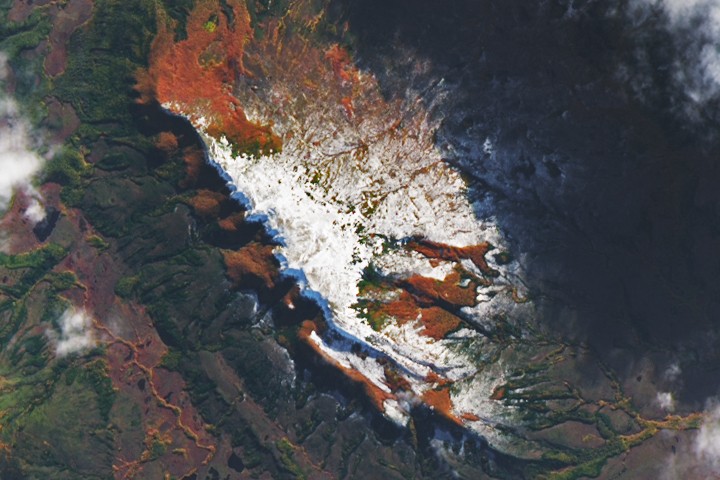
The bright whites of mountain snow, muted browns of arid plains, and gem-like blues and teals of glacial lakes typically dominate the Patagonian color palette. But for a short time in the austral autumn, temperate deciduous forests add splashes of warm tones. On April 12, 2026, a break in the clouds allowed the Landsat 9 satellite to capture an image of reddish hillsides in the Magallanes region of southern Chile - because apparently, even satellites enjoy a good leaf-peeping session.
Patagonia contains the southernmost temperate forests in the world, home to many species found nowhere else on the planet. Among these are several types of southern beech tree (genus Nothofagus) that form the foundations of Andean forests. These highly adaptable trees can thrive in a range of climates, tolerating freezing temperatures and almost desert-like levels of rainfall - basically the botanical equivalent of that friend who's comfortable in any weather.
The deciduous varieties put on a show in the fall, their leaves displaying yellows and reds when shorter, colder days set in. One of these species, known as the lenga beech (Nothofagus pumilio), occurs from about 36 degrees south latitude down to Tierra del Fuego at around 55 degrees south. Its range stretches about 2,000 kilometers (1,200 miles) along the spine of the continent and includes the area shown in this image - a commute that would make any tree tired.
Where lenga beeches grow, they tend to be the predominant or only type of tree in the forest, researchers note. As a subalpine-loving species, their presence often marks the highest elevation that trees will grow in an area. In the warmer, northern part of their range, they occur at higher elevations - around 1,700 meters (5,600 feet). In cooler, southern climes, they populate lower areas; the red ridgetops in the scene above, located about 100 kilometers (60 miles) northwest of Punta Arenas, are at about 600 meters (2,000 feet) above sea level - proving that even trees have altitude preferences.
Colorful autumn displays of lenga and other southern beech forests dazzle leaf-peepers across Patagonia’s iconic locales. In Conguillío National Park, reds and yellows appear amid the clear lakes and volcanic peaks. And in Torres del Paine and Tierra del Fuego, trees such as Nothofagus antarctica, better known as ñire or “Antarctic fire,” lend touches of blazing color to the landscape - because who needs actual fire when you have trees that know how to accessorize?
The Good Times
News in your inbox.
One sardonic roundup, delivered on your schedule. Free. Unsubscribe whenever your tolerance for wit runs out.
Already subscribed but we never reach your inbox? Check your spam folder and hit 'Not spam' (or 'Remove from spam') to bust us out of junk-mail purgatory. You'll be helping everyone else too.
Don't open any of our emails for a month and you'll be automatically removed from the mailing list.
Rewrite Article
Select parts to regenerate with a fresh AI pass. Translations will be updated automatically.
Generate AI Image
Creates a sardonic version of the article image using OpenAI.