Grad Student's Wild Idea That Everyone Thought Was Crazy May Actually Help Us Hunt Zombie Cells
Two grad students had a chat, and now we might finally be able to tag zombie cells with synthetic DNA - because if you can't kill them, at least you can find them.
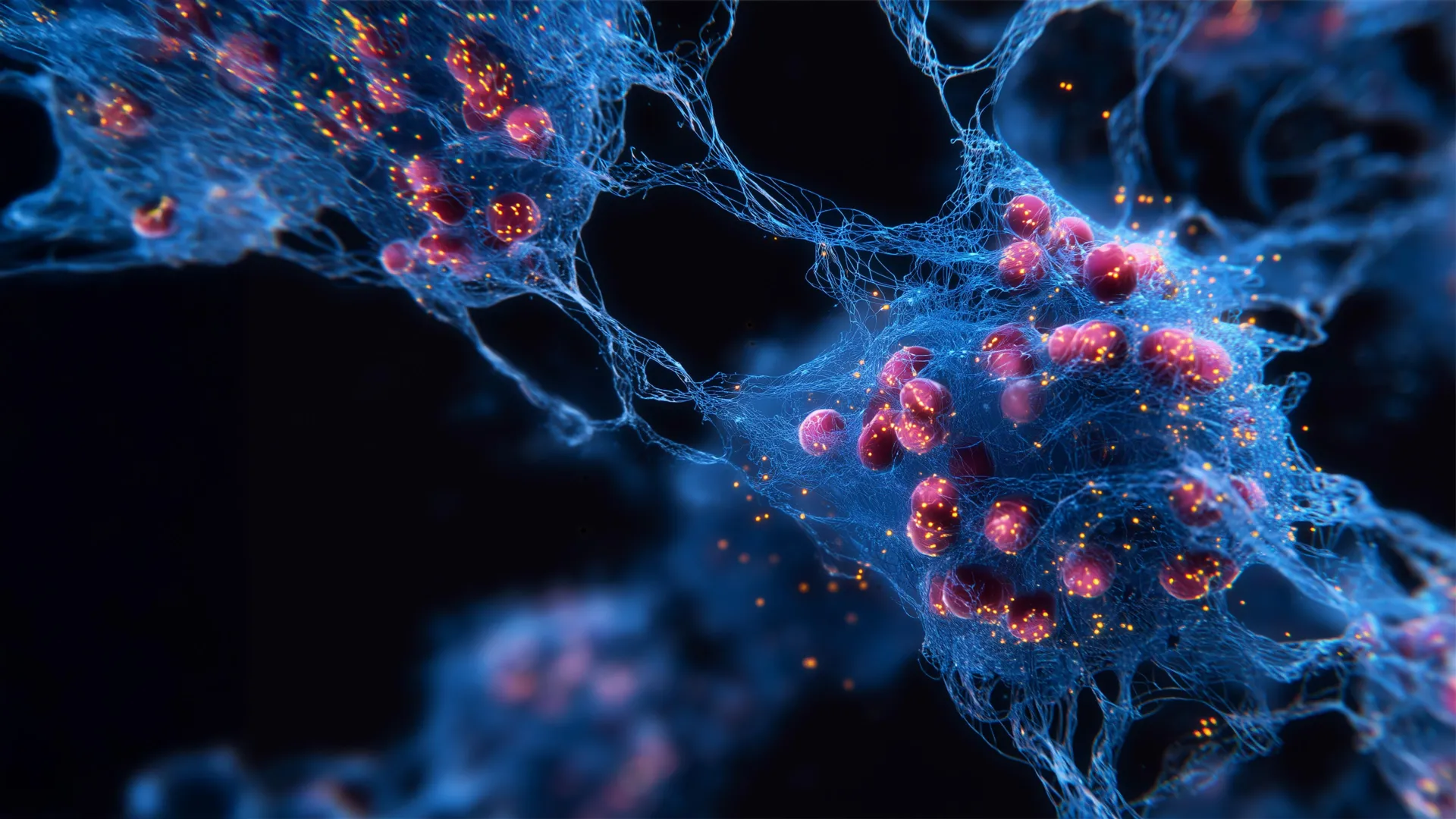
One of the biggest headaches in aging research is a bunch of cells that refuse to die like they're supposed to. Known as "zombie cells" (because apparently regular zombies weren't scary enough), these senescent cells stop dividing but stick around like unwanted houseguests, contributing to cancer, Alzheimer's, and the general unpleasantness of getting older.
Scientists have been trying to find and remove these cells for years, but they've had trouble spotting them hiding among their well-behaved neighbors. Enter a team at Mayo Clinic, writing in the journal Aging Cell, who say they've found a way to tag these cellular miscreants using molecules called "aptamers" - short strands of synthetic DNA that fold into complex 3D shapes and latch onto specific proteins on cell surfaces.
Working with mouse cells, the researchers screened over 100 trillion random DNA sequences and found several rare aptamers that bind to proteins associated with senescent cells, effectively flagging them for identification. "This approach established the principle that aptamers are a technology that can be used to distinguish senescent cells from healthy ones," says biochemist Jim Maher, III, Ph.D., a principal investigator of the study, adding that while this is just a first step, it could eventually apply to human cells.
The whole thing started when two grad students - Keenan Pearson, Ph.D., who was studying aptamers for brain cancer, and Sarah Jachim, Ph.D., who was studying aging and senescent cells - bumped into each other at a scientific event and started chatting about their thesis projects. Pearson wondered if aptamer tech could be adapted to recognize zombie cells. "I thought the idea was a good one, but I didn't know about the process of preparing senescent cells to test them, and that was Sarah's expertise," says Pearson, now lead author of the paper.
The students pitched the idea to their mentors, including researcher Darren Baker, Ph.D. Maher admits the concept initially sounded "crazy" but intriguing enough to investigate. "We frankly loved that it was the students' idea and a real synergy of two research areas," he says. The research moved fast, with early experiments producing encouraging results sooner than expected, and soon additional grad students - Brandon Wilbanks, Ph.D., Luis Prieto, Ph.D., and M.D.-Ph.D. student Caroline Doherty - joined to contribute specialized techniques.
The study also turned up some clues about zombie cells themselves. Several of the aptamers attached to a variation of fibronectin, a protein on mouse cell surfaces. Researchers don't yet know exactly how this fibronectin variant relates to senescence, but the finding could help define what makes these cells unique. "To date, there aren't universal markers that characterize senescent cells," says Maher. "The beauty of this approach is that we let the aptamers choose the molecules to bind to."
The researchers caution that more studies are needed before aptamers can reliably identify senescent cells in humans, but the technology could eventually carry therapies directly to these cells for highly targeted treatments. Pearson notes that aptamers are also cheaper and more adaptable than traditional antibodies. "This project demonstrated a novel concept," says Maher. "Future studies may extend the approach to applications related to senescent cells in human disease."
Materials provided by Mayo Clinic. Note: Content may be edited for style and length.
The Good Times
News in your inbox.
One sardonic roundup, delivered on your schedule. Free. Unsubscribe whenever your tolerance for wit runs out.
Already subscribed but we never reach your inbox? Check your spam folder and hit 'Not spam' (or 'Remove from spam') to bust us out of junk-mail purgatory. You'll be helping everyone else too.
Don't open any of our emails for a month and you'll be automatically removed from the mailing list.
Rewrite Article
Select parts to regenerate with a fresh AI pass. Translations will be updated automatically.
Generate AI Image
Creates a sardonic version of the article image using OpenAI.