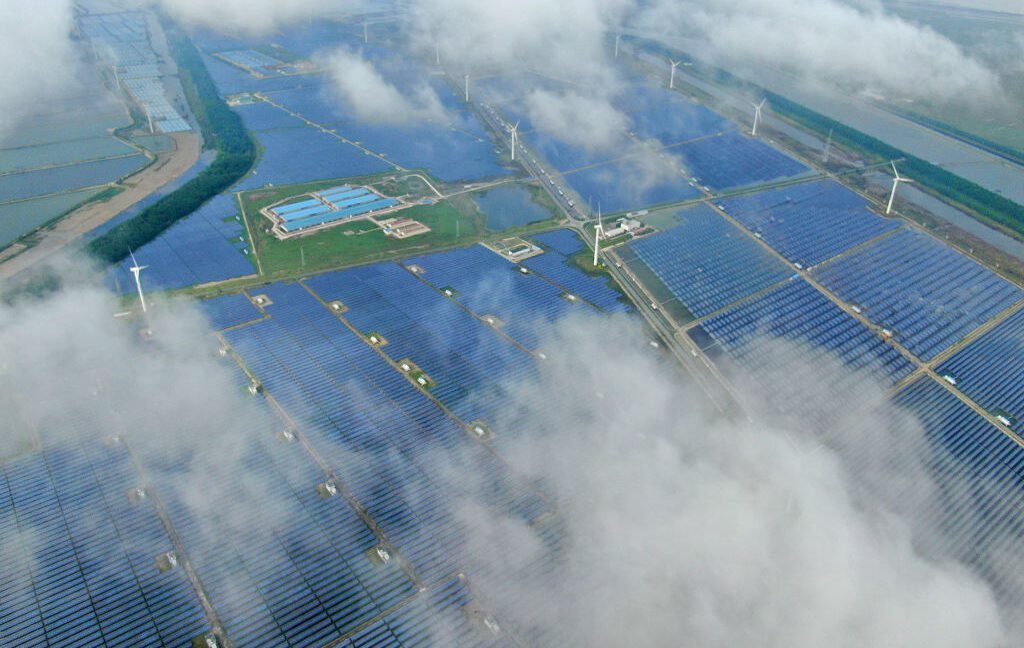
Coal Pollution Found to Be Sabotaging Solar Power, Because of Course It Is
New research finds coal pollution is cutting solar power output by hundreds of terawatt-hours a year - because apparently, even the sun can't escape coal's grimy reach.
Coal is, as we all know, the undisputed heavyweight champion of pollution. It pumps out more carbon emissions per energy unit than any other fuel, along with a delightful cocktail of sulfur dioxide aerosols and nitrogen oxides, plus the charming gift of coal ash laced with toxic metals. The health benefits of replacing coal with cleaner energy are usually estimated to far outweigh the costs of new equipment. But a new study suggests coal's interference goes beyond human lungs - it's also actively undermining its own competition.
Researchers have discovered that aerosols - both natural and human-made - are significantly cutting into the power we could be getting from solar panels, to the tune of hundreds of terawatt-hours per year. And a hefty chunk of those aerosols come from burning coal. The study, led by a UK-based team, used a new global inventory of solar facilities, combining known data with AI-analyzed satellite imagery and crowdsourced location records. They then used weather data to estimate what those facilities would produce if clouds and aerosols weren't scattering sunlight like a bunch of celestial party poopers.
The numbers are striking: In 2023, over a quarter of potential solar power was lost, with clouds accounting for more than 20 percent and aerosols for another 6 percent. That adds up to over 500 terawatt-hours - the equivalent of the full annual output of 84 coal plants, each with a 1-gigawatt capacity. Aerosols alone are a major culprit. Over the five years leading up to 2023, the world installed enough solar capacity to generate an average of 250 terawatt-hours of additional power per year, but lost 75 terawatt-hours of that to aerosols. Yes, production still rose because total capacity kept growing, but it's like running a marathon with a anvil tied to your ankle.
Aerosols can also help clouds form, causing further losses, but the researchers focused on direct aerosol effects since cloud contributions are trickier to measure. Some aerosols come from natural sources like desert dust, but the world hasn't built much solar in deserts yet - so that's less of a factor than you'd think. Coal, however, is a star player. Sulfur dioxide aerosols, primarily from coal burning, account for nearly half of the aerosols analyzed. Carbon-rich material, also typically from fossil fuels, makes up another 18 percent.
The impact isn't evenly spread. In China, aerosols reduce solar production by 7.7 percent overall and offset between a third and half of its annual solar growth. The spatial distribution of solar losses in China, the researchers note, mirrors that of its coal-fired power capacity. An analysis of pollution data shows that 30 percent of aerosol-related losses there can be blamed on coal. In the U.S., most solar is in the south and west, while coal plants cluster in the east and northeast, so annual losses are less than half of China's - a mere 3 percent.
The good news: China is cleaning up its act. After severe pollution problems, the country built high-efficiency coal plants and retired some of the worst offenders. The data shows this is helping solar, with aerosol impacts dropping over recent years. Still, it's remarkable that coal appears to be the only power source that actively reduces the productivity of its primary competitor. This should provide some impetus to ditch coal faster - at least some of the lost coal production will be offset by enhanced solar productivity. Because nothing says "efficient energy system" like one fuel sabotaging another.
The study appears in Nature Sustainability.
The Good Times
News in your inbox.
One sardonic roundup, delivered on your schedule. Free. Unsubscribe whenever your tolerance for wit runs out.
Already subscribed but we never reach your inbox? Check your spam folder and hit 'Not spam' (or 'Remove from spam') to bust us out of junk-mail purgatory. You'll be helping everyone else too.
Don't open any of our emails for a month and you'll be automatically removed from the mailing list.
Rewrite Article
Select parts to regenerate with a fresh AI pass. Translations will be updated automatically.
Generate AI Image
Creates a sardonic version of the article image using OpenAI.