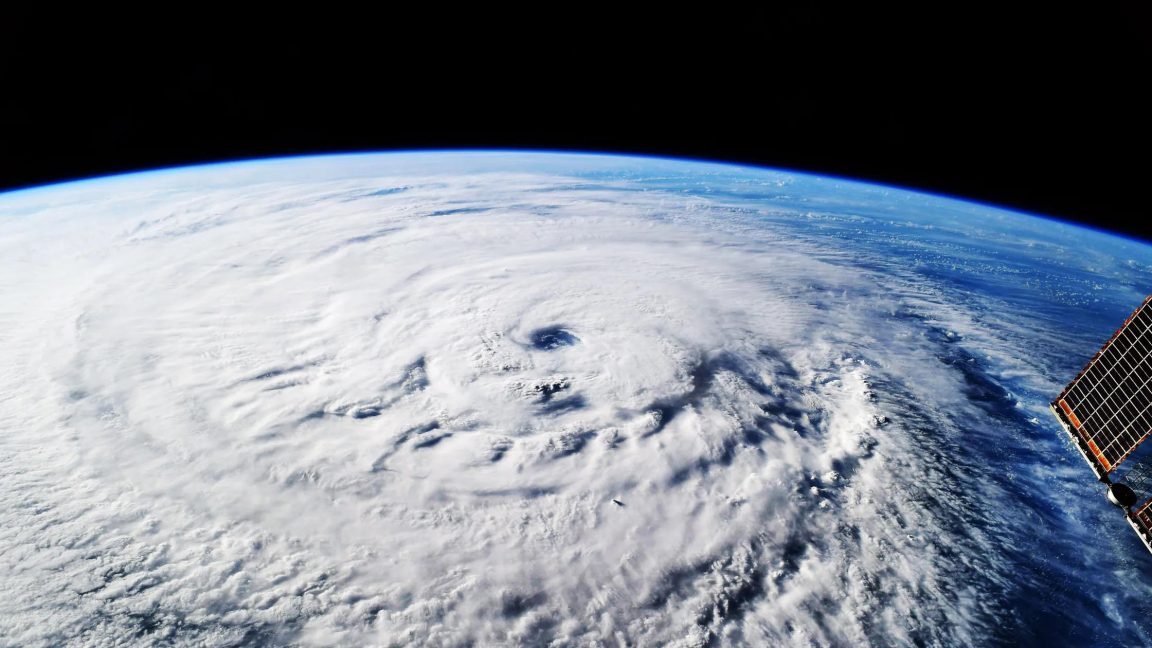
In October 2025, a storm brewed over the Caribbean Sea, and the weather models were having a disagreement. Would it fizzle out over Haiti, or turn into a monster and head for Jamaica? Enter WeatherNext, Google DeepMind's AI model, which confidently predicted the latter - five days before landfall, it said with 80 percent confidence that the storm would hit Jamaica as a Category 5 hurricane.
Hurricane Melissa did exactly that, wreaking havoc with flooding and landslides across Jamaica. But thanks to the AI's early warning, communities had more time to prepare. According to a paper published Thursday in Nature, WeatherNext gives forecasters an average of one extra day of lead time - its three-day predictions are as accurate as previous models' two-day ones. As Mike Brennan, director of the US National Hurricane Center, puts it, "Time is really golden." Indeed, when you're staging supplies and evacuating people, an extra day is practically a luxury.
Historically, gaining a day of forecast accuracy took a decade of work. So what's the secret? Training an AI on lots of weather data, even if cyclone data is scarce. As Ferran Alet, a research scientist at DeepMind, explains, "We don't have that much cyclone data, but we have a lot of weather data." So they trained a model to be good at both.
Hurricanes are tricky because they operate on multiple scales - track prediction needs global data, while intensity needs local details. Earlier AI models could nail the track but fumbled intensity. WeatherNext, however, does both, and it even surprised the researchers. "I think everybody was surprised at just how well it did," says Kate Musgrave, a co-author and tropical cyclone lead. The model was so good in retrospective tests that they were skeptical it would work in real time. It did.
Here's the kicker: the AI uses lower-resolution data than traditional models, yet it still excels. That's puzzled scientists, because it suggests the lower-res inputs contain more signal than previously believed. Alet admits, "It's a black box at the end of the day," but it might hint at physics we don't yet understand.
The model also generates a range of scenarios - last year, 50 per storm; now, 1,000 - to capture potential butterfly effects. That's something traditional models can't do with current computing power. Brennan, however, cautions that WeatherNext is just one tool, and human expertise remains vital. After all, "it's the impacts that kill people," not just the forecast.
DeepMind is open-sourcing the models, hoping researchers can unlock new insights. Alet is excited: "I think AI is giving us new tools to poke into the laws of the universe." And maybe, just maybe, keep us a step ahead of the weather's next tantrum.
The Good Times
News in your inbox.
One sardonic roundup, delivered on your schedule. Free. Unsubscribe whenever your tolerance for wit runs out.
Already subscribed but we never reach your inbox? Check your spam folder and hit 'Not spam' (or 'Remove from spam') to bust us out of junk-mail purgatory. You'll be helping everyone else too.
Don't open any of our emails for a month and you'll be automatically removed from the mailing list.
Rewrite Article
Select parts to regenerate with a fresh AI pass. Translations will be updated automatically.
Generate AI Image
Creates a sardonic version of the article image using OpenAI.