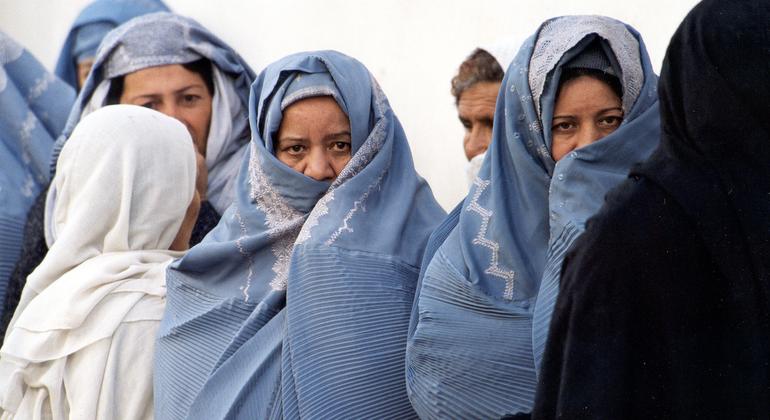
Afghanistan's Talents Getting the 'No Girls Allowed' Treatment, Warns UNICEF
UNICEF warns Afghanistan could lose 25,000 female teachers and health workers by 2030 due to education bans, costing $84 million yearly in lost economic output.
Afghanistan is on track to lose over 25,000 female teachers and health workers by 2030, thanks to ongoing restrictions on girls' education and women's employment, the UN Children’s Fund (UNICEF) warned Tuesday. Because nothing says 'stable society' like systematically eliminating your trained professionals.
A new UNICEF analysis, The Cost of Inaction on Girls’ Education and Women’s Labour Force Participation in Afghanistan, reveals that female representation in civil service has already dropped from 21% to 17.7% between 2023 and 2025. That's a lot of empty desks and unused expertise.
Since the Taliban banned girls from secondary education in September 2021, more than one million girls have been denied their right to learn. If the ban remains until 2030, that number swells to over two million girls - in a country that already boasts one of the world's lowest female literacy rates. It's a race to the bottom nobody is winning.
“Afghanistan cannot afford to lose future teachers, nurses, doctors, midwives and social workers, who sustain essential services. This will be the reality if girls continue to be excluded from education,” said UNICEF Executive Director Catherine Russell, in the tone of someone stating the extremely obvious.
The report outlines a dual crisis: losing current trained female professionals while preventing the next generation from replacing them. By 2030, the deficit could reach 20,000 women teachers and 5,400 healthcare workers. The education sector is already bleeding talent - female teachers in basic education fell by over 9%, from nearly 73,000 in 2022 to around 66,000 in 2024.
Fewer female teachers means fewer girls in school (shocker), and fewer female healthcare workers directly reduces access to maternal, newborn, and child health services - because social norms often prevent women from receiving medical care from men. So women and children face greater risk. Good times.
Restrictions on girls' and women's education and work are also costing Afghanistan $84 million each year in lost economic output. That figure is expected to grow as more women and girls remain blocked from classrooms and jobs. Because nothing boosts an economy like excluding half the population.
UNICEF continues to support education: in 2025, over 3.7 million children in public schools received emergency support, while 442,000 children - 66% of them girls - benefited from community-based learning. The agency has also built or rehabilitated 232 schools. Someone's got to pick up the slack.
“Denying Afghan girls access to secondary education robs an entire nation of its potential - locking girls, their families and their communities into poverty, weakening health outcomes and silencing the economic engine that an educated generation of women could ignite,” Russell added. In other news, water is wet.
The Good Times
News in your inbox.
One sardonic roundup, delivered on your schedule. Free. Unsubscribe whenever your tolerance for wit runs out.
Already subscribed but we never reach your inbox? Check your spam folder and hit 'Not spam' (or 'Remove from spam') to bust us out of junk-mail purgatory. You'll be helping everyone else too.
Don't open any of our emails for a month and you'll be automatically removed from the mailing list.
Rewrite Article
Select parts to regenerate with a fresh AI pass. Translations will be updated automatically.
Generate AI Image
Creates a sardonic version of the article image using OpenAI.