Trump Says Iran Ceasefire on 'Massive Life Support,' Calls Tehran's Counter-Offer 'Piece of Garbage'
Trump compares Iran ceasefire to a patient with a 1% chance of survival after rejecting Tehran's counter-offer as a 'piece of garbage,' while both sides continue to block each other's ports and enrich tensions.
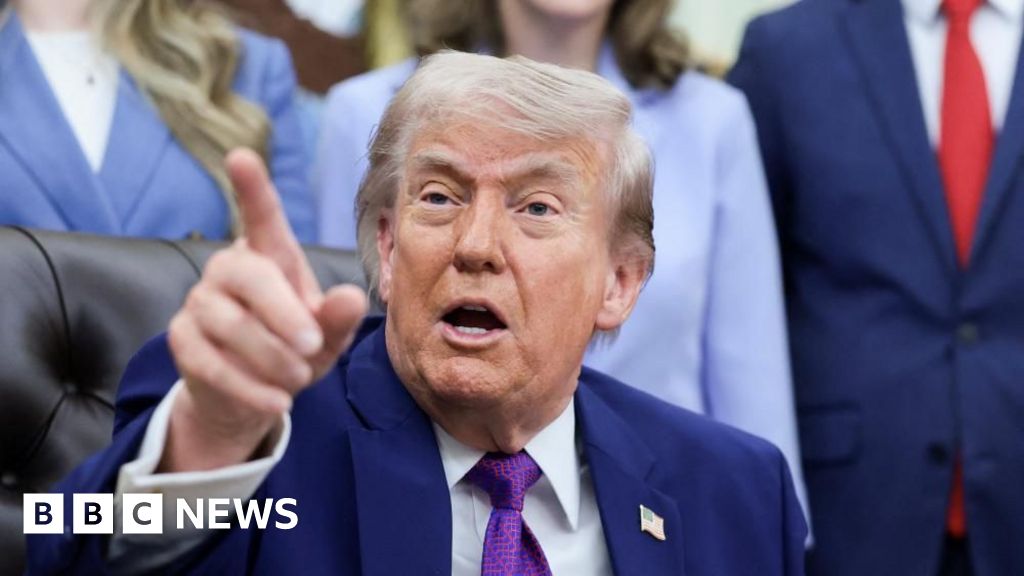
US President Donald Trump has declared that the month-long ceasefire with Iran is on "massive life support," which is doctor-speak for "this patient is not long for this world." Speaking from the Oval Office on Monday, Trump said the truce, while technically still in place, was "unbelievably weak" - which is about as encouraging as a hospital chart with a flatline.
Iran laid out its demands to end the war and reopen the Strait of Hormuz in a counter-offer sent to the US on Sunday. Trump rejected the proposal, calling it "totally unacceptable" and, in a moment of typical diplomatic delicacy, "a piece of garbage." Esmail Baghaei, a foreign ministry spokesperson for Iran, responded by insisting Tehran's proposals were "responsible" and "generous" - which is one way to describe a document the other side refused to finish reading.
According to Iran's semi-official Tasnim news agency, Tehran's offer includes an immediate end to the war on all fronts - a reference to continued Israeli attacks against Iran-supported Hezbollah in Lebanon - a halt to the US naval blockade of Iranian ports, and guarantees of no further attacks on Iran. It also reportedly demands compensation for war damage and emphasizes Iranian sovereignty over the Strait of Hormuz, through which about 20% of the world's oil and liquefied natural gas normally passes. Trump responded on Truth Social with characteristic restraint: "I have just read the response from Iran's so-called 'Representatives.' I don't like it - TOTALLY UNACCEPTABLE."
Baghaei shot back that Iran would act "in any way necessary to secure our interests," which is diplomatic code for "we're not backing down." In the Oval Office, Trump elaborated on the ceasefire's prognosis: "I would say the ceasefire is on massive life support... when the doctor walks in and says, 'Sir, your loved one has approximately a 1 percent chance of living.'" He called Iran's leaders "very dishonourable people," adding, "Look, I've had to deal with them four or five times - they change their mind." He also accused Iran of reneging on an agreement to let the US remove its supply of enriched uranium, insisting Iran would "never have a nuclear weapon." Tasnim quoted a source close to the negotiating team as saying, "There is no such thing in Iran's proposal as accepting taking out enriched nuclear material."
Israeli Prime Minister Benjamin Netanyahu, meanwhile, added his own conditions, saying Iran's enriched uranium stockpile must be "taken out" and enrichment sites dismantled before the war can be considered over. US news outlet Axios reported that the initial US memorandum - a one-page, 14-point document - includes provisions for suspending Iranian nuclear enrichment, lifting sanctions, and restoring free transit through the Strait of Hormuz, all contingent on a final agreement. Iran has continued to block the strait, driving up world oil prices, while the US enforces a blockade of Iranian ports - a move that has infuriated Tehran. Israeli and US forces began massive air strikes on Iran on 28 February, and the ceasefire came into effect last month. So, basically, both sides are lobbing proposals and accusations while the ceasefire sits in the ICU, hooked up to a very shaky ventilator.
The Good Times
News in your inbox.
One sardonic roundup, delivered on your schedule. Free. Unsubscribe whenever your tolerance for wit runs out.
Already subscribed but we never reach your inbox? Check your spam folder and hit 'Not spam' (or 'Remove from spam') to bust us out of junk-mail purgatory. You'll be helping everyone else too.
Don't open any of our emails for a month and you'll be automatically removed from the mailing list.
Rewrite Article
Select parts to regenerate with a fresh AI pass. Translations will be updated automatically.
Generate AI Image
Creates a sardonic version of the article image using OpenAI.