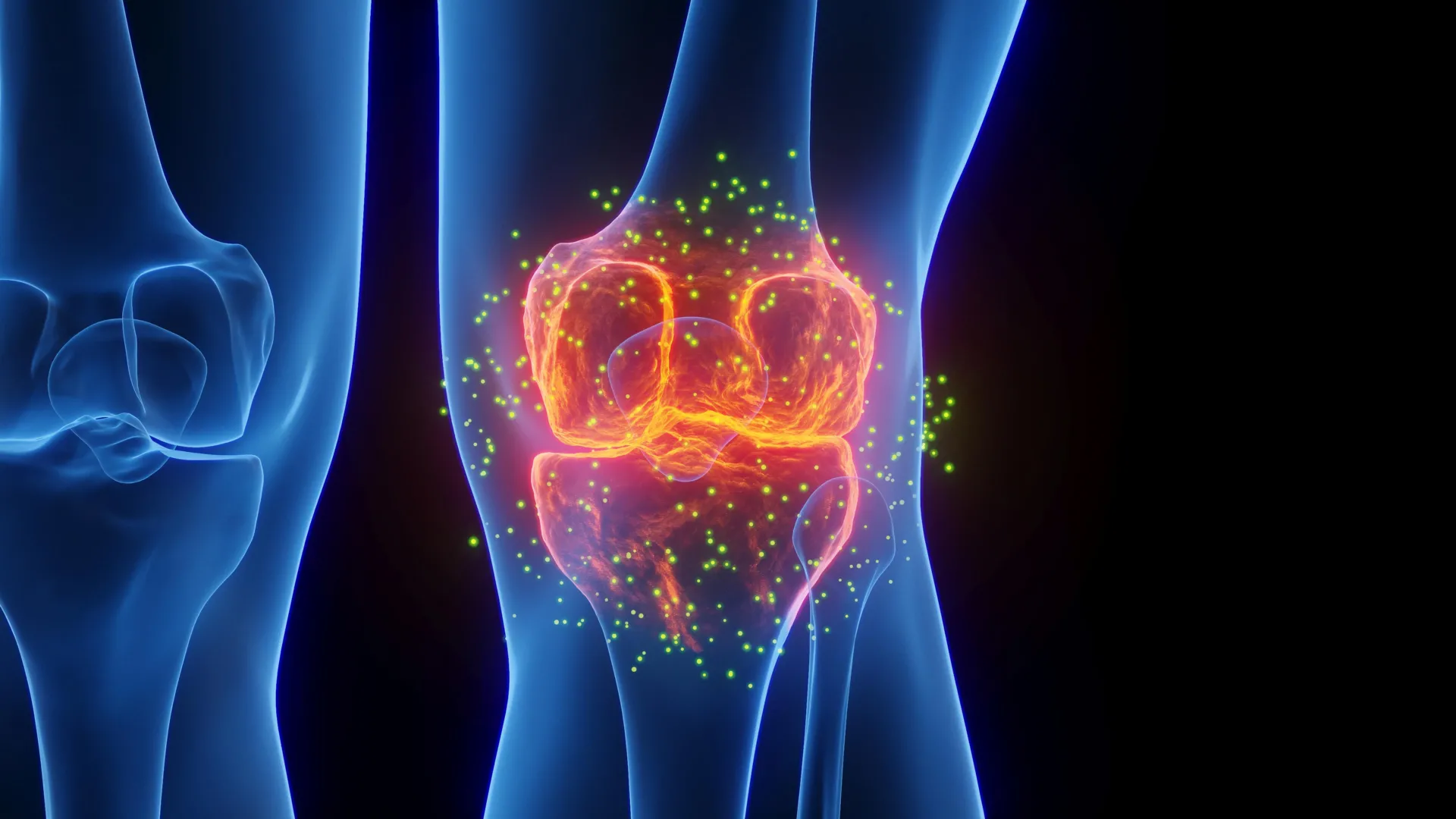
Stanford Scientists Find Way to Regrow Cartilage; Knees Everywhere Breathe Collective Sigh of Relief
Stanford scientists discover that blocking an age-related protein can regrow knee cartilage in mice and human tissue, potentially reducing the need for joint replacements - and making stairs slightly less terrifying.
In a development that will make aging athletes and stair-climbers everywhere cautiously optimistic, researchers at Stanford Medicine have figured out how to regrow lost knee cartilage in older mice and prevent arthritis after serious joint injuries - and they've got the human tissue samples to back it up.
The key is a protein called 15-PGDH, which the researchers have dubbed a "gerozyme" - essentially a biological jerk that becomes more abundant with age and helps wreck various tissues. Block this protein, and older mice start growing back the kind of cartilage you'd expect in a much younger rodent. Samples from actual human knee replacement surgeries also started producing new, functional cartilage when exposed to the treatment.
Osteoarthritis, the most common form of arthritis, affects about one in five U.S. adults and generates roughly $65 billion in direct health care costs each year. Current treatments are basically painkillers and, when things get really bad, joint replacement - there's no approved drug that slows, stops, or reverses the disease. This approach, which could eventually come as a local injection or even an oral medication, aims to change that.
"This is a new way of regenerating adult tissue, and it has significant clinical promise for treating arthritis due to aging or injury," said Helen Blau, PhD, professor of microbiology and immunology, who co-led the study with Nidhi Bhutani, PhD. "We were looking for stem cells, but they are clearly not involved. It's very exciting."
Here's the weird part: cartilage doesn't regenerate the way other tissues do. Instead of relying on stem cells, cartilage-producing cells called chondrocytes apparently just decide to act young again - shifting their gene activity like a middle-aged person suddenly taking up skateboarding. The treatment works by blocking 15-PGDH, which normally breaks down prostaglandin E2, a molecule that helps with regeneration.
When the team treated older mice - either via abdominal injection or direct knee injection - cartilage that had thinned with age grew back thicker across the joint surface. And it was the good stuff: hyaline cartilage, the smooth, slippery kind that lets knees move without sounding like a bag of gravel, not the less effective fibrocartilage.
"Cartilage regeneration to such an extent in aged mice took us by surprise," Bhutani said. "The effect was remarkable."
The researchers also tested the treatment in a mouse model mimicking ACL tears - the kind of injury that sends soccer players and skiers to the sidelines and often leads to osteoarthritis within about 15 years. Mice that got the gerozyme inhibitor twice weekly for four weeks after injury were far less likely to develop arthritis, walked more normally, and put more weight on the injured limb.
In human cartilage samples from knee replacement surgeries, one week of treatment with the 15-PGDH inhibitor reduced cartilage-degrading cells and boosted production of new articular cartilage.
An oral version of the treatment is already being tested in clinical trials for age-related muscle weakness, and Blau noted that Phase 1 trials have shown it's safe and active in healthy volunteers. "Our hope is that a similar trial will be launched soon to test its effect in cartilage regeneration," she said. "Imagine regrowing existing cartilage and avoiding joint replacement."
The research was published in Science and funded by a who's-who of biomedical funding sources, including the National Institutes of Health, the Baxter Foundation, and the Li Ka Shing Foundation. Blau, Bhutani, and several co-authors have patents on the technology licensed to Epirium Bio, where Blau is a co-founder and holds equity.
The Good Times
News in your inbox.
One sardonic roundup, delivered on your schedule. Free. Unsubscribe whenever your tolerance for wit runs out.
Already subscribed but we never reach your inbox? Check your spam folder and hit 'Not spam' (or 'Remove from spam') to bust us out of junk-mail purgatory. You'll be helping everyone else too.
Don't open any of our emails for a month and you'll be automatically removed from the mailing list.
Rewrite Article
Select parts to regenerate with a fresh AI pass. Translations will be updated automatically.
Generate AI Image
Creates a sardonic version of the article image using OpenAI.