
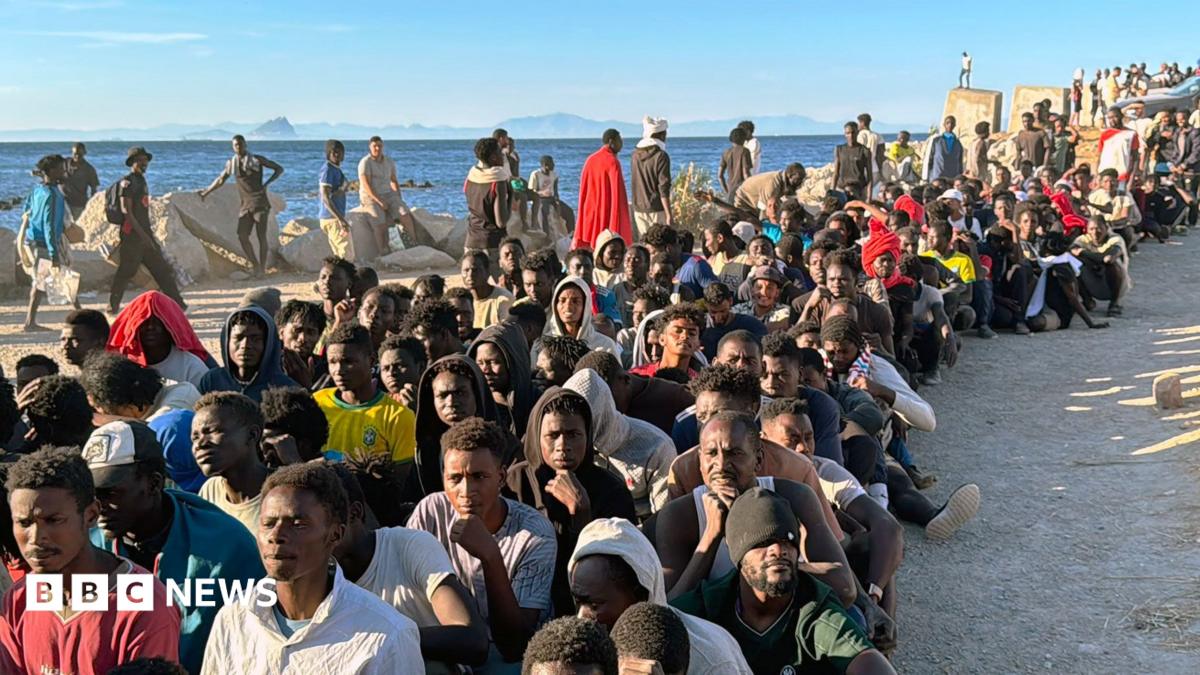
In a move that screams 'European solidarity,' Spain has slapped border controls on all air and sea travel from Italy, escalating a row between the two EU member states that's been simmering since last week's migrant surge into Ceuta.
The measures, effective from midnight (22:00 GMT) and lasting a month, come in response to Italy's own restrictions imposed after roughly 78,000 migrants from Morocco crossed into the Spanish exclave of Ceuta. Spain demanded Italy reverse its checks by Sunday; Rome, ever the stubborn dinner guest, said they'd stay until at least 15 August, citing Spain's anticipated 'new wave of migration.'
The spat pits Spain's socialist leader Pedro Sanchez against Italy's conservative Giorgia Meloni, who's been championing stricter EU migration rules like it's a campaign promise she actually intends to keep.
Italy, which notably doesn't share a land border with Spain, claimed its temporary suspension of the border-free Schengen arrangement was to prevent Ceuta's migrants from hopping over to Italy. Madrid called this 'spurious arguments' lacking factual basis, since those migrants have no legal way into the Schengen area - a detail Italy apparently glossed over.
In a pre-emptive rebuttal, Italy's government declared it wouldn't accept 'ultimatums' and had no intention of reconsidering its suspension 'under any circumstances' until at least 15 August, or until terrorist risks to Italy are 'completely eliminated' - which, given the world we live in, might be never.
Italian officials assure that checks are done with 'maximum comfort' for Spanish and other European citizens, and Spanish citizens are exempt from extra scrutiny, which is nice. But El Pais reports long queues at airports, with passengers from Spain directed to special lines - because nothing says 'comfort' like standing in a queue that snakes around the terminal.
Spain's counter-measures include passport, nationality, and visa checks for Italian passengers and visitors arriving from Italy, citing 'persistent irregular migratory pressure.' These will stay until 7 September, unless circumstances change, which they probably will, because they always do.
Temporary Schengen suspensions aren't new - Italy also has controls on its border with Slovenia. Finland and Denmark backed Italy's move, while the Czech Republic suggested suspending Spain's Schengen membership altogether, presumably for kicks.
Most of the migrants who arrived in Ceuta last week were returned within days, but nearly 1,400 minors, some 'very young,' remain. Spain hasn't announced a second wave, though social media chatter from Moroccan users planning another attempt has officials monitoring, but not expecting, a repeat.
The exact cause of the mass crossing remains murky, with EU Migration Commissioner Magnus Brunner blaming criminal networks spreading disinformation - a claim Spain agrees with. Morocco, meanwhile, points fingers at Spain's Supreme Court, which ruled that migrants stopped at sea can't be summarily returned. An unnamed source said the 'deterrent element collapsed' not due to criminals but 'a judge's decision' - because judges are the real gatekeepers.
The sheer number of swimmers raises questions about Morocco's border guards' apparent inactivity. And the exclaves themselves remain a diplomatic thorn between Spain and Morocco, which doesn't recognize Spanish sovereignty over them.
So, in the grand tradition of EU cooperation, two member states are now imposing checks on each other, proving that when it comes to migration, the only thing more porous than borders is common sense.