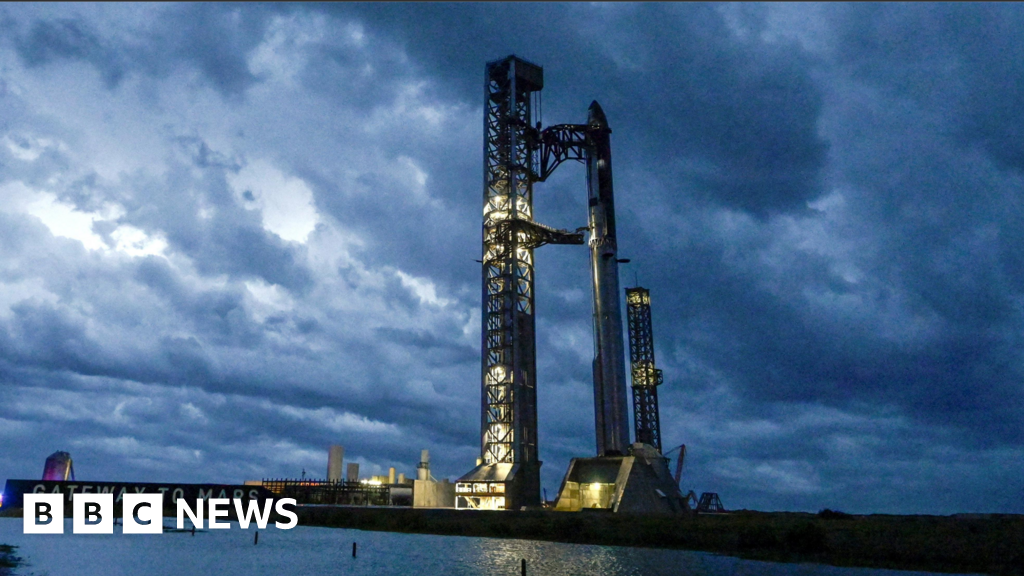
SpaceX Postpones Starship Launch, Because Nothing Says 'Buy Our Shares' Like a Hydraulic Pin Acting Up
SpaceX delays Starship launch due to a wonky pin, right before a record-breaking IPO that could make Elon Musk the first trillionaire - because nothing says 'invest in me' like a rocket that needs a hardware fix.
Elon Musk's SpaceX has postponed the launch of its massive Starship rocket, pushing the highly-anticipated test flight to Friday. The delay comes just a day after the firm unveiled plans for a record-breaking stock market debut, where a successful launch could help entice investors into buying shares - because nothing whispers 'stable investment' like a rocket that won't take off on time.
The initial public offering (IPO) on the tech-heavy Nasdaq stock market is set to be the largest in Wall Street history and could start next month under the ticker symbol SPCX. The ticker, presumably, stands for 'SpaceX, Please Cash X-travagantly'.
Because of the shares he will own in SpaceX, the listing could make Musk, already the world's richest person, the first-ever trillionaire. Yes, the man who brought you the Cybertruck and tweeting at 3 a.m. is on track to have more money than most countries' GDP. Democracy dies when you can buy a small nation with pocket change.
Musk said on social media that the delay was caused by a malfunctioning hydraulic pin on part of the launch tower. 'If that can be fixed tonight, there will be another launch attempt tomorrow at 5:30 CT [22:30 GMT],' he added. Because nothing says 'we're ready for investors' like a pin holding up the whole show.
SpaceX makes rockets, offers a satellite internet service called Starlink, and also owns the controversial artificial intelligence (AI) firm xAI. Because why stop at dominating space and internet when you can also build Skynet?
The uncrewed launch will mark the debut of the Starship V3 rocket after months of testing delays. SpaceX described it as 'the most powerful launch system ever developed' in its IPO filing. 'We expect that Starship V3 will be able to carry a payload of 100 metric tons, with future generations of Starship being designed to double this payload,' it added. That's enough to launch a herd of elephants or, more practically, a whole lot of Starlink satellites.
It features dozens of upgrades designed for rapid launches of the firm's Starlink satellites and NASA missions to the moon. Because why let a little thing like gravity get in the way of global internet domination and lunar real estate?
SpaceX has spent more than $15bn (£11.2bn) on the Starship programme, according to the filing. That's a lot of hydraulic pins. SpaceX values itself at $1.25tn, and Musk's majority ownership means his share could be worth more than $600bn. Last year, Musk, who is also chief executive of Tesla, became the first person to achieve a net worth of more than $500bn. So, you know, he's got that going for him.
Last year, Space Exploration Technologies - as it is officially known - brought in $18.6bn in revenue but had a net loss of $4.9bn. In the first three months of this year, it achieved $4.7bn in sales but made a net loss of $4.3bn. But who's counting? Certainly not the trillionaire-in-waiting.
The Good Times
News in your inbox.
One sardonic roundup, delivered on your schedule. Free. Unsubscribe whenever your tolerance for wit runs out.
Already subscribed but we never reach your inbox? Check your spam folder and hit 'Not spam' (or 'Remove from spam') to bust us out of junk-mail purgatory. You'll be helping everyone else too.
Don't open any of our emails for a month and you'll be automatically removed from the mailing list.
Rewrite Article
Select parts to regenerate with a fresh AI pass. Translations will be updated automatically.
Generate AI Image
Creates a sardonic version of the article image using OpenAI.