Small Island Nations Ask UN to Notice the Water Is, In Fact, Rising
Island nations tell the UN that rising seas are redrawing their borders while global military spending keeps getting the funding that climate finance apparently can't.
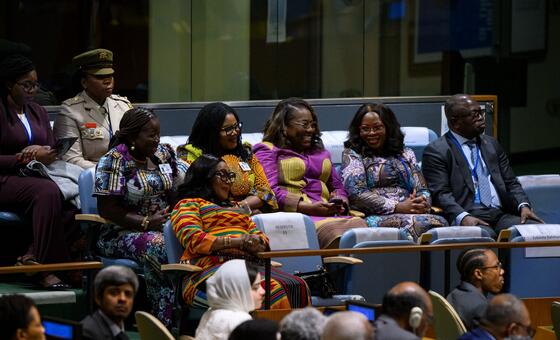
Leaders from small island States spanning the Caribbean to the Pacific took the podium at the UN General Assembly on Friday and delivered a message roughly as subtle as a tsunami: climate change is not a distant threat, it is currently rearranging their national borders. Rising seas, they noted, are already redrawing national boundaries - a cartographic update nobody requested.
The fourth day of the annual high-level debate, summarized in The Takeaway, found island leaders demanding climate justice, ocean protection and greater solidarity, while also pointing out that the ripple effects of faraway wars are washing up on their shores. For island and coastal States, the ocean is central to identity, security and economic survival - which makes it awkward that it keeps trying to relocate them.
Why it matters, per the assembled leaders: climate change is damaging economies, threatening water and food security, and placing communities at risk. The big picture, meanwhile, is that the international financial system does not reflect the risks facing small island developing States - a polite diplomatic way of saying the funding math is not mathing.
Speakers drew a pointed contrast between limited development and climate finance on one hand and rising global military expenditure on the other. Apparently the world can always find budget for new ways to blow things up, but gets strangely frugal about the water arriving uninvited.
Beyond the islands, water scarcity and transboundary water governance surfaced as major security issues. Island States also warned that geopolitical competition and the disruption of major waterways can quickly raise the cost of food, fuel and transportation - because nothing says "global supply chain" like a chokepoint having a bad week.
Finally, Pacific leaders raised what they called an unfinished legacy: communities continue to experience displacement, illness, contamination and loss decades after nuclear testing ended. The tests stopped. The consequences, less so.
The Good Times
News in your inbox.
One sardonic roundup, delivered on your schedule. Free. Unsubscribe whenever your tolerance for wit runs out.
Already subscribed but we never reach your inbox? Check your spam folder and hit 'Not spam' (or 'Remove from spam') to bust us out of junk-mail purgatory. You'll be helping everyone else too.
Don't open any of our emails for a month and you'll be automatically removed from the mailing list.
Rewrite Article
Select parts to regenerate with a fresh AI pass. Translations will be updated automatically.
Generate AI Image
Creates a sardonic version of the article image using OpenAI.