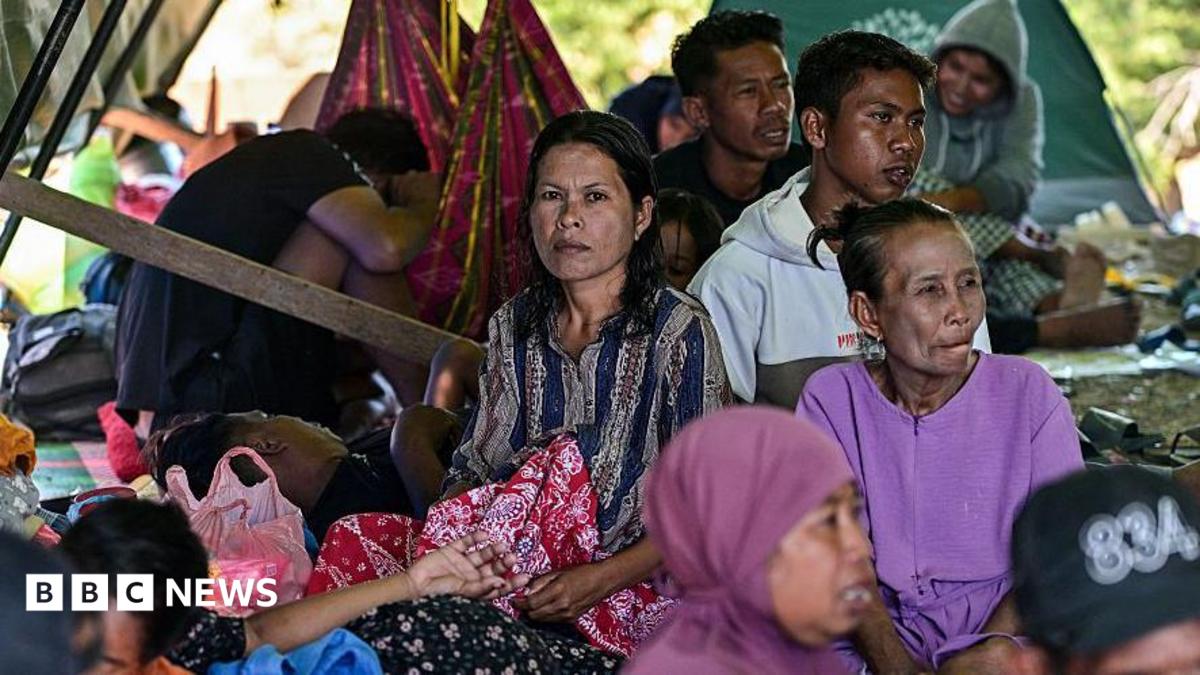
Indonesia's Flores island is currently hosting an unplanned, open-air sleepover, and nobody's thrilled about it. After a 7.7-magnitude earthquake struck on Saturday, thousands of survivors are camping out under the stars, not for fun, but because they're terrified the aftershocks will turn their homes into pancake material. The quake, which hit at a depth of just 15km, has killed at least 53 people and displaced around 5,000, making it the country's deadliest since 2022's West Java tragedy.
In the town of Ruteng, the regional hospital's PR officer, Rista Mari, is playing a waiting game that's getting old: 'We heard that medical assistance would be provided, but nothing has arrived yet.' The hospital's operating room, delivery room, pharmacy, and lab are all out of commission after the roof caved in, so they've set up emergency tents among the rubble. Because nothing says 'medical care' like a tent in the debris of a collapsed building.
Over in Labuan Bajo, the gateway to Komodo National Park and a top tourist spot, survivors are also sleeping outside, worried that the tremors might crush them in their sleep. One farmer, Anastasia Imad, told the BBC from a tent next to her damaged home: 'The shaking was very scary. My house almost collapsed. We were worried that the aftershocks would collapse the house while we were sleeping.' Sensible, really.
Herry Kabut, editor of local publication Floresa Media, describes a scene of chaos: blackouts, landslides, roadblocks, and everyone setting up their own evacuation posts. 'People have no idea where to evacuate. There's been no government advice. Many have fled to the hills and are starving.' Because when the government's advice is 'figure it out yourselves,' you might as well head for the hills.
Health services across the island have been forced outdoors, but the aid isn't exactly rushing in. In Ngada Regency, resident Charles Abar reports that as of Sunday night, no medical assistance had arrived. He thinks the government's response has been a bit sluggish, though he acknowledges they're struggling with budget constraints and limited supplies. Ah, the classic 'we'd love to help, but we're broke' routine.
Meanwhile, villages are cut off, and aftershocks keep rattling the island, adding to the trauma. But there's a sliver of good news: rescuers reached Nitung Village on Palue Island, which had been isolated for nearly two days. They made the trek despite a landslide-prone road that Deputy Police Chief Commissioner Marselus Yugo Amboro called 'life-threatening.' Hundreds of homes were severely damaged, and residents had been sheltering in makeshift shelters with no electricity or communication. They hadn't received aid because, well, they were isolated.
Indonesia sits on the meeting point of three major tectonic plates, so earthquakes are a regular feature. But that doesn't make it any easier when the ground shakes and the aid trucks can't get through. The community is still traumatised, and honestly, who can blame them? They're sleeping outside, waiting for help that's taking the scenic route.
Additional reporting by Eliazar Robert in Sikka Regency, East Nusa Tenggara.
The Good Times
News in your inbox.
One sardonic roundup, delivered on your schedule. Free. Unsubscribe whenever your tolerance for wit runs out.
Already subscribed but we never reach your inbox? Check your spam folder and hit 'Not spam' (or 'Remove from spam') to bust us out of junk-mail purgatory. You'll be helping everyone else too.
Don't open any of our emails for a month and you'll be automatically removed from the mailing list.
Rewrite Article
Select parts to regenerate with a fresh AI pass. Translations will be updated automatically.
Generate AI Image
Creates a sardonic version of the article image using OpenAI.