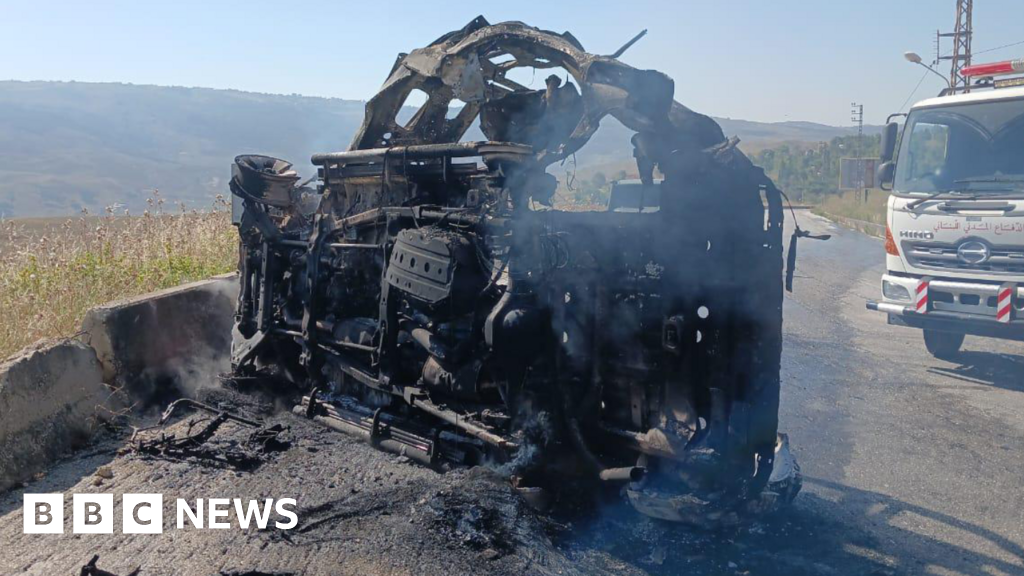
The Israel Defense Forces have announced an investigation after confirming they attacked a vehicle carrying Lebanese soldiers in southern Lebanon - a move that, tactically speaking, seems slightly counterproductive given that Israel is in ceasefire talks with the Lebanese government.
The Lebanese Army described Saturday's strike as "aggressive and barbaric," which is diplomatic code for "you killed a brigadier-general, a captain, and a private." The IDF explained that the vehicle was "moving suspiciously towards forces" and that gunfire had been reported in the area - which is a bit like saying you punched someone because they were walking in your direction.
Israel has been fighting Hezbollah since March, primarily in southern Lebanon, where the Iran-backed group has been launching rockets and drones into northern Israel. Over the weekend, the IDF struck around 150 Hezbollah "infrastructure sites," including storage facilities and command centers. The ill-fated Lebanese army vehicle was on a road near the village of Kfar Tebnit, about four miles north of the Litani River - an area that has seen intense fighting and displacement.
The IDF insists it is "operating against the Hezbollah terrorist organisation, not against the Lebanese Army," but the Lebanese Army is not buying it, accusing Israel of "brutal, deliberate and repeated aggression." The victims were identified as Brig Gen Samer Sabra, Cpt Elie Khoury, and Pte Hassan Ghazal.
This incident comes after Hezbollah's leadership rejected a US-backed ceasefire agreement that would have kept both sides from attacking each other in certain areas. Hezbollah leader Naim Qassem called the talks "futile," which is Hezbollah-speak for "we're not stopping."
Lebanon's government wants to end the fighting so it can disarm Hezbollah itself, but Israel has doubts about Beirut's ability to do so. Meanwhile, US President Donald Trump has been trying to defuse the conflict to reach a deal with Iran - which has made any agreement contingent on halting the campaign against Hezbollah.
Lebanon was drawn into this mess on March 2, when Hezbollah launched rockets into Israel in retaliation for an Israeli strike that killed Iran's supreme leader. The resulting war has killed at least 3,550 people in Lebanon and 30 on the Israeli side. Lebanese President Joseph Aoun told CNN his people are "fed up," which is probably the understatement of the year - prompting Iran's foreign minister to advise him to "save Lebanon from your real foe," presumably meaning Israel, not the fed-up public.
The Good Times
News in your inbox.
One sardonic roundup, delivered on your schedule. Free. Unsubscribe whenever your tolerance for wit runs out.
Already subscribed but we never reach your inbox? Check your spam folder and hit 'Not spam' (or 'Remove from spam') to bust us out of junk-mail purgatory. You'll be helping everyone else too.
Don't open any of our emails for a month and you'll be automatically removed from the mailing list.
Rewrite Article
Select parts to regenerate with a fresh AI pass. Translations will be updated automatically.
Generate AI Image
Creates a sardonic version of the article image using OpenAI.