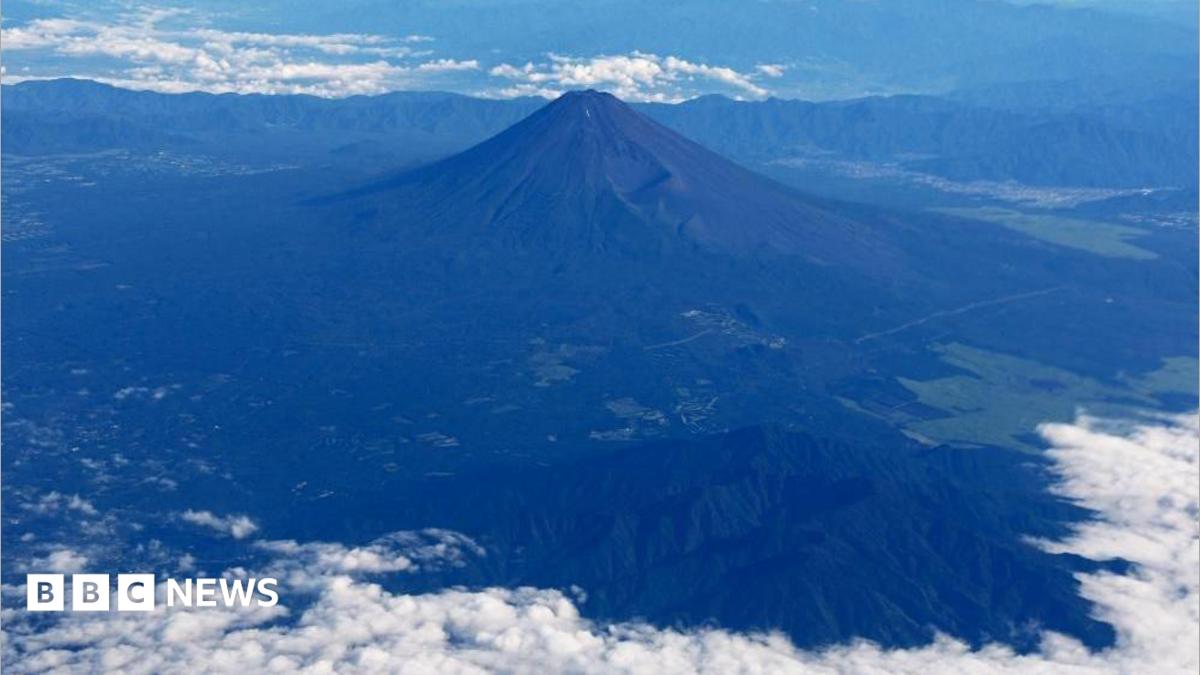
Dad Leaves 7-Year-Old Alone on Mount Fuji to Finish Hike, Gets a Stern Talking-To
A father's 'take a break' strategy on Mount Fuji leaves his 7-year-old alone for eight hours, earning him a police lecture and a spot in the parenting hall of shame.
In a move that parenting experts will surely not endorse, a Japanese father decided that the best way to handle his tired 7-year-old son was to park him on a bench on Mount Fuji and continue his hike with the older kid. Because nothing says 'family bonding' like abandoning your youngest on a foggy, rainy mountainside with only a soft drink and a snack for company.
The boy was discovered by staff at a mountain hut near the sixth station of the Fujinomiya route, sitting alone at an altitude of over 2,000 meters (6,500 feet). He had been waiting for eight hours - long enough to become 'tired and fussy,' which is probably the understatement of the century. The father, 48, was eventually tracked down between the seventh and eighth stations, a three-hour hike away. When he returned, police gave him a verbal smackdown, reportedly saying, 'Even if it means having to give up on climbing the mountain together, leaving a child behind is unacceptable.' The dad apologized for his 'rash' decision, which is a bit like apologizing for a 'slightly damp' tsunami.
The incident took place on Thursday at 07:30 local time (22:30 GMT), and the father was 'reprimanded' by police - which, in Japan, is the equivalent of being told you've been a very naughty boy. The family had been on the Fujinomiya route, which starts from the fifth station and takes about five hours to reach the peak, plus three more to descend. Not that the father seemed to mind the extra legwork.
Mount Fuji, standing at 3,776 meters (12,389 feet), has seen its fair share of climbing mishaps. In July, a 99-year-old woman needed rescuing after falling and hurting her hip and back - because age is just a number, but gravity is a harsh mistress. And last year, a 27-year-old university student had to be rescued twice in four days after ignoring the official climbing season and then going back for his lost phone, because priorities.
The active volcano, located south-west of Tokyo, has been a UNESCO World Heritage Site since 2013 and is one of Japan's three 'Holy Mountains,' alongside Mount Tate and Mount Haku. Around 200,000 people climb it annually, with daily caps on some routes to prevent overcrowding - though clearly, there's no cap on parental judgment.
The Good Times
News in your inbox.
One sardonic roundup, delivered on your schedule. Free. Unsubscribe whenever your tolerance for wit runs out.
Already subscribed but we never reach your inbox? Check your spam folder and hit 'Not spam' (or 'Remove from spam') to bust us out of junk-mail purgatory. You'll be helping everyone else too.
Don't open any of our emails for a month and you'll be automatically removed from the mailing list.
Rewrite Article
Select parts to regenerate with a fresh AI pass. Translations will be updated automatically.
Generate AI Image
Creates a sardonic version of the article image using OpenAI.