UN Report Confirms: Cutting Aid to Women's Organizations Has Predictably Bad Results
A new UN Women report finds that cutting aid to women's organizations in crisis zones leads to more suffering, burnout, and school dropouts - who could have guessed?
At least one million women and girls have lost access to critical humanitarian support since January 2025 as unprecedented aid cuts push women's organizations in crisis zones to the brink of collapse, the UN’s gender equality agency, UN Women, said on Friday.
According to a new report, Beyond the Breaking Point, those providing essential services to women and girls are being forced to reduce or suspend programmes just as global humanitarian needs reach historic highs. Around 120 million women and girls worldwide now require humanitarian assistance and protection, yet the local women's organizations best placed to reach them are facing severe funding shortages, despite often operating in places where international agencies cannot.
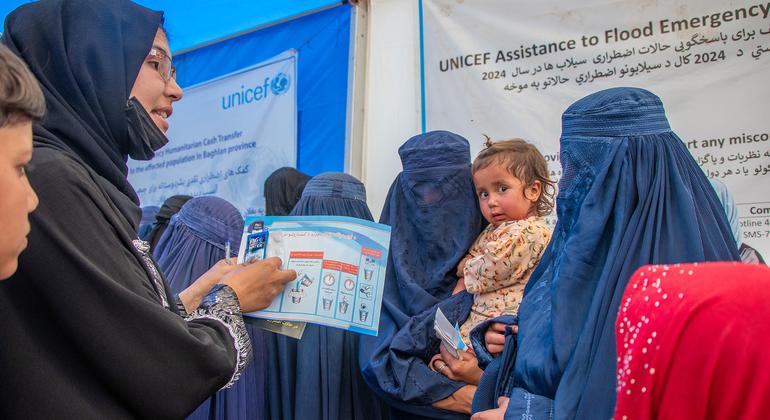
These organizations play a key role in some of the world's most severe humanitarian emergencies, including Afghanistan, the Democratic Republic of the Congo and Haiti. They remain on the ground long after international attention has shifted elsewhere, supporting survivors of violence, displaced families and vulnerable communities.
“Every dollar withdrawn from women's organizations is a dollar withdrawn from survivors of conflict-related sexual violence, displaced mothers, girls forced from school, and communities struggling to survive,” said Sofia Calltorp, UN Women Chief of Humanitarian Action.
The report, based on responses from 855 women-led organizations across 52 crisis- and conflict-affected countries, found that many women leading these organizations are themselves living through conflict or displacement, yet continue working despite the lack of resources. Nearly two-thirds report staff working without pay to maintain essential services. At the same time, almost half say staff burnout is increasing, while 88 per cent report worsening mental health among the women and girls they support.
The impact of the funding crisis is already being felt across crisis-affected communities. Half of the organizations surveyed have introduced waiting lists or are turning women and girls away because they can no longer meet demand. Meanwhile, 92 per cent report growing poverty among the women they serve, and 82 per cent are seeing more girls leave school.
Behind the statistics are women arriving at shelters that have closed, pregnant women forced to travel for hours to access healthcare, and mothers unable to secure food for their children. The consequences extend beyond the immediate humanitarian crisis, as the loss of women's organizations also weakens efforts to promote women's leadership and participation in community decision-making. More than half of those surveyed report declining involvement of women in local leadership roles.
UN Women is calling for sustained investment in women's organizations, describing them as indispensable first responders, defenders of women's rights and essential partners in recovery and peacebuilding. “Without immediate action, the organizations that have kept women and girls alive through the world's worst crises risk becoming another casualty of war,” Ms. Calltorp concluded.
The Good Times
News in your inbox.
One sardonic roundup, delivered on your schedule. Free. Unsubscribe whenever your tolerance for wit runs out.
Already subscribed but we never reach your inbox? Check your spam folder and hit 'Not spam' (or 'Remove from spam') to bust us out of junk-mail purgatory. You'll be helping everyone else too.
Don't open any of our emails for a month and you'll be automatically removed from the mailing list.
Rewrite Article
Select parts to regenerate with a fresh AI pass. Translations will be updated automatically.
Generate AI Image
Creates a sardonic version of the article image using OpenAI.