Sudan's Warring Factions Add 'Blowing Up Bridges' to Their Ever-Growing Resume of Bad Ideas
Sudan's warring factions continue their demolition derby on bridges and roads, making it harder for aid to reach millions while Chad braces for a regional spillover. Who needs infrastructure anyway?
The United Nations has noted with its characteristic diplomatic understatement that escalating attacks on bridges, roads, and other civilian infrastructure in Sudan are, in fact, making it harder to get aid to people who desperately need it. Shocking, we know.
The latest example of strategic brilliance came overnight when explosions reportedly struck the crucial Ardamata bridge in West Darfur state, which connects the city of El Geneina to areas near the border with Chad. This isn't just any bridge - it's a vital route for commercial traffic and humanitarian supplies entering the Darfur region. But hey, who needs supplies when you have drone strikes?
Speaking of which, the Sudanese Armed Forces (SAF) and their former allies the Rapid Support Forces (RSF) have been locked in a delightful struggle for control since April 2023. Their latest achievements include destroying two key bridges along the road between Kadugli and Dilling in South Kordafan state over the weekend. UN Deputy Spokesperson Farhan Haq noted that this has disrupted civilian movement and aid operations just as the rainy season begins - because nothing says "humanitarian crisis" like washed-out roads and no bridges. "Humanitarian partners warn there will be no viable alternative routes once seasonal rains intensify," he said, presumably while sighing deeply.
Meanwhile, humanitarian movements along the Geneina - Zalingei road linking West and Central Darfur have resumed after a brief suspension on Monday due to insecurity and rising intercommunal tensions. But access remains fragile, like a house of cards built by toddlers hopped up on sugar.
Drone activity is also making life interesting across Sudan, where more than 30 million people need humanitarian assistance. A drone was reportedly shot down on Tuesday in Omdurman, Khartoum state, while multiple strikes were reported in Dilling the previous day. Because nothing says "we care about civilians" like buzzing death machines.
Mr. Haq reiterated the UN's call for all parties to protect civilians and civilian infrastructure, and to facilitate rapid, safe, unhindered and sustained humanitarian access. This is roughly the 47th time the UN has made such a call, and it's working about as well as you'd expect.
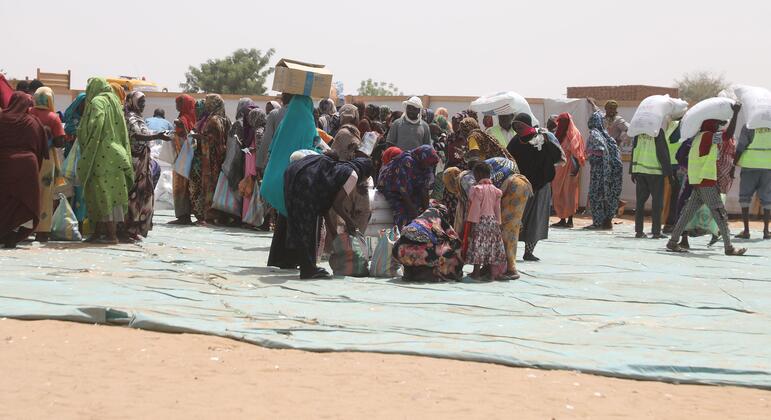
Over in Chad, the situation isn't much cheerier. Martha Pobee, Assistant Secretary-General for Africa, briefed the Security Council on how the Sudan war is affecting the region. "With the conflict in Sudan in its fourth year, its direct impact on Chad cannot be overemphasized," she told ambassadors. The influx of nearly a million Sudanese refugees - alongside some 300,000 Chadian returnees - has placed a significant strain on resources. "Repeated cross border incursions and drone strikes on Chadian military positions risk a further regionalization of the conflict," she added, because apparently one collapsing country wasn't enough.
The UN World Health Organization (WHO) also chimed in, emphasizing how refugee arrivals have placed immense pressure on fragile health systems in Chad. WHO continues to work with authorities and partners to strengthen emergency response, support frontline health workers, and improve access to essential health services. "From emergency medical assistance to mental health and psychosocial care, solidarity and coordinated action remain critical," the agency tweeted, because if there's one thing that solves a war, it's a well-worded tweet.
The Good Times
News in your inbox.
One sardonic roundup, delivered on your schedule. Free. Unsubscribe whenever your tolerance for wit runs out.
Already subscribed but we never reach your inbox? Check your spam folder and hit 'Not spam' (or 'Remove from spam') to bust us out of junk-mail purgatory. You'll be helping everyone else too.
Don't open any of our emails for a month and you'll be automatically removed from the mailing list.
Rewrite Article
Select parts to regenerate with a fresh AI pass. Translations will be updated automatically.
Generate AI Image
Creates a sardonic version of the article image using OpenAI.