Scientists Discover That Maybe We Should Just Ask Bacteria Nicely to Stop Causing Gum Disease
Scientists explore the radical notion that instead of killing all bacteria, we might just ask them nicely to stop causing gum disease - by disrupting their chemical gossip.
Bacteria are constantly evolving to survive, which is great for them and less great for anyone who has ever needed antibiotics. One major consequence of this relentless adaptation is that many harmful microbes are becoming resistant to antibiotics and disinfectants, creating serious challenges for medicine and public health. But not all bacteria are dangerous. In fact, many are essential to keeping the human body healthy, which is why scientists are now exploring whether it may be possible to influence bacterial behavior instead of simply trying to destroy bacteria outright. Radical idea, we know.
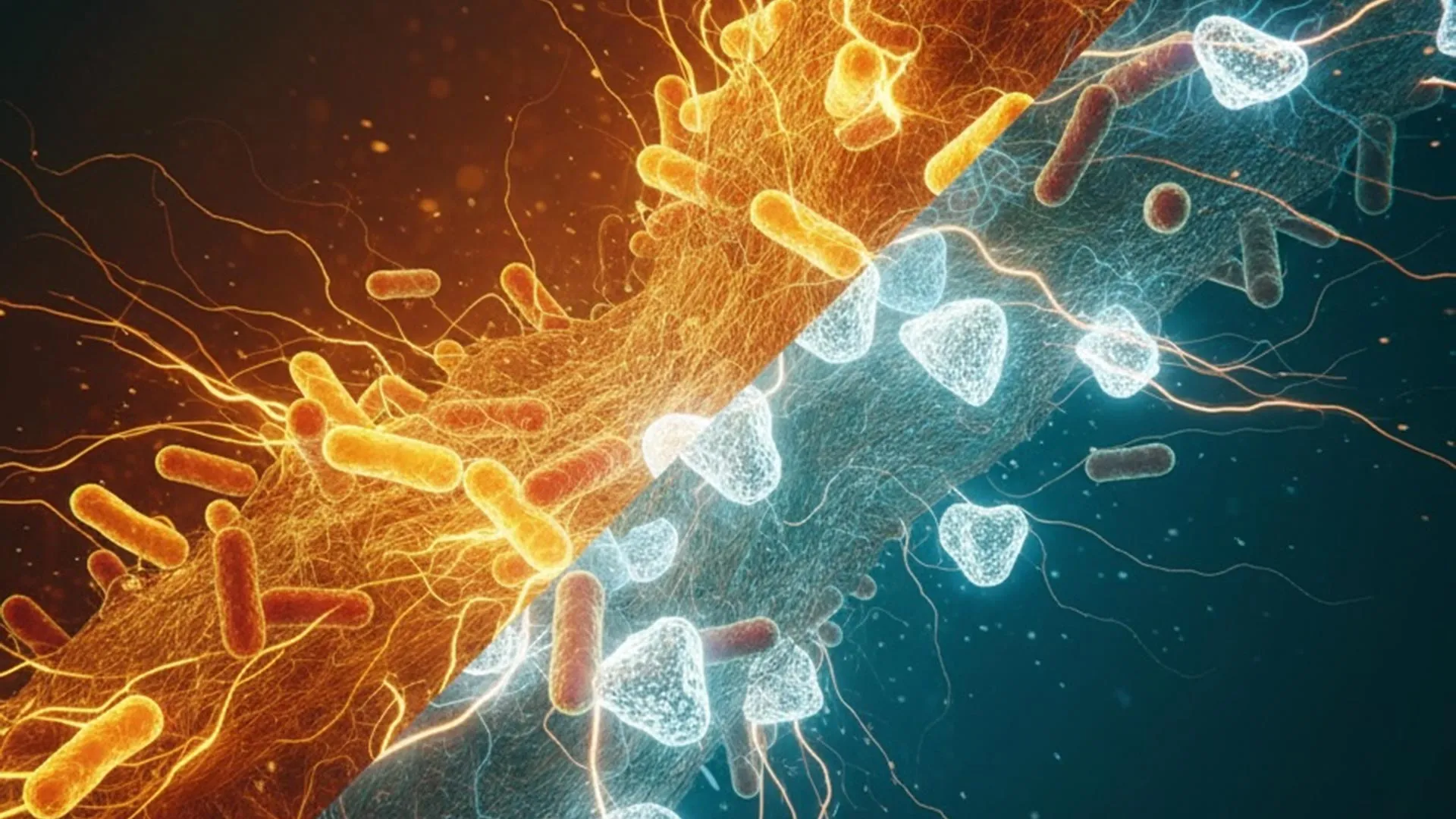
Inside the human mouth, bacteria are in near constant communication - roughly 700 bacterial species live there, and many exchange chemical messages through a process called quorum sensing. Some of these microbes communicate using signaling molecules known as N-acyl homoserine lactones (AHLs), which sounds like something a chemist named after a forgotten Greek god. Researchers from the College of Biological Sciences and the School of Dentistry set out to investigate how these bacterial signals shape the oral microbiome and whether interrupting those signals could help prevent harmful plaque buildup while preserving healthy bacteria. Their findings, published in npj Biofilms and Microbiomes, could eventually influence treatments far beyond dentistry.
The research team discovered several important patterns in how mouth bacteria interact. "Dental plaque develops in a sequence, much like a forest ecosystem," said Mikael Elias, associate professor in the College of Biological Sciences and senior author of the study. "Pioneer species like Streptococcus and Actinomyces are the initial settlers in simple communities - they're generally harmless and associated with good oral health. Increasingly diverse late colonizers include the 'red complex' bacteria like Porphyromonas gingivalis, which are strongly linked to periodontal disease. By disrupting the chemical signals bacteria use to communicate, one could manipulate the plaque community to remain or return to its health-associated stage."
The researchers also found that oxygen plays a surprisingly important role in determining how these bacterial messages influence plaque growth. "What's particularly striking is how oxygen availability changes everything," said lead author Rakesh Sikdar. "When we blocked AHL signaling in aerobic conditions, we saw more health-associated bacteria. But when we added AHLs under anaerobic conditions, we promoted the growth of disease-associated late colonizers. Quorum sensing may play very different roles above and below the gumline, which has major implications for how we approach treatment of periodontal diseases." This discovery suggests that bacterial communication works differently depending on where bacteria live inside the mouth, which is a great reminder that location matters even for microbes.
The next phase of the research will examine how bacterial signaling differs across various areas of the mouth and in people with different stages of periodontal disease. "Understanding how bacterial communities communicate and organize themselves may ultimately give us new tools to prevent periodontal disease - not by waging war on all oral bacteria, but by strategically maintaining a healthy microbial balance," said Elias. Researchers believe this strategy could eventually be expanded beyond oral health. Imbalances in the microbiome, known as dysbiosis, have been linked to numerous diseases throughout the body, including certain cancers. Scientists hope these findings could help lay the groundwork for future therapies that guide microbial communities toward healthier states rather than eliminating bacteria altogether. Funding for the study was provided by the National Institutes of Health.
The Good Times
News in your inbox.
One sardonic roundup, delivered on your schedule. Free. Unsubscribe whenever your tolerance for wit runs out.
Already subscribed but we never reach your inbox? Check your spam folder and hit 'Not spam' (or 'Remove from spam') to bust us out of junk-mail purgatory. You'll be helping everyone else too.
Don't open any of our emails for a month and you'll be automatically removed from the mailing list.
Rewrite Article
Select parts to regenerate with a fresh AI pass. Translations will be updated automatically.
Generate AI Image
Creates a sardonic version of the article image using OpenAI.