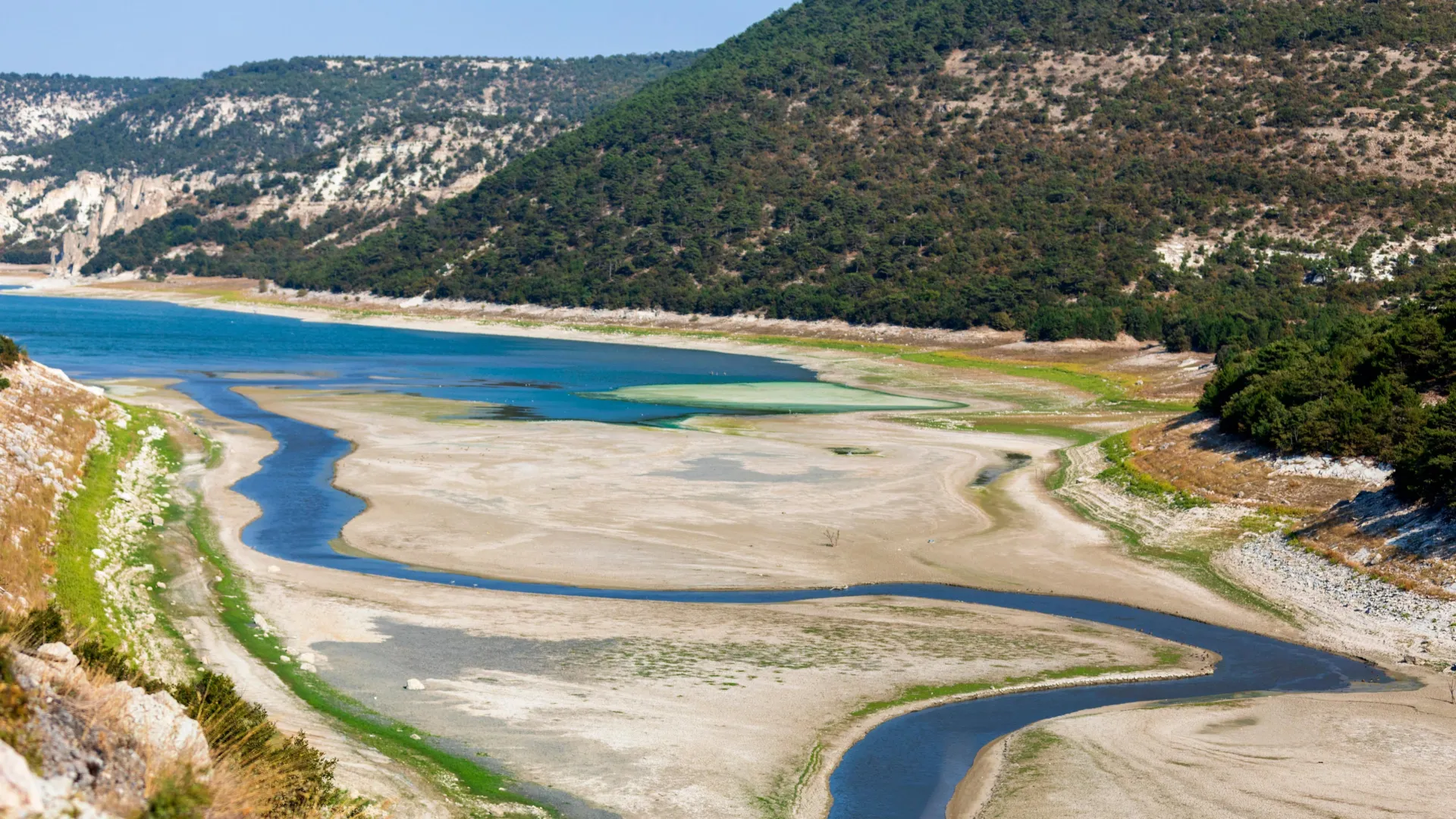
Climate change is steadily stripping oxygen from rivers around the world, according to a new study published May 15 in Science Advances. Researchers found that this long-term oxygen decline is happening across most river systems, with tropical rivers emerging as the most vulnerable. The findings point to an urgent need for strategies aimed at slowing oxygen loss in freshwater ecosystems - because apparently, fish need to breathe too.
The study was led by Prof. Kun Shi of the Nanjing Institute of Geography and Limnology (NIGLAS) at the Chinese Academy of Sciences. Dr. Qi Guan served as the first author, and the project also involved a researcher from Tongji University. So, three cheers for international collaboration on bad news.
Dissolved oxygen plays a critical role in maintaining healthy river ecosystems. It supports aquatic organisms, helps sustain biodiversity, and influences important biogeochemical processes. When oxygen levels fall, river health can deteriorate, putting fish and other freshwater species at risk. In other words, water without oxygen is just wet emptiness.
To examine how river oxygen levels have changed over time, the researchers used a machine-learning stacking algorithm to analyze observations from 21,439 river reaches worldwide collected over nearly four decades (1985-2023). Their analysis revealed a clear global trend. River oxygen levels declined at an average rate of -0.045 mg L-1 decade-1, and 78.8% of the rivers included in the study showed signs of deoxygenation. That's a lot of rivers holding their breath.
The strongest oxygen losses were found in tropical rivers located between 20°S and 20°N, including rivers in India. This result surprised researchers because scientists had previously expected rivers at higher latitudes, where warming is often more intense, to face the greatest deoxygenation risks. Instead, the study showed that tropical rivers already tend to have lower oxygen concentrations, making them especially vulnerable when oxygen levels continue to drop. Combined with faster deoxygenation rates, these conditions increase the likelihood of hypoxia events, when oxygen becomes too scarce to support many forms of aquatic life. So, tropical fish, start practicing your holding-your-breath faces.
The researchers also examined how river flow patterns and dam impoundment affect oxygen decline. Both low-flow and high-flow conditions appeared to partially reduce deoxygenation compared with normal-flow conditions. Rivers experiencing low-flow conditions had an 18.6% lower deoxygenation rate, while high-flow conditions were associated with a 7.0% lower rate. So, the Goldilocks zone for river flow is apparently extreme - low or high, just not medium.
Dam impoundment produced different effects depending on reservoir depth. In shallow reservoirs, impoundment accelerated oxygen loss. In deeper reservoirs, however, it helped reduce deoxygenation in the impounded area. Turns out, depth matters, even for oxygen.
Further analysis showed that declining oxygen solubility caused by climate warming was the primary driver behind the global oxygen decline, accounting for 62.7% of the observed changes. Ecosystem metabolism, influenced by factors such as temperature, light, and water flow, contributed 12% of the deoxygenation. The team also investigated the role of heatwaves. Their results showed that heatwave events accounted for 22.7% of global river deoxygenation. Heatwaves increased the deoxygenation rate by 0.01 mg L-1 decade-1 compared with conditions under average climatological temperatures. So, heatwaves are basically the river's worst enemy - and they're not even trying.
Overall, the findings highlight the growing impact of climate warming on flowing freshwater ecosystems, also known as lotic ecosystems. The researchers say tropical rivers should be considered a top priority for mitigation efforts aimed at preventing worsening oxygen depletion. The study also provides a scientific foundation that policymakers can use when developing strategies to address river deoxygenation worldwide. Because if you can't breathe in the water, where can you breathe?
Materials provided by Chinese Academy of Sciences Headquarters. Note: Content may be edited for style and length.
The Good Times
News in your inbox.
One sardonic roundup, delivered on your schedule. Free. Unsubscribe whenever your tolerance for wit runs out.
Already subscribed but we never reach your inbox? Check your spam folder and hit 'Not spam' (or 'Remove from spam') to bust us out of junk-mail purgatory. You'll be helping everyone else too.
Don't open any of our emails for a month and you'll be automatically removed from the mailing list.
Rewrite Article
Select parts to regenerate with a fresh AI pass. Translations will be updated automatically.
Generate AI Image
Creates a sardonic version of the article image using OpenAI.