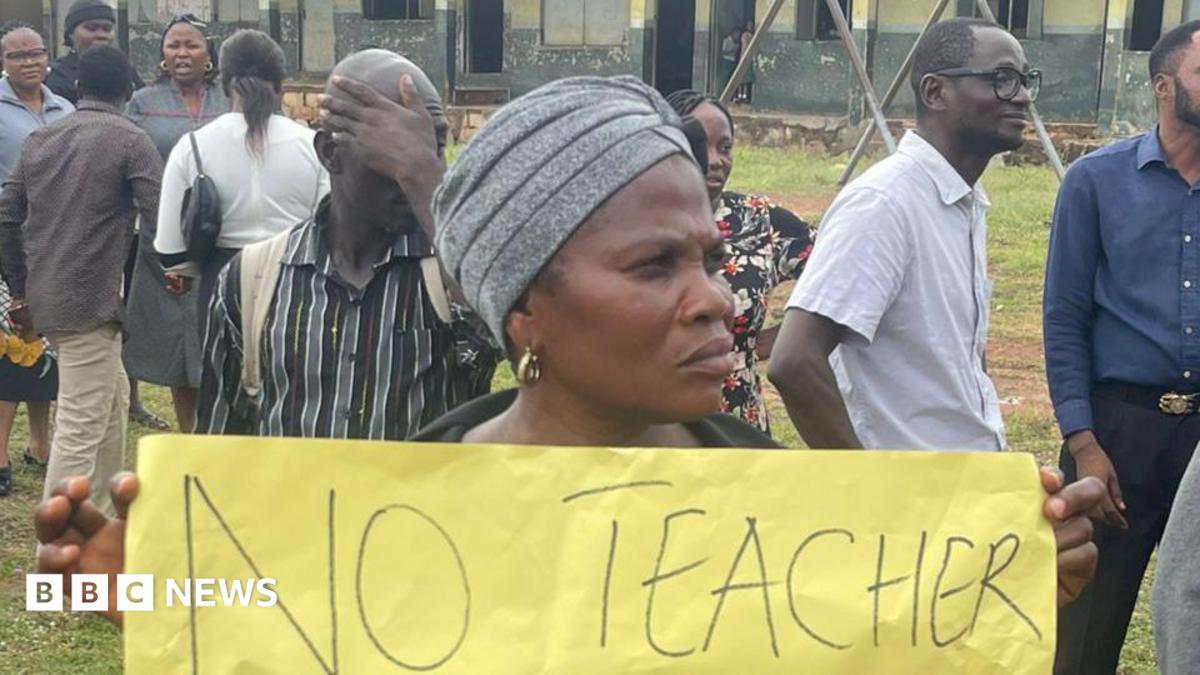
Nigeria Military Finally Returns 44 Kidnapped People, Because Two Months Wasn't Long Enough to Start a New Hobby
Nigeria's military frees 44 kidnapped after two months; families relieved, critics ask where the Safe School money went, and kidnappers learn the southwest is also fair game.
In a rare bit of good news from Nigeria's ongoing kidnapping crisis, the military announced it has freed all 44 pupils and teachers snatched from three schools in Oyo state two months ago. Yes, two months. That's roughly the same amount of time it takes to binge-watch every season of a mediocre Netflix show, but presumably with more trauma.
The military says it also arrested some of the captors, though it remains coy on how many are still at large. Several soldiers died in the rescue operation, which is a grim reminder that even good news comes with a body count.
Families are reportedly "relieved" - as one might be after their loved ones are finally released from an ordeal they never should have endured. Prof Wole Alamu, whose wife Rachael is the headteacher of Community Grammar School, described the experience as "harrowing" but thanked God it ended well. He also noted that watching videos of his wife and students released by their abductors was particularly hard on the family. No kidding.
The freed captives are now receiving medical treatment at an undisclosed hospital, with a return home scheduled for "a later date" - because apparently even after being freed, they can't catch a break on timing.
This mass abduction occurred on May 15 at three schools in Osiire district: Baptist Nursery and Primary School, LA Primary School, and Community Grammar School. Victims' ages remain unconfirmed, but typical Nigerian schoolchildren range from two to 18 years old. So that's a wide range of trauma to process.
Hassan Ajibola, head of the Teachers' Union in Oyo State, expressed "joy" but also politely pointed out that the government's Safe School Initiative - launched over a decade ago after the infamous Chibok kidnappings - hasn't exactly been a roaring success. He suggests security personnel, CCTV, regular patrols, fencing, and local security groups. Revolutionary ideas, really.
Critics and lawmakers have called for an investigation into how Safe School Initiative funds have been used, which is diplomatic speak for "Where did all that money go?"
This particular kidnapping spree rattled Nigeria because it happened in the predominantly Christian southwest, where such attacks are less common than in the Muslim north. Because nothing says "equal opportunity terror" like expanding your kidnapping operations to new regions.
The army says its month-long operation involved military, police, intelligence agencies, and local vigilantes. They dismantled the kidnappers' support network, including informants and hideouts in the Old Oyo National Park forest - one of several vast, hard-to-patrol areas that have become criminal and jihadist havens.
More operations are planned, because of course they are.
The Good Times
News in your inbox.
One sardonic roundup, delivered on your schedule. Free. Unsubscribe whenever your tolerance for wit runs out.
Already subscribed but we never reach your inbox? Check your spam folder and hit 'Not spam' (or 'Remove from spam') to bust us out of junk-mail purgatory. You'll be helping everyone else too.
Don't open any of our emails for a month and you'll be automatically removed from the mailing list.
Rewrite Article
Select parts to regenerate with a fresh AI pass. Translations will be updated automatically.
Generate AI Image
Creates a sardonic version of the article image using OpenAI.